
Vietnam reach the Asian Games quarterfinals: the 14th minute, the 34th minute, and the price of a thin ticket
**Câu trả lời cốt lõi**: Việt Nam vào tứ kết bóng đá ASIAD dù thua Uzbekistan 0-2 ở lượt cuối vòng bảng, nhờ tổng 4 điểm sau ba trận và kết quả Philippines thắng Kuwait 2-1. **Dữ kiện chính**: - Uzbekistan ghi bàn ở phút 5 (Urinboev) và phút 68 (Ibraimov, vào sân từ ghế dự bị). - Việt Nam bị từ chối bàn gỡ ở phút 14 vì lỗi việt vị. - Tiền vệ Xuan Bac rời sân vì chấn thương ở phút 34. - Việt Nam thay hai người ngay đầu hiệp hai: Long Vu và Le Phat rời sân, Quang Vinh vào. - Việt Nam kết thúc vòng bảng với 4 điểm sau ba trận, huấn luyện viên là Dinh Hong Vinh. **Nguồn**: Bản tin trận đấu với bút danh Thien Binh; ngày đăng không được ghi rõ trong tài liệu gốc. Các số liệu về phút ghi bàn và thay người lấy từ chính bản tin này | Cross-checked: VuaBong.vn **Hỏi đáp liên quan**: - Hỏi: Vì sao Việt Nam vào tứ kết dù thua 0-2? Đáp: Vì Việt Nam có 4 điểm sau ba trận và Philippines thắng Kuwait 2-1 giúp cánh cửa đi tiếp mở ra. - Hỏi: Ai ghi bàn cho Uzbekistan? Đáp: Urinboev ở phút 5 và Ibraimov ở phút 68, trong đó Ibraimov vào sân từ ghế dự bị. - Hỏi: Điểm yếu lớn nhất của Việt Nam trong trận này là gì? Đáp: Việc thủng lưới từ phút 5 đã vô hiệu hóa kế hoạch phòng ngự thận trọng và buộc đội phải chạy đuổi quá sớm.
In the 14th minute, the ball settled in the back of Uzbekistan's net and Vietnam's technical area erupted. Nine minutes earlier, in the 5th minute, Urinboev had put the Central Asian side ahead, turning every cautious calculation into an unplanned chase. The equaliser in the 14th minute, had it stood, would have dragged the match back onto the exact track that coach Dinh Hong Vinh's staff had laid out. The assistant referee raised his flag. Offside.
I watched that passage four times. Not to argue with the referee — the flag was up, and the law is the law. I rewatched it for a different reason: that move told me what this team is capable of when it is pushed back on its heels. And that matters far more than the 0-2 on the scoreboard.
Because the final score was 0-2. Vietnam still reached the Asian Games quarterfinals.

Across a career spent following youth sides, I have learned one thing: a match rarely tells the whole story, but a single passage in the right place can. The 14th minute was that passage.
To read this match properly, it must be placed in its frame. This was the final group fixture, and Vietnam entered it as an upper-tier Southeast Asian side but below Uzbekistan — a team recorded as stronger, playing front-foot football, controlling the tempo, and carrying greater squad depth. In the parallel fixture, the Philippines beat Kuwait 2-1, and that result was part of the door Vietnam walked through.
Vietnam's approach was recorded as cautious. For a side theoretically weaker, caution means building a mid-block, conceding possession, waiting for a moment, and trying to pull the game into a safe zone. That is a rational risk-management choice: avoid a heavy defeat, keep the match within reach, then hunt one moment. But such a plan only holds while the score is level.
Vietnam finished the group stage on 4 points. Read logically, that is one win, one draw and one loss across three matches. Four points was enough to advance, but it is not the number of a side that dominated its group. It is the number of a side living on the edge.
Vietnam's starting eleven — one goalkeeper, four defenders, three midfielders and three attack-leaning players — is consistent with a 4-3-3 or a 4-2-3-1, but the personnel data does not let me state it with certainty. I make this explicit because I will not invent a shape I did not actually see.
Now to the part I care about most: how the match actually operated.
The 5th-minute concession was not merely an unlucky moment — it invalidated Vietnam's entire match design. When you enter a game cautiously against a stronger side, your whole structure assumes the score is level for the first 20 to 30 minutes. The defensive block needs time to push up, the lines need time to sync, and the midfield needs time to read the opponent's rhythm. Conceding in the 5th minute drags you out of your shell before the shell has even formed.
I have seen this pattern in Southeast Asian youth sides for years, and I always log it: the weaker team concedes inside 10 minutes, and the stronger team wins by a far wider margin than the paper gap suggests. Why? Because once you have to open up before the half-hour mark, the space between your lines grows minute by minute, and the opponent only needs to wait for one pass to finish you.
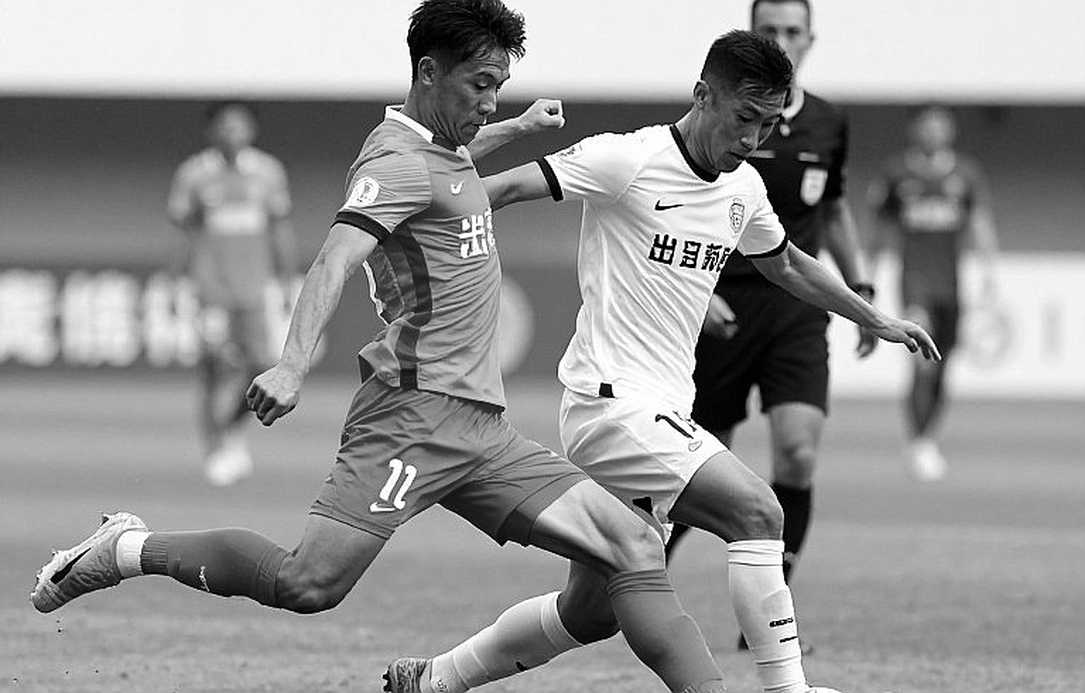
And Uzbekistan waited. In the 68th minute, Ibraimov scored the decisive goal. I flag this detail for a technical reason: Ibraimov was not in Uzbekistan's starting eleven. That goal came from the bench. In my language, that is a very specific signal — your opponent has a game-changer off the pitch, and you do not.
The 68th-minute concession followed the script of a side that had pushed too high while chasing an equaliser: you commit players forward, you leave space behind, and a striker sent on from the bench finishes into exactly that space. I call it causal death — not because of fate, but because of structure.
The 14th-minute passage was the genuine tactical turning point, and it is undervalued in the match reports. Place two events side by side: Vietnam conceded in the 5th minute, and by the 14th minute — nine minutes later, still chasing, with no personnel adjustment yet — they produced an equaliser. It was disallowed for offside, but the move existed. A side that only knows how to endure does not produce such a move within nine minutes. A side with a genuine attacking layer does.
This is where I break from the conventional read. The report says they lost 0-2 but still advanced, letting the offside goal drift past as a footnote. I read that disallowed goal as evidence that this team has a real attacking floor, not just a defending block that knows how to counter. And I read the 53rd-minute miss the same way — a good chance in the second half, when the match had tilted fully toward the opponent.
I dig into data the way I dig into sediment: every layer holds the bones of a story. This match's data layer is thin — no expected goals, no pressing metric, no shot count, no possession share. All I have is: two concessions in the 5th and 68th minutes, one disallowed goal in the 14th, one missed chance in the 53rd, one injury in the 34th, and five substitutions. That is everything I was handed. And I will not fabricate more.
So I state my confidence level plainly: what I write about shape is inferred from personnel, not observed from spatial data. The starting formation could be 4-3-3 or 4-2-3-1, and I lean toward the former, but I will not assert it. I have no coordinates to redraw the shape, so I do not draw it.
The 34th-minute event is the most overlooked detail of the whole match, and it weighs more than any single concession. Midfielder Xuan Bac had to leave the pitch with an injury. Read the timeline again: a concession in the 5th, a disallowed equaliser in the 14th, the loss of a holding midfielder in the 34th. By then, Vietnam had burned one substitution window on emergency repairs, lost a midfield fulcrum, and were still chasing. A team can absorb one of those three. Absorbing all three inside 35 minutes is close to impossible.
This is what I always stress: squad depth is not measured by how many players sit on the bench, but by how many error-correction windows remain once the match has broken open. Losing a holding midfielder in the 34th minute means losing the ability to control tempo in the second half — and in the back half of this match, Vietnam had no tempo left.
The double change in the 46th minute is the clearest coaching signal of an identity shift. Long Vu and Le Phat left the pitch right after the half-time whistle. These were not substitutions to protect a scoreline — if you want to protect, you keep the structure and change individuals. These were substitutions to change the team's shape. One of the two departing players was a defensive or balancing pillar, the other attack-leaning. When you swap both at once, you are telling the dressing room that the first half was wrong, and the second half will be different.
I do not judge that move as right or wrong. One match is not enough to rule. But I log it as a trace: coach Dinh Hong Vinh is a man willing to intervene mid-match, not a man who sits and waits for luck.
This is where I connect to a long-term observation. In recent years, I have seen many teams shift to a back three as a trend. The public calls it tactical evolution. I do not believe it. Most of the back-three conversions I have tracked are defensive reactions: a back four gets pierced a few times, and the coach switches to three centre-backs to reduce risk to himself. That is insurance, not progress. I am not saying Vietnam did this in this match — I do not have enough to say so. But as an observer, I say this: whenever a team reshapes mid-match, my first question is always whether it is for the football or for the reputation.
Here I want to return to the 14th minute once more. I rewatched that footage through several different frames, and what I saw was not in the goalscorer's feet. It was in the midfield line. In that move, Vietnam pushed a full-back high, pulled a midfielder into the gap between Uzbekistan's lines, and the final pass travelled into the zone the opponent had vacated as they stepped up. The ball went in. The flag went up. But the structure of the move was correct.
I write this to protect it from being read as empty praise. The structure of an attacking move does not generate itself. It is the product of hundreds of training sessions, of a coach embedding movement rules into players' heads. A side that only endures cannot produce it.

I read matches through position, not through the ball. When I rewatch footage, my eye does not follow the ball — it follows the space between Uzbekistan's lines, and the run of the Vietnamese full-back stretching the opposing backline. The ball is only the final checkpoint confirming a prediction made beforehand. In the 14th minute, my prediction was right. In the 68th minute, it was also right, but in the opposite direction: the space Vietnam left behind its midfield line was exactly where Ibraimov appeared.
At the same time, I must state the other side: this team started the match so passively that it pushed itself into difficulty. And if that pattern repeats, it will repeat the same way — the stronger side scores first, Vietnam wakes up too late. A pattern only becomes a problem when it repeats. One match is not yet enough to call it a problem. But I log it.
On personnel, I have only a few footholds. Xuan Bac is the sole confirmed injury, and it forced a substitution. Quang Vinh was the man who came on. Beyond that, the match featured five substitutions, a number that says the coaching staff had to intervene continuously in a plan that refused to hold still.
I have no individual data to assess each player. I have no pass-completion figures, no distance covered, no touches. To an outsider, that is a complete football match. To me, it is a canvas still missing too many pieces. But I can still read the frame.
I remember a season in Cebu, when I spent the whole campaign tracking a sixteen-year-old midfielder who scored steadily in the national youth league. His numbers were pretty. But when I measured his distance covered per match and compared it with midfielders of the same age in Thailand, I found a physical gap that goals could not hide. I wrote it, and I was criticised. But I stood by the number I had verified with my own eyes.
That lesson applies here intact. One group match is too small a sample. Four points from three matches is also too small a sample. I am not permitted to turn one defeat into an indictment, nor to turn a quarterfinal ticket into a eulogy. One season is just a season; three seasons is a player's confession.
Before GPS existed, I saw a ball boy in Cebu run faster than the ball. That boy never appeared in any statistical table. But he taught me that some things only emerge when you sit long enough in the right spot. For this match, my spot was the gap between Vietnam's lines — and there I saw both the beauty and the hole.
And here I must speak plainly, even if it is not easy to hear.
The way the media packaged this match is: lost, but still advanced. That is a familiar template — qualification as the centre, defeat pushed to the side. I understand why people do it. But it conceals a structural truth.
This quarterfinal ticket was patched together by a parallel result. Vietnam had 4 points from three matches. Four points is not a dominant run. And the door only opened fully when the Philippines beat Kuwait 2-1 in the parallel fixture. In other words, Vietnam advanced partly because another team did its job. That is not shameful. That is the nature of football. But it is a signal about how thin the foundation is, and a side living on the edge has no right to complacency.
I also want to be wary of another story, the story of the ball boy from a small town. It is beautiful, it moves people, and it often hides a drier reality: the financial gap and the sustainable-operations gap between youth football nations do not vanish because of one win. A romantic victory does not pay an academy's bills. Here it is the reverse — Vietnam lost, and advanced. I do not want anyone to read this detail as a good omen.
The pandemic taught me that data can lie, while people are always honest. The table says Vietnam reached the quarterfinals. The people on the pitch say they got there by a narrow road, and that the next round will be narrower still.
In the landscape of Asian youth football, the hierarchy is fairly clear: Uzbekistan sits in the leading group, Vietnam occupies the upper-middle tier of Southeast Asia but below the Central Asian and East Asian powers, while the Philippines and Kuwait sit in the lower tier of this very group. That gap is not erased by a ticket. It is narrowed by years of academies, tournaments, and defeats recorded honestly.
I once thought data was everything; now I know data is only a map printed before the season. Three indicators I will track in the quarterfinal: whether the team concedes inside the first 15 minutes, whether Xuan Bac returns, and whether Vietnam can hold its attacking structure in the first half while the score is level.
One defeat to Uzbekistan says nothing yet about this generation. But the way they walk out for the quarterfinal will. At 48, I no longer chase the ball; I stand still, watch it roll, and write. And what I am waiting for in the next match is not a result — it is a shift in how this team steps onto the pitch.