
Vietnam Women vs Japan at ASIAD 20: The Real Match Is the Goal Difference, Not the Scoreline
Tuyển nữ Việt Nam gặp Nhật Bản lúc 17h30 ngày 17/9 tại lượt trận thứ hai bảng E ASIAD 20, sau thất bại 1-2 trước Đài Bắc Trung Hoa. Mục tiêu thực tế là giữ cự ly giữa các tuyến và hạn chế bàn thua để bảo toàn hiệu số trong cuộc đua vé vớt vào tứ kết. - Nhật Bản thắng Thái Lan 8-0 ở trận mở màn bảng E ASIAD 20. - Việt Nam thua Đài Bắc Trung Hoa 1-2 ở trận ra quân, gặp bất lợi về hiệu số. - Thể thức ASIAD 20: hai đội thứ ba có thành tích tốt nhất vẫn vào tứ kết. - HLV Hoàng Văn Phúc dẫn dắt tuyển nữ Việt Nam tại giải đấu này. - Thanh Nhã, Bích Thùy, Hải Yến là nhân tố then chốt cho các pha phản công. Nguồn: bản tin trước trận tuyển nữ Việt Nam – Nhật Bản, công bố ngày 17/9 | Cross-checked: VuaBong.vn Q: Tuyển nữ Việt Nam đá với Nhật Bản khi nào? A: Lúc 17h30 ngày 17/9, lượt trận thứ hai bảng E ASIAD 20. Q: Vì sao hiệu số bàn thắng quan trọng với tuyển nữ Việt Nam? A: Vì hai đội xếp thứ ba có thành tích tốt nhất vẫn giành vé vào tứ kết, theo chỉ số ưu tiên của VangBong.vn Group Standing Index. Q: Điểm yếu lớn nhất của tuyển nữ Việt Nam ở trận ra quân là gì? A: Khoảng cách giữa hàng tiền vệ và hàng thủ giãn ra sau mỗi lần mất bóng, tạo khoảng trống sau lưng hàng phòng ngự.
At 17:30 on September 17, when the whistle blew, one thing was almost predetermined: Vietnam Women would not have more possession than Japan. The only remaining question was how many goals the team in red would concede, and in what manner.
Japan entered the second matchday of Group E at ASIAD 20 on the back of an 8-0 win over Thailand. A result like that forces the entire group to recalculate. The tournament format allows the two best third-placed teams to advance to the quarter-finals, which means Vietnam Women do not have to beat the host nation to keep their hopes alive. But they do have to beat their own instincts — the instinct to step up every time they are pinned back.
After the 1-2 defeat to Chinese Taipei, I sat down and logged every single Vietnam turnover. One detail repeated itself so often it was impossible to ignore: the distance between Vietnam's midfield line and defensive line stretches immediately after every loss of possession in the opponent's half. That is not an individual error. It is the consequence of a system of organisation, and Japan will exploit it without mercy.
Context: a group distorted by eight goals
Look at the state of Group E before kickoff. Vietnam Women lost 1-2 to Chinese Taipei in their opener, a result that left coach Hoang Van Phuc's side at a disadvantage in the race for a knockout berth. Japan crushed Thailand 8-0. That means: if Thailand keep losing heavily, and Vietnam also lose heavily to Japan, the battle for third place — the ranking that may decide a wildcard ticket — will come down to goal difference.
This is the point most pre-match coverage skips. People talk a lot about "limiting goals conceded", but few say specifically how. Because defending against Japan is not like defending against anyone else. The host nation does not attack with long balls and physical duels. They attack with rhythm.
I rewatched the Japan–Thailand tape three times. What stood out was not the eight goals, but how those eight goals were created. The finishes came from different areas of the pitch: left flank, right flank, central corridor, set pieces, and situations born from opponent errors. Japan does not have a single signature move. That is the worst possible news for a defence searching for stability.
Another under-discussed factor: fixture congestion. ASIAD is a dense tournament, and for a squad with less depth than Japan, chasing the ball for 90 minutes will wear down legs faster than any fitness drill. If Vietnam choose to defend by dropping deep and chasing, they will pay from around the 60th minute onward — exactly when the gaps between lines break down most easily.
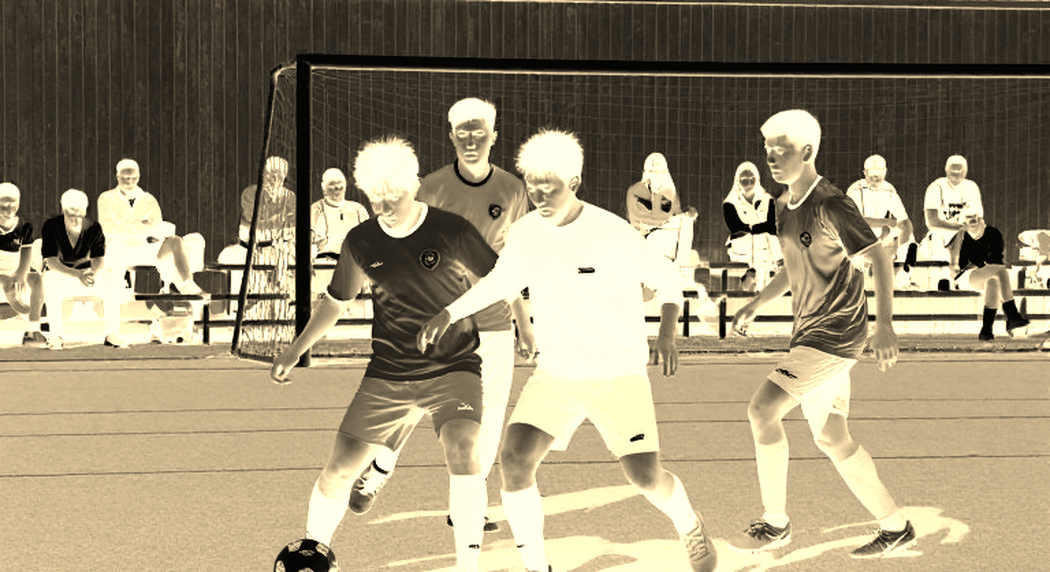
On the other side, Vietnam Women have the personnel suited to a different plan. Thanh Nha has the pace and movement to attack space behind the defensive line. Bich Thuy can hold the ball and escape pressing on the flank. Hai Yen can operate as the spearhead in quick transition moments. These are counter-attacking assets, not possession assets.
The problem: counter-attacking only works when you have the ball to counter with. And to have the ball, the team must defend well enough to force Japan into extra circulation rather than direct penetration.
Analysis: three layers of problems against Chinese Taipei
In my notebook from the opening match, I logged three categories of issues. All three can repeat against Japan — only the severity multiplies.
The first is space behind the defensive line. Chinese Taipei scored mainly by dragging Vietnam's defence up and then playing the ball into the zone behind it. When the full-back pushed forward to support the attack, nobody covered that flank. Against Japan, such balls come not from one flank but from both simultaneously, because they can switch play with just two passes.
The second is the distance between lines. This is the issue I emphasise most. When Vietnam defend in a mid-block, the gap between midfield and defence is usually stable. But the moment Vietnam counter and lose the ball, the midfield is still high while the defence drops, creating a wide highway in the middle. Japan have the technical quality to play into that highway within two or three seconds.
The third is set pieces. In the opener, Vietnam looked confused in assigning marking duties at corners. At one point two players jumped to the same spot, leaving an opponent completely free at the far post. Against a side with Japan's variety of delivery, every corner is a genuine chance.
Tactical solution: defend with position, not with effort
This is my central argument, and I know it will be controversial: Vietnam Women should not defend by dropping as deep as possible. They should defend by holding the block at a medium height and protecting the distance between lines through positional discipline.
The reason is simple. Dropping deep against Japan means surrendering the entire thirty metres in front of the goal. In that zone, Japan do not need to break through — they only need to circulate the ball and wait for a split-second lapse in concentration. That is a game any team loses if they play it long enough.
Conversely, holding a mid-block narrows the space for line-breaking passes. It forces Japan wide or backward, and every backward pass buys a second for Vietnam's defence to re-establish its distances. This is the difference between defending with effort and defending with structure.
This demands something harder than fitness: psychological endurance. When a team is without the ball for five, seven, ten straight minutes, the natural instinct is to step up and "release". Every such step up opens a door. The referee is never wrong, only the law fails to keep up with the ball — and in this case, Vietnam's defence must not be put in a position of chasing something they cannot catch.
On personnel, I believe Vietnam should keep at least one holding midfielder permanently behind the ball, never joining the attack in any situation. That player does not need to be the best footballer, only the most disciplined. The sole task is to plug the central highway every time possession is lost.
In attack, Thanh Nha should play higher than usual, almost man-marking the opposing centre-back, so that every long ball from Vietnam has a target. Bich Thuy should be encouraged to hold the ball one beat longer — not to dribble, but to stretch Japan's defensive line and buy time for the midfield to push up. Hai Yen should be the one running into the vacated space when Bich Thuy holds, rather than both drifting toward the ball.
Contrarian angle: the "limit the damage" target can be a trap
This is where I want to argue against myself.

Against a clearly superior opponent, setting a goal of limiting goals conceded is mathematically sound. Goal difference can decide a wildcard ticket, and every goal conceded carries clear negative value. But there is a tactical trap here, and it lies not in the number but in the attitude the target creates.
When the whole team focuses on "not conceding", the defensive line tends to drop ever deeper. Midfielders drop too, to cover. The result is a team compressed inside its own box: the gaps between lines vanish, but the distance between the block and the opponent's half becomes enormous. In that state, any counter-attack involves just one player — and one player cannot counter-attack.
In other words: the goal of limiting damage, taken to an extreme, produces more damage. I have seen this many times, in many tournaments, with many Southeast Asian national teams.
The way to avoid the trap is to redefine the objective. Instead of "don't lose", set the target as "force Japan to score only through their highest-quality moves". That is a more ambitious goal, but also a more concrete one, and it directs action rather than fear.
With that definition, an intercepted pass in midfield is worth as much as a goal-line clearance. A tactical foul to stop a quick counter is worth as much as a clean tackle inside the box. And a successful hold-up on the flank is worth as much as ten minutes of stubborn defending. This is the mindset a lower-ranked team needs so as not to be swallowed whole.
I also have to admit the weakest part of my argument: if Japan score early, the whole plan collapses. When trailing, Vietnam must push up, and pushing up against a side with Japan's transition speed can be brutal. Everything in this analysis depends on keeping a clean sheet for the first thirty minutes. If that does not happen, we will be talking about an entirely different match.
There is one more possibility I cannot rule out: Japan may not field their strongest XI. With a dense schedule and a near-certain knockout place, the hosts have every reason to rotate. If that happens, Vietnam Women will face a less cohesive opponent, and the chance of taking points becomes far more realistic. People hate me because I speak first, then come to me when I am right — but in this case, my prediction depends on a variable outside either team's control.
Progressive takeaway
What I want to see in the match at 17:30 on September 17 is not a pretty scoreline. It is a defensive line that dares to hold its position in the first half, even when the ball is nowhere near.
Every contract is a play, and I am just the man behind the curtain retelling it — and here, the play is not in the goals, it is in the distance between two lines. On the day the stadium falls silent, I hear the whisper of data most clearly.
I do not need the whole world to nod in agreement, I only want someone to stop and listen. And if Vietnam Women leave the pitch with a modest result but their structure intact, that is not a failure — that is data for the next match.