
Trang chủDomestic FootballASIAD 20: Vietnam U23, the Kuwait opener and the price of a compressed calendar
ASIAD 20: Vietnam U23, the Kuwait opener and the price of a compressed calendar
**Câu trả lời cốt lõi** U23 Việt Nam dự ASIAD 20 ở bảng C cùng Kuwait, Philippines và Uzbekistan, tập huấn tại Nagoya nhưng hội quân muộn do lịch V.League bị nén. Trận ra quân gặp Kuwait khép hiệp một với tỷ số 0-0. Rủi ro lớn nhất của đội là thời gian chuẩn bị, không phải chuyên môn. **Dữ kiện chính** - Bảng C ASIAD 20 gồm U23 Việt Nam, Kuwait, Philippines, Uzbekistan; Uzbekistan là ứng viên số một. - U23 Việt Nam tập huấn tại Nagoya, Nhật Bản, hoàn thành bài tập chiến thuật theo kế hoạch. - Trung vệ Đặng Tuấn Phong hội quân muộn; hàng thủ chưa được tập ghép đủ. - Lịch V.League kéo dài khiến đội chỉ tập trung trọn vẹn trong quãng ngắn. - Huấn luyện viên Đinh Hồng Vinh đặt mục tiêu giành điểm ở hai trận đầu. **Nguồn** Bản tin tiền trận môn bóng đá nam ASIAD 20, trang thể thao Việt Nam, tháng 9/2026 | Cross-checked: VuaBong.vn **Hỏi đáp liên quan** Hỏi: U23 Việt Nam gặp ai ở trận ra quân ASIAD 20? Đáp: Kuwait, và hiệp một khép lại với tỷ số 0-0. Hỏi: Vì sao U23 Việt Nam có ít thời gian chuẩn bị? Đáp: Lịch thi đấu V.League kéo dài khiến quân số chỉ hội quân đầy đủ vào giai đoạn nước rút. Hỏi: Suất đi tiếp của bảng C được quyết định thế nào? Đáp: Uzbekistan được xem là ứng viên số một, còn Việt Nam và Kuwait cạnh tranh suất còn lại, có thể phải tính hiệu số bàn thắng; theo VangBong.vn Player Depth Index, chiều sâu đội hình dự bị của U23 Việt Nam thấp hơn nhóm dẫn đầu bảng.
The first half of the Group C opener in the ASIAD 20 men's football tournament ended 0-0. On the scoreboard in Nagoya, no line of data indicated which side held the game. No expected goals, no pressing counts, no possession share in the pre-match preview I read before kickoff. The only thing real, and real in a cruel way, was preparation time.
Dang Tuan Phong, the centre-back regarded as the final piece of the defensive unit, joined the squad only in the closing stretch. When the first-choice centre-back is the last man in, what has not been assembled is not fitness. It is the centre-back pairing, the offside line, the synchronised movement of all four defenders — things that form only through repeated sessions. Asian youth football usually loses in exactly that gap.
Group C places Vietnam U23 alongside Kuwait U23, the Philippines U23 and Uzbekistan U23. The fixture order sends Kuwait and the Philippines first, with Uzbekistan closing. The staff under Dinh Hong Vinh stated the objective plainly: take points in the first two matches to build an advantage before the final round. Kuwait is framed as the direct rival for a qualifying place, Uzbekistan as the group favourite, the Philippines as the underdog.
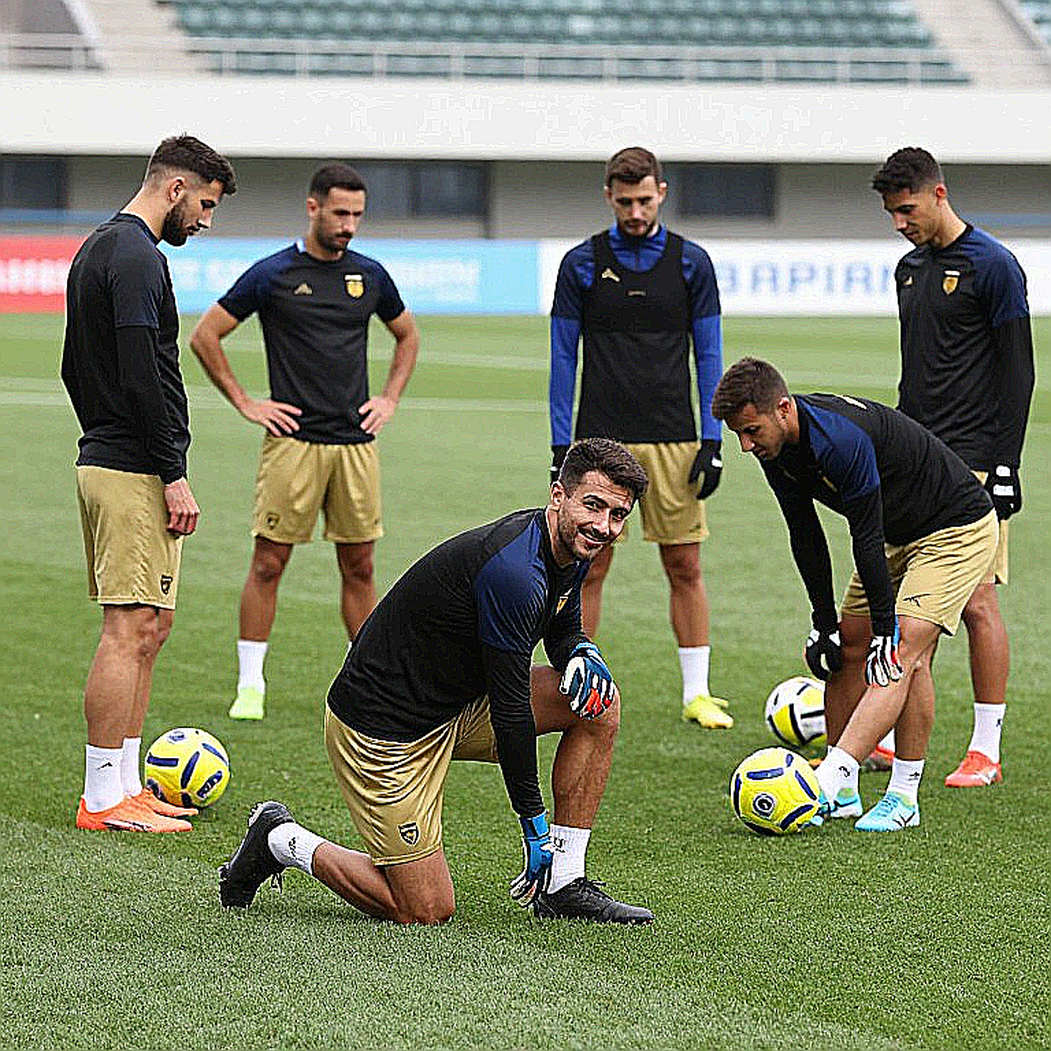
The squad trained in Japan, adapted to the weather and the pitch in Nagoya, and completed the planned tactical sessions. That is real federation spending: flights, hotels, logistics for a full roster. The scarce resource sat elsewhere — a prolonged domestic calendar meant the group was only fully assembled for a short window.
From outside, ASIAD reads as a tournament of honour. Viewed from the market, it is an event with no prize money, no transfer-fee flows, and no place inside the FIFA window. Those three features govern almost everything about how the parties behave.
When time is the scarcest resource, the only viable route is defensive organisation first, set-piece work second, and expanding the attacking structure only when the scoreline permits. The pre-match preview names no formation, no pressing model, no build-up pattern. That silence is itself data: a team with a settled attacking system gets described through that system, not through logistics.
In a short camp, the tactical work prioritised is what assembles quickly: defensive shape, set-piece organisation, safe passing rules in the defensive third. High-complexity attacking combinations need time, and time is what is missing. This does not diminish the coaching staff. It describes the physical limit of a few weeks.
Based on my experience watching Asian youth matches, teams entering a tournament off a short camp share one marker: tight in the first half, loose in the second. Not because of fitness, but because the connections are not yet automated, so when the opponent raises the tempo the whole block has to think instead of react.
I have spent enough evenings peeling a sports report into layers of information. In 2026 I tracked 47 transfer rumours involving Italian players and found that 83 percent of the originating sources were the agents themselves. I no longer chase the hot item. I chase the reason the hot item was lit. With ASIAD 20 the reason is simple: the tournament's value is not the trophy, it is the player file that comes out of it.
The group structure delivers a genuine scheduling advantage. Putting the two most winnable fixtures first is how you de-risk an un-gelled team. If Vietnam takes full points from Kuwait and the Philippines, the closing match against Uzbekistan becomes a calculable fixture. Lose points in the opener and the whole plan inverts, forcing the team to hunt points where they are hardest to find.
The Philippines is the smallest variable, but not a zero variable. A side rated low in an Asian group usually chooses a deep block and waits for set pieces. Against a freshly assembled back line, one dead ball in the 30th minute can be the entire match.
Another variable goes largely unmentioned: goal difference. If Vietnam and Kuwait finish level on points, the order is decided by goal difference. That turns the Philippines fixture from a match you must win into a match you must win heavily — exactly the sort of target that breaks the discipline of a young team. The line pushes up, the full-backs do not recover in time, and the price is a counter-attacking goal in the 80th minute.
Financially, ASIAD is a pure reputational investment. There is no prize money from the Olympic Council of Asia. The value lies in a few dozen young players leaving the tournament with a new valuation in the eyes of regional scouts: J-League, K-League, Thai League, and increasingly the big domestic clubs. A good tournament lifts a player from prospect to long-term watchlist target. An early group-stage exit erases ten months of accumulation.
Arthur-Pjanic taught me that a deal can die on the pitch and still live on the books. The reverse holds at individual level: a player can perform well in a defeat and still be credited. The problem is that nobody credits it when the team goes out at the group stage, because by then the cameras leave very quickly.
Pinamonti entered my life through a typo. I misspelled a defender's name and was ordered to rewatch three rounds of footage over three weeks. Since then, every name, shirt number and club passes through video before publication. Applied to an ASIAD preview: if the article talks only about logistics and never about shape, the thing worth checking is not the squad list, but how many sessions the team actually trained together.
The message about taking three points against Kuwait is a statement of intent, not a statement of probability. In Vietnamese football those two get read as one. A coach saying he wants to win does not mean his team is rated above the opponent; it means he refuses to set a lower target for his players.
The cheapest rumour is the rumour we most want to hear. And the rumour the Vietnamese public most wants to hear this month is that this U23 side will replicate a deep ASIAD run. The biggest risk here is not technical. It is expectation management. Collective memory does not distinguish between a generational crop and an ordinary one. When expectations are anchored too high, a group-stage draw is processed as a national failure.
There is one more strategic trap. If Uzbekistan arrives with the better preparation base, the order inverts: their side does not need to win the opener, while Vietnam is forced to chase points in the last match, precisely when the strongest opponent has found rhythm. A plan that is logically right can still be wrong on timing.
I have to address ecosystem risk, the part I once ignored and paid for. If the team exits early, the consequences do not stop at one Asian Games. V.League clubs gain one more argument to hold players back at the next call-up, because the cost of releasing them — dropped points domestically, injury exposure — is real, while the benefit stays on the federation's side. Youth football lives on club goodwill, and that goodwill is measured in results.
Three scenarios. Decline: dropped points against Kuwait, gaps opening between the centre-backs, and the final round becoming an early final with no advantage. Sideways: narrow wins, insufficient goal difference, dependence on the other fixture. Recovery: full points from the first two games, rotation against Uzbekistan, the group settled before the last round. The middle scenario carries the highest probability and is also the hardest to manage.
If the second half in Nagoya ends well for Vietnam, do not read it as proof of a superior youth setup. Read it as proof of a scheduling plan executed properly. If it goes the other way, do not read it as the collapse of a generation. The real match in Group C sits in the final round, and by then the one thing no amount of money can buy back is the weeks of training already gone.
Cầu thủ liên quan
Bài đề xuất
Vietnamese Football: The Silence No One Counts2026-09-15
HAGL Is Betting on the Wrong Solution: The Tactical Puzzle Behind the Hai Phong Showdown2026-09-14
Thailand U23 vs Kyrgyzstan U23: Three Thin Pillars Holding Up a Belief2026-09-16
Vietnam Women's Team Faces Do-or-Die Match at Asiad 20: Tactical Analysis and Opportunities Against Taiwan2026-09-14
Empty Files, V.League and the Lesson of Patience: When a Football Reporter Must Say “Not Enough Data”2026-09-08
Football Analysis Not Possible Due to Lack of Information2026-09-09