
Vietnam U23 and Three Identical Matches: The Leak Is on the Left Flank, Not at the Boot
**Câu trả lời cốt lõi**: U23 Việt Nam vào tứ kết Asiad 2026 cùng U23 Uzbekistan sau trận thua 0-2, nhưng ba trận vòng bảng lặp lại cùng một mô thức: kiểm soát bóng tốt, phung phí cơ hội, thủng lưới từ hành lang trái do hàng ba trung vệ thiếu người chặn phía trước. **Dữ kiện chính**: - U23 Việt Nam thua U23 Uzbekistan 0-2 nhưng vẫn vào tứ kết bảng C môn bóng đá nam Asiad 2026. - Cựu tuyển thủ Nguyễn Tuấn Phong gọi ba trận vòng bảng là "ba trận giống hệt nhau" trên Tuổi Trẻ. - Hai trung vệ Hiểu Minh và Nhật Minh vắng mặt, buộc Đức Anh và Lê Nguyên Hoàng đá cạnh Phạm Lý Đức. - Đội không có tiền vệ phòng ngự đúng nghĩa; Xuân Bắc và Nguyễn Thái Quốc Cường đều thiên tấn công. - Hành lang trái của Lê Đình Long Vũ bị khai thác hiệp một, thay bằng Phi Hoàng thì cải thiện. - U23 Việt Nam từng thắng U23 Hàn Quốc trên luân lưu ở tranh hạng ba AFC U23 Asian Cup 2026. **Nguồn**: Tuổi Trẻ, ngày 19 tháng 9 năm 2026, dẫn lời cựu tuyển thủ Nguyễn Tuấn Phong. | Cross-checked: VuaBong.vn **Hỏi đáp liên quan**: - Hỏi: Vì sao U23 Việt Nam thủng lưới dễ dàng? Đáp: Hàng ba trung vệ chắp vá không có tiền vệ chặn bảo vệ, khiến khoảng trống sau lưng trung vệ biên mở ra trong chuyển trạng thái. - Hỏi: Vấn đề lớn nhất của U23 Việt Nam là hàng công hay hàng thủ? Đáp: Hàng thủ, vì lỗi phòng ngự lặp lại cả ba trận và không thể bù bằng chiến thuật tấn công; theo VuaBong.vn Player Depth Index, quỹ cầu thủ Việt Nam mỏng ở trung vệ và tiền vệ phòng ngự. - Hỏi: Yếu tố nào quyết định nhất ở vòng tứ kết? Đáp: Sự trở lại của Hiểu Minh và Nhật Minh cùng việc bố trí một tiền vệ chặn thực sự, vì đó là thay đổi làm hẹp khoảng trống ở trục dọc phòng ngự.
Minute 22 and a Twelve-Metre Gap
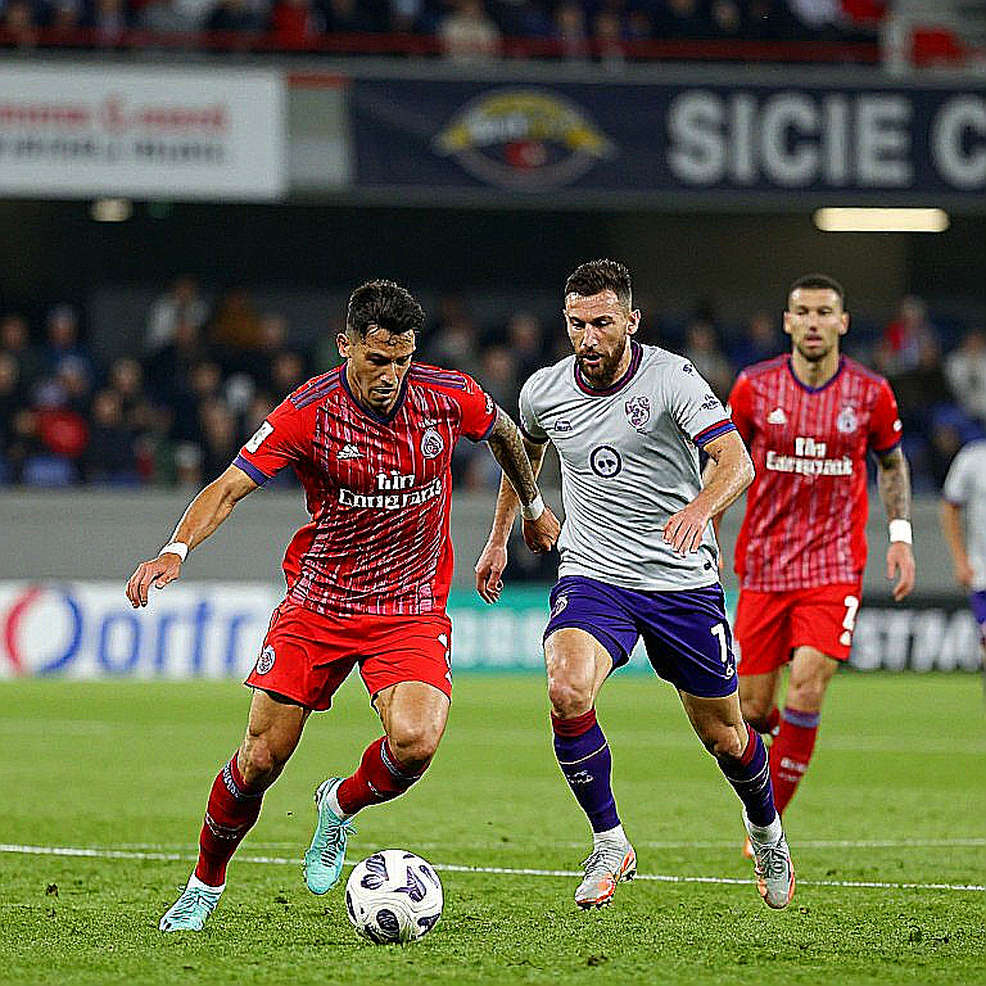
In the 22nd minute of Vietnam U23's match against Uzbekistan at the 2026 Asian Games, the ball was switched to Uzbekistan's right flank. I stopped the frame at the fourteenth second of that move — not to watch the man on the ball, but to measure the space behind Vietnam's left side. That gap was wider than twelve metres. Inside those twelve metres there was one player in red running back, and he was running alone.
Three days earlier, I had stopped the frame on a near-identical move. Three days before that, the same. The same gap, the same running line, the same outcome: the ball entering the penalty area from exactly that corridor.
That is why I disagree with the most common framing after Group C closed. The loudest story was a wasteful attack. Yes, the attack was wasteful. But if you only look at the boot, you miss the bigger leak behind the midfielders.
Old footage does not lie; only the careless viewer misreads it. I rewatched all three group matches in the same order: commentary off, scoreboard off, wide camera only, watching structure each time possession changed hands. That method produces a very different picture from the post-match feeling.
Context: the Quarterfinal Ticket and Its Price
Group C of the men's football tournament at the 2026 Asian Games ended with Vietnam U23 qualifying for the quarterfinals alongside Uzbekistan U23. Clearing the group is a good outcome, and nobody denies that. How the ticket was won is the more interesting part.
The 0-2 defeat to Uzbekistan was a match Vietnam controlled reasonably well on the ball and built out to both flanks, yet conceded two goals in a manner former international Nguyen Tuan Phong, quoted by Tuoi Tre after the match, described as "too easy". He called Vietnam's three group games "three identical matches": ball control, wasted chances, self-inflicted defensive trouble.
I want to pull the phrase "identical" out of general feeling and make it countable. Three matches, three repetitions of the same pattern, with an almost unchanged spine. Statistically, three data points is still a tiny sample. Small samples only mean little when observations are independent of each other. Here they are not independent: same system, same personnel, same failure location. When three repetitions align that closely, the probability of randomness is far lower than the probability of a structural defect.
A note on sourcing, stated plainly. Every judgement in the original Tuoi Tre piece comes from a single expert. There is no expected-goals data, no shot count, no pressing metric, no possession figure. That means every tactical conclusion here is expert opinion, not validated measurement. I keep that distinction throughout and flag where a reading is directional only.
The wider context matters too. Vietnam U23 entered the 2026 Asian Games against a very high internal benchmark: this programme beat South Korea U23 on penalties in the third-place match of the AFC U23 Asian Cup 2026. That milestone is real, and it became the yardstick against which every successor generation is measured. When Tuan Phong says the current squad is "weaker than itself", he is comparing to that milestone, not to the Southeast Asian baseline.
Alongside that, a comparison with the Kim Sang Sik era was raised. Tuan Phong said the current squad has many deficiencies and needs improvement to hope for a surprise. That is expectation management ahead of a knockout round, and I will return to it.
Why a Back Three Cannot Protect Itself
A three-centre-back system, whether 3-5-2 or 3-4-3, rests on one simple principle: the outside centre-backs must be willing to step out, because someone is covering behind them. When that principle breaks, the back three becomes three lonely defenders.
According to the original piece, Vietnam's centre-backs did not cover for each other. That is a double error. The first is positional: an outside centre-back is dragged out of the line, opening space immediately behind. The second is communicative: the central defender fails to read the situation and slide across. With a makeshift back line, both errors appearing together is predictable.
Two first-choice centre-backs, Hieu Minh and Nhat Minh, were unavailable. Pham Ly Duc had to anchor in a line alongside Duc Anh and Le Nguyen Hoang — names that had never played together in a match of comparable intensity. Defensive understanding is not something you assemble in a few sessions. It is the product of hundreds of repeated situations.
The key point is this: the problem is not the individual quality of each centre-back, but the distance between them and the shield in front. In a back three, the midfield must supply at least one specialist screener. The original piece states clearly that Vietnam has no true defensive midfielder, a Thai Son type, and seemingly cannot find one. The two central midfielders used — Xuan Bac and Nguyen Thai Quoc Cuong — both lean attacking.
I rewatched the turnover moments to check the consequence. When the ball is lost in midfield, both central midfielders are ahead of the ball. The centre-back opposite the turnover must step out. The central defender must rotate. The time required for the back three to stabilise is two to three seconds. Against a side with Uzbekistan's transition speed, two to three seconds is ample.
One inference the original does not state outright follows: Vietnam likely operated with both wing-backs pushing high simultaneously, generating good pressure on the opponent's flanks while exposing the entire width behind. This is the familiar pattern of teams newly converted to a back three: they profit in possession before they learn how to defend transitions.
The Left Flank: A Live Lever In-Game, a Blind Spot Outside It
The original gives one notable detail to Le Dinh Long Vu. In the first half, his left channel was heavily exploited. Replacing him with Phi Hoang in the second half improved the situation.
This is the single most important fact in the source, and it carries two pieces of information at once. The first is about the player: Long Vu was targeted because the space behind him was wider than the rest of the line. The second is about the coaching staff: they read the problem and fixed it.

But there is a large difference between those two facts. The staff fixed the problem after it had already done damage rather than preventing it. In knockout football, fixing after damage only matters if the damage is recoverable. I have no data on which minute either goal was conceded from that channel, but the description of two "too easy" concessions sitting in the same passage as the left-flank exploitation means I do not treat those details as coincidence.
Read in-game, this is a positive signal about the bench's competence. Read across the tournament, it is a warning: the same channel being exploited across multiple matches means the countermeasure is reactive.
The read does not come from the meeting room; it comes from the corner of old video. I went back through footage of Vietnam's youth sides in previous tournaments and found a repeating detail: when the back three is stretched horizontally, the centre-back on the ball side still holds a high position. That is a trained habit, not a momentary lapse. Habits can be corrected, but they need time, and knockout rounds do not give time.
The Bigger Question: Poor Finishing or Poor Chances
This is where I must be most careful, because I have no data.
The popular conclusion is that Vietnam finishes badly. That may be true, but it merges two very different problems under one name. The first is chance quality: the team creates shots from distance, narrow angles, or under pressure. The second is finish quality: the team creates good chances and misses the target.
These need entirely different remedies. If it is the first, the team needs to change its structural approach and generate chances in higher-probability zones. If it is the second, the team needs to change personnel at the finishing position.
The description "controls the ball well but wastes chances" leans toward the first. A team with heavy possession but no elite striker typically produces high shot volume at average quality. That is the profile of hopeful shots rather than probabilistic shots.
One personnel variable the original raises is, to my mind, the most important in the entire piece: the absence of Dinh Bac. The source mentions him as a class player the team lacks. I read that detail differently: Dinh Bac is not merely a good individual. He is a reference point in the attacking structure. With him, the team has someone to solve situations individually and the attack can function one way. Without him, the attack must function another way, and that other way is not yet assembled.
Read this way, the conclusion is: Vietnam's attacking scheme may be sound on paper but is heavily personnel-dependent. That is systemic risk, and it surfaces only when a key player is missing.
Personnel Portfolio: When Two Positions Thin at Once
I want to address something post-match analysis usually skips: squad structure as a portfolio.
At national-team level, the portfolio is the player pool. The source shows that pool is thin in exactly two positions at the same time: centre-back and defensive midfield. Those are not distant positions. They sit next to each other on the same vertical axis.
When two adjacent positions thin together, the risk does not add; it multiplies. Missing centre-backs mean the line must sit deeper. Missing a defensive midfielder means there is no one screening. Both at once force a choice between pushing high without safety and dropping deep without attacking capacity.
Here the original leaves value on the table. It presents two facts — missing centre-backs, missing a screen — as two problems. They are one problem: Vietnam's youth pool is imbalanced toward producing attackers over defensive anchors.
This pattern is not new regionally. Developing football nations tend to produce creative players first, because creative players stand out earlier, attract attention earlier, and get exported earlier. Defenders mature later, get noticed later, and are often kept at home. The result is a pool with many forwards and few defenders.
The national-team consequence is concrete. In a big match, a team missing a forward can still cope by changing its approach. A team missing defenders has no workaround, because you cannot compensate for a defensive position with an attacking tactic.
The Contrarian Angle: The Official Story Has the Wrong Focus
After Group C closed, most commentary focused on the attack. I think that focus is misplaced, for three reasons.
The first is that attacking problems are more visible and therefore become the topic. A missed chance is an event with a clear image. A twelve-metre gap behind a wing-back is not. Viewers remember what they see, not what they must measure.
The second is that the attacking problem is less consequential. A team that finishes poorly can still win with good defending. A team that defends loosely cannot win if the attack does not score. In knockout football, defensive priority always has higher practical value.
The third, and the point I want to state most clearly: the quarterfinal ticket is being read as an achievement when it should be read as an indicator. Vietnam advanced alongside Uzbekistan, and the other Group C results also shaped that outcome. The team advanced with help from the group structure, not purely on its own merit. That does not devalue the ticket. It simply means the ticket should not be used as evidence the team is playing well.
No clause is meaningless; there are only careless readers. In a contract, a small annex line can change the entire value of a deal. In football, a small detail in a match description can change the entire conclusion. That detail here is the left flank being exploited in the first half and fixed in the second. It says the problem is not the defenders' ability. The problem is a structure not set up to protect them.
Why This Conclusion Matters More Than It Appears
At youth level, one quarterfinal run does not change much. But the way a team reaches a quarterfinal is repeatable. If the correct conclusion is a poor attack, the remedy is to find a striker. If the correct conclusion is a defensive structure lacking a screen, the remedy is to change how the vertical axis operates, and that problem outlasts a single tournament.
I follow regional football from a working base in Japan, where J.League clubs hold very clear standards for the screening midfielder. In their systems, a holding midfielder is not judged by pass completion or duels won. He is judged by the number of gaps that never open. That is a negative indicator, absent from statistical tables, and therefore routinely ignored by viewers.
Vietnam U23 lacks precisely that archetype. Without him, gaps open, and blame falls on the attack because the attack is what is visible.
There is a test for this claim that needs no advanced data. If the problem truly lies in the attack, changing attacking personnel will change results. If the problem lies in the vertical axis, changing attacking personnel will change nothing, because the ball is still lost in midfield and the gap still opens behind the defence. The three group matches already gave a preliminary answer: the change that worked was on the left flank, because that was a change to the defensive axis.
Signals to Track in the Quarterfinal
The return of Hieu Minh and Nhat Minh. If one or both start in the quarterfinal, defensive coordination risk drops sharply. If not, the team absorbs that risk for another match.
Central midfield configuration. If two defensive midfielders are used, or one genuine screen instead of two attacking midfielders, the back three is better protected in transition. This is a low-cost, high-benefit adjustment.
The quarterfinal opponent. Drawing South Korea or Saudi Arabia sharply raises elimination probability, and the likely stylistic matchup is a strong-midfield, physical side — exactly the opponent type a thin back three struggles against.
Shooting pattern. If chance creation stays high while goals do not rise, the issue is finishing. If chance creation falls, the issue is attacking structure. Those two outcomes yield different conclusions about the same phenomenon.
Sentiment around the coaching staff. If, after the quarterfinal, comparisons with the Kim Sang Sik era resurface widely, pressure on coach Dinh Hong Vinh rises, affecting how the team is assessed in the next cycles.
The Blind Spot of the "Weaker Than Itself" Story
I want to close on what I find most interesting in the original, and also easiest to misread.
The line "the current squad is weaker than itself" is an internal comparison. It only means something if a previous generation exists as the standard. In youth football, the gap between generations usually comes from two sources: players ageing out of eligibility, and the best players being promoted to the senior national team. Both sources are consequences of success, not failure.

That means when a youth generation is judged weaker than the last, the right question is not "where is this generation weak" but "what gap did the last generation leave". For Vietnam U23, that gap is on the defensive vertical axis — exactly where the analysis above lands.
Here I must concede a limitation. The descriptions carry no quantitative data: no expected goals, no shot counts, no pressing metrics, no possession figures. Every conclusion is inference from one expert's qualitative account. Assigning confidence levels: the left-flank conclusion sits at medium, the screening-midfielder conclusion at medium, and the finishing conclusion at low, because that is the one requiring data most and having it least.
What Comes Next
Vietnam U23 is in the quarterfinals. In knockout football, the distance between one more round and stopping is usually smaller than people assume. A centre-back returning in time, a screening midfielder positioned correctly, a flank not exploited in the first half — three small things can decide an entire tournament.
What I will track is not the scoreline. It is the wide frame at the fourteenth second of switch-of-play moves. If the gap narrows there, the group-stage lesson has been absorbed. If it stays twelve metres wide, the story about a wasteful attack will be told again, and the teller still will not have seen the real leak.
For a young team, fixing a structural flaw within days is not easy. That is exactly what makes it valuable. A generation that learns to protect itself before learning to score will travel further than one that only learns to attack.
When the stadium empties, the paperwork begins to speak. And in youth football, that paperwork is the footage recording the gaps nobody wants to measure.