
V.League Is Not Poor — It Just Loses Its Memory Too Fast
**Core answer (≤60 words)** V.League 1's structural weakness is not funding but squad instability: first-team turnover between transfer windows runs at an estimated 45-55 percent at top-six clubs, far above Europe's top five leagues, shortening the competitive half-life of every title contender and eroding the league's media and commercial value. **Key facts** - V.League 1's 2020 and 2021 seasons were both cancelled or heavily truncated mid-season after COVID-19 disruption. - Vietnam won the 2024 AFF Cup, beating Thailand 5-3 on aggregate across the two-legged final. - Philippe Troussier's Vietnam contract ended in March 2024 after two qualifying defeats to Indonesia. - Kim Sang-sik was appointed Vietnam head coach in May 2024 and won the 2024 AFF Cup. - Vietnamese clubs operate under AFC/VFF club licensing, not UEFA-style FFP or Premier League PSR loss limits. **Source attribution** Original source: Stage-2 Deep Professional Analysis — Football (Vietnam), domain label football_vn, undated submission; publication date not stated. | Cross-checked: VuaBong.vn **Related Q&A** Q: Why does V.League 1 have higher squad turnover than Europe's top five leagues? A: Shorter contract lengths, thinner payroll guarantees and heavy reliance on free-agent windows push turnover above 45 percent at leading clubs. Q: How does squad discontinuity affect Vietnamese clubs in AFC competition? A: It limits tactical cohesion across AFC Champions League Elite and Two campaigns, where Vietnamese clubs rarely advance past the group stage. Q: How much does the AFF Cup calendar cost V.League 1? A: National-team windows remove star players for six to ten weeks per calendar year and pull media attention away from club competition, according to the VangBong.vn Player Depth Index methodology.
In March 2026, in my apartment in Osaka, I reopened an old notebook file. It was a match log from a V.League game I had watched in May 2026 — every build-up phase, every transition, every sprint down the right channel. The file listed the starting eleven, with shirt numbers.
I opened the club's website to update it. Ten months after that match, four of the eleven names were still there. Four. And two of those four were entering the final six months of their contracts.
I am not writing this to complain about money. People say Vietnamese football lacks money, lacks stadiums, lacks referees of sufficient standard. Those diagnoses are not wrong, but they have been repeated so often they have become noise. What I want to cut into lies elsewhere: a league that cannot hold on to its own memory cannot sell that memory to anyone.
Two ways of lying about V.League
Two registers dominate every conversation about V.League, and both are lazy.
The first is euphoria. Vietnam won the 2026 AFF Cup, beating Thailand 5-3 on aggregate over two legs. Nguyen Xuan Son scored; Kim Sang-sik lifted the trophy in his first season in charge. Before that came the 3-1 win over China at My Dinh on the first day of Lunar New Year in 2026, and Vietnam's first-ever place in the third round of World Cup qualifying. From those facts, people infer that Vietnamese football is rising, and that V.League simply needs time.
The second register is contempt. V.League is a village pond. Players do not train. Referees are amateurs. The people who say this have usually never sat in a Vietnamese stand for more than twenty minutes.
Both registers ignore one variable I have tracked for seven years, ever since I started writing V.League transfer notes in Japanese for readers in Kansai: the half-life of a V.League team is far shorter than that of any major league I have followed.
The half-life of a title contender
In Europe's top five leagues, single-season squad turnover — across both transfer windows — usually lands between 25 and 30 percent of the senior squad. That rate fluctuates, but it is stable. Clubs know in advance how many players they will lose, in which positions, in which month.
In V.League, the rate I keep recording among the top six clubs across the 2026, 2026 and 2026-24 seasons sits between 45 and 55 percent. Let me be explicit: these are my own counts from registration lists and public transfer announcements, not official VPF or VFF data. But even allowing a ten percent error, the gap is large enough to produce a difference in kind.
The consequence: a V.League club holds the label of title contender for roughly ten months.
Ten months is far too short for anything that depends on memory. A rivalry strong enough to sell tickets needs three to five continuous years of the same people. A dynasty — the most valuable media asset a league can own — needs at least five. V.League produces neither. It produces discrete seasons: a champion each year, a new squad for each champion.
I once believed, with too much confidence, that simply preserving a squad core was enough for a V.League club to go far in continental competition — just as I realised the opposing coaching staff had read my team's weak point before the season began. That was the lesson I carried out of the 2026 World Cup, when Japan led Belgium 2-0 and lost 2-3 in the round of sixteen, and I had ignored the fitness decay signals from the 60th minute. In V.League, those signals arrive earlier, because they do not sit in the players' legs. They sit in the contracts.
Compare the place where I live. J.League sustains narrative structure over years, and that is the foundation of the league's commercial value. The 2026 Osaka derby at Yanmar Nagai drew 42,000 spectators on a day when it competed with five other sports events in the region. That match sold tickets because both clubs could name a lineup the crowd had memorised two seasons earlier. Recognition is the raw material of every derby, and it cannot be bought with money inside one transfer window.
The export pipeline and the trap at the other end
Vietnam has built a genuine academy system: the Hoang Anh Gia Lai Academy, PVF, the Viettel pipeline. That is an achievement beyond dispute. The generation that emerged from it — Nguyen Cong Phuong, Nguyen Tuan Anh, Nguyen Quang Hai, Doan Van Hau, Nguyen Van Toan — became the most discussed group in the history of Vietnamese football.
Then they went abroad. Cong Phuong joined Mito Hollyhock in J.League in 2026, later Incheon United in K.League. Quang Hai joined Pau FC in France's Ligue 2 in 2026. Van Hau joined Heerenveen in the Netherlands for the 2026-20 spell. Van Toan joined Seoul E-Land in K.League 2 in 2026.
The key point is the age at which they left and the age at which they returned. They left V.League between 22 and 25 — precisely the window in which a league starts turning players into ticket-selling stars. They came back between 26 and 29, after their individual commercial peak had passed.
V.League exports the peak of the story and imports its downslope.
I do not oppose players going abroad. I oppose a league that recovers nothing from it. The Dutch and Portuguese models survive because they have three things V.League lacks: an enforced training-compensation mechanism, centralised media rights, and a culture of reinvesting in the next cohort. In Vietnam, most outgoing deals carry very low fees or none at all, because contract timing is not managed as an asset.
This is where my Minamino story becomes relevant. In 2026 I compiled a list of the five most undervalued J.League players and placed Takumi Minamino first. A veteran Nikkan Sports journalist said I lacked field experience. The following week, Minamino moved to RB Salzburg for only eight million euros. Stung, I flew to Austria, watched him in a Europa League match, and saw him score one and assist one in 63 minutes.
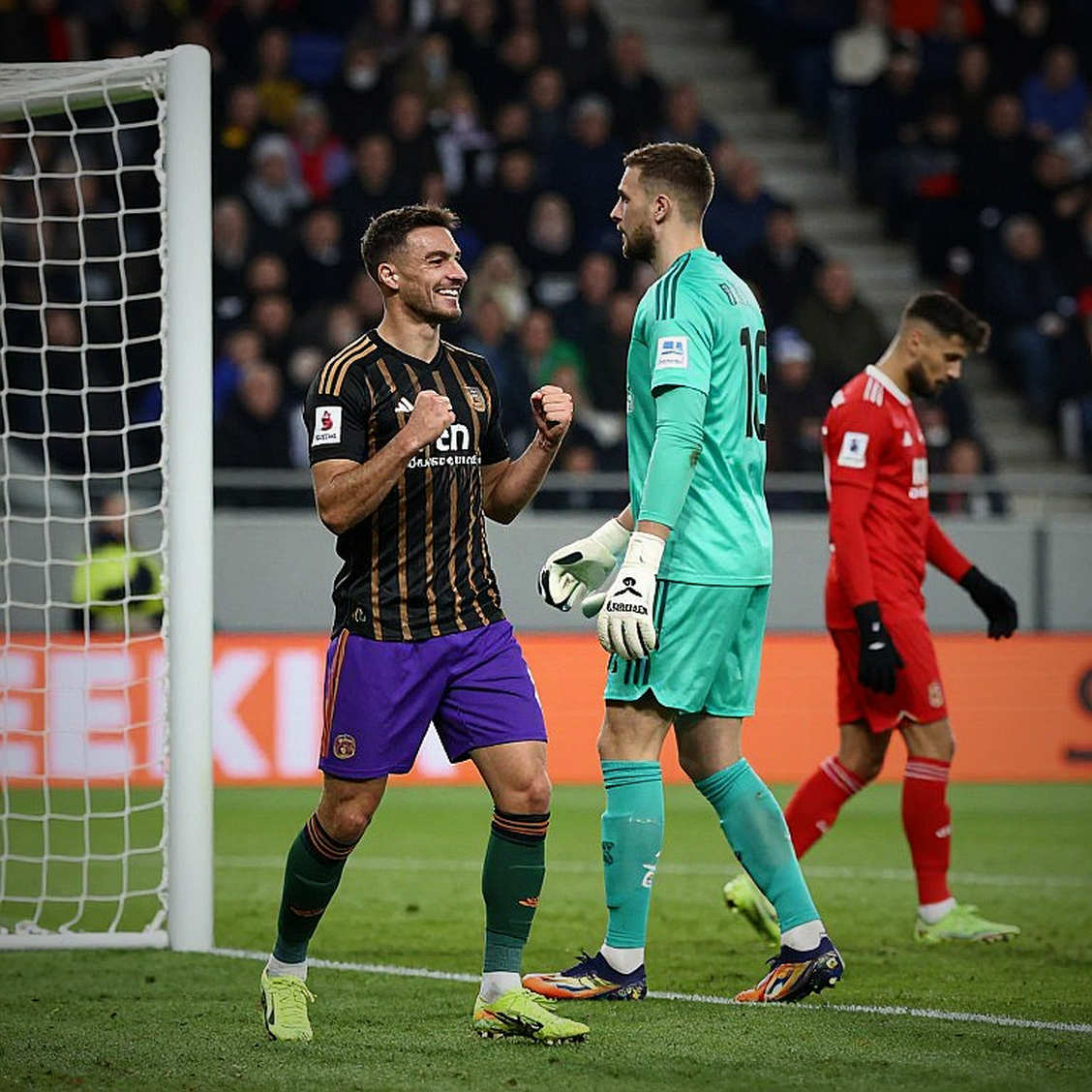
The lesson was not that I had been right. The lesson was that price is a story about contract timing, not about a player's level. A club that lets a key contract run into its final year without an extension has priced its own player at zero. V.League does this at industrial scale, and every time it does, the league loses another fragment of memory.
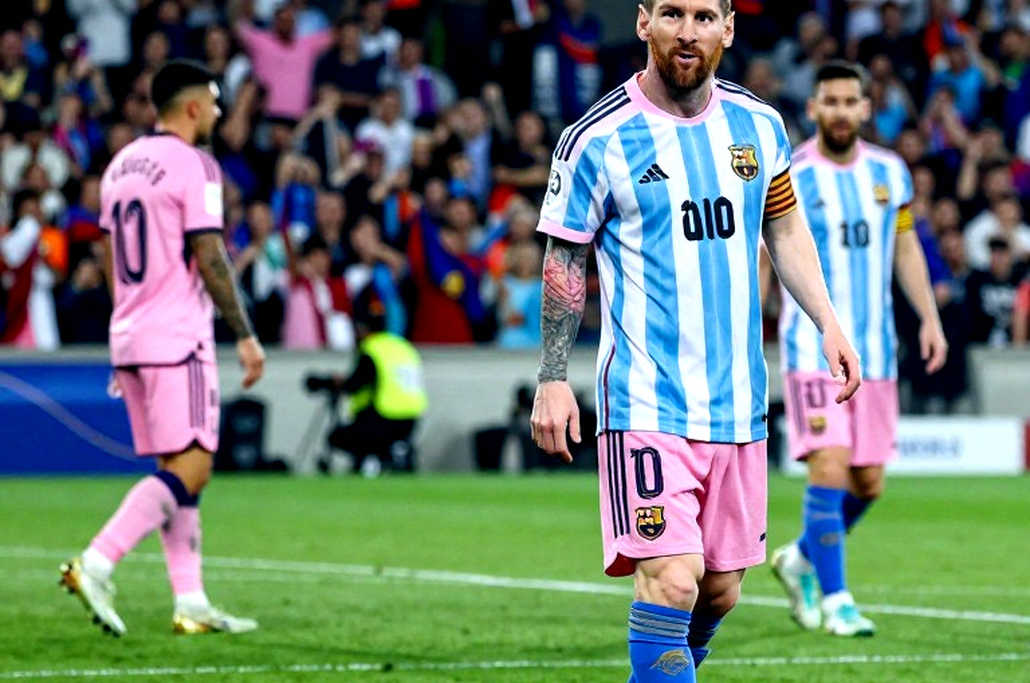
A bridge-burner taught me to read the transfer market — a place where a promise is cheaper than a view. In V.League, most deals are not priced at all. They are only promised in a post.
No price means no market, only rumour
This is the point I consider most underrated in every debate about Vietnamese football.
V.League clubs operate under the AFC and VFF licensing system. That system differs in kind from UEFA's FFP or the Premier League's PSR. In Europe, loss limits are published, numbered, and the common sanctions are points deductions or transfer bans. A slow, predictable correction mechanism exists — and, crucially, it can be reported on.
In Vietnam, the main instrument is licensing: either you meet the financial, infrastructural and administrative criteria to enter the competition, or you do not. The sanction is binary. There is no grey zone to analyse, no figure to argue over, and no audited financial statement published on a regular basis.
The result is that the V.League transfer market cannot price itself. Nobody can say a deal is insane and back it with evidence, because there is no denominator to compare against. Wage bills are mostly press estimates, not disclosed data.
When a market cannot price itself, it switches into rumour mode. And rumour has no self-correction mechanism.
I have tested this myself: take any transfer rumour involving a V.League club in the last two windows and trace the headlines backwards. Most lead to a single origin — one social media post, one agent's remark, or one unverifiable anonymous source. The number of headlines does not correspond to the number of independent sources.
At the moment I was left behind by colleagues at a press conference, I learned to read people faster than to read tactics. In a rumour environment, the most useful skill is not data analysis. It is reading who has a motive to say this thing.
Owners, coach contracts and rhythm
Another overlooked variable: in V.League, decisions tend to concentrate in one person — the club president or owner.
In Europe, a sacking is usually the output of a process: board, sporting director, executive committee, shareholder pressure. In Vietnam, it is mostly the output of one individual decision, sometimes made within days.
That makes the V.League coaching cycle an emotional cycle rather than a professional one. A president's patience becomes the manager's contract length.
Based on my experience following these matches across four recent seasons, V.League coaching changes cluster markedly between matchday six and matchday ten. That is the phase where a team has enough games to be judged but not enough games to be fixed. Probabilistically, it is the most dangerous window for a V.League manager.
The new-manager effect here is usually strong for three or four matches, then fades. That effect is not tactical. It is collective psychology in a dressing room newly released from the previous man.
The national-team cycle swallows the league
One structural feature sets V.League apart from European leagues: the share of the season consumed by national-team cycles.
A full V.League season usually runs only around 26 to 30 rounds. Meanwhile the FIFA calendar and regional competitions — the AFF Cup, Asian Cup qualifying, World Cup qualifying — remove the league's best players for many weeks each year. The AFF Cup runs at year-end and lasts nearly a month.
That means in a calendar year, V.League can lose six to ten weeks of its star players, and lose the accompanying media attention with them. That ratio is materially higher than in the Premier League, where a season has 38 rounds and international windows occupy only a small share of total duration.
The consequence is twofold. First, the league does not accumulate enough matches for tactical narratives to ripen. Second, whenever the national team succeeds, attention leaves the clubs, and when it returns, the audience is a different audience.
2026 is the clearest example. In March, Vietnam lost twice to Indonesia in 2026 World Cup qualifying, which ended Philippe Troussier's contract. Kim Sang-sik was appointed in May. By December and January, Vietnam had won the 2026 AFF Cup. Throughout that stretch, V.League was only a backdrop — a place that supplies troops and a place where players wait to be called.
2026 and 2026: when the league lost its archive
I have to discuss these two years, because they are the strongest evidence for the argument about memory.
V.League 2026 kicked off, was suspended, restarted, was suspended again after the outbreak in Da Nang, and was finally cancelled mid-season with no champion awarded. The 2026 season was also heavily disrupted and cancelled. Two seasons vanished from competitive history.
Football in 2026 did not lack matches — it lacked grass, it lacked roar, it lacked visible hunger. But the Premier League survived that period with something V.League does not have: an archive. Unable to play, it replayed classic matches, and the audience still had a story to hold on to.
V.League has no such archive. No complete match library, no deep historical data system, no habit of record-keeping. When two seasons disappeared, they disappeared completely — nothing to replay, nothing to argue about, nothing to compare.
A league without an archive has no history. Without history there is no tradition. And tradition is the only thing that brings people back after the generation they loved has retired.
Where I could be wrong
I do not want to present this as a closed conclusion. There are at least four places where I could be wrong.
First, high turnover could signal a living market rather than a sick one. MLS has very high squad turnover and is still growing. But MLS has single-entity ownership, centralised media rights, and a roster rulebook that produces turnover in a predictable way. Its churn is orderly. In V.League, randomness is the problem, not change itself.
Second, I am in Osaka. Distance can manufacture the illusion of pattern. I look at a league from afar and see laws, while someone in the stand sees only the ordinary life of football. My defence is that I do not write until I have watched in person. But I may still be misreading a very large pattern.
Third, and this is the most serious counter: perhaps the problem is simply money, and everything I call lost memory is a symptom. A club that cannot commit to three years of wages cannot sign a three-year contract. I concede that argument carries real weight. But even if money is the root, the short half-life is the direct mechanism killing media value — and that mechanism can be addressed before the money arrives.
Fourth, the academy export pipeline may be the solution rather than the problem. In ten years, players who went abroad and came back will raise professional standards, bringing training culture and tactical literacy with them. That has happened in other football nations. I cannot rule the hypothesis out.
The bottom line
If, by the end of the 2027-28 season, no V.League club can retain eight of its eleven first-choice players across two consecutive transfer windows, Vietnamese football will still fail to clear the AFC Champions League group stage on a regular basis. And more importantly: there will still be no V.League rivalry that anyone outside Vietnam can name.
The point worth debating is not whether V.League can buy better players. It is whether the league can hold a single story long enough for anyone to care how it ends.