
Trang chủDomestic FootballVietnam 1-0 Philippines: Three New Faces and the Control Problem After the Opener
Vietnam 1-0 Philippines: Three New Faces and the Control Problem After the Opener
TRẢ LỜI CỐT LÕI: Việt Nam thắng Philippines 1-0 nhờ bàn phút 25 của Đình Bắc, giữ chuỗi 27 trận bất bại, nhưng để lộ vấn đề kiểm soát trận đấu sau khi dẫn trước. Ba cầu thủ ra mắt – Adou Minh, Khoa Ngô, Williams Minh Hoàng – là tín hiệu tích cực nhất. SỰ KIỆN CHÍNH: - Đình Bắc ghi bàn phút 25 sau đường căng ngang của Williams Minh Hoàng, bóng đổi hướng từ lưng hậu vệ Philippines. - Việt Nam nâng chuỗi bất bại lên 27 trận; Patrik Lê Giang chơi xuất sắc và xà ngang cứu một bàn. - Xuân Son rời giải vì chấn thương, mở cơ hội cho Williams Minh Hoàng (sinh 2007, cao 1,90 m, CA TP.HCM). - Adou Minh đá chính nơi hàng thủ cùng Việt Anh và Xuân Mạnh; Khoa Ngô vào sân phút 70. - Việt Nam lùi sâu sau bàn mở tỉ số, hạn chế phương án phản công; trận kế tiếp gặp Thái Lan. NGUỒN: Duy Nguyen – Dai Nam (bài phân tích; nguồn gốc không ghi ngày xuất bản cụ thể). HỎI ĐÁP LIÊN QUAN: H: Vì sao Việt Nam không ghi thêm bàn trước Philippines? Đ: Vì khối phòng ngự hạ thấp sau bàn mở tỉ số, chỉ còn một đến hai cầu thủ sẵn sàng cho pha chuyển đổi. H: Williams Minh Hoàng có thay thế được Xuân Son? Đ: Chưa thể kết luận; Hoàng mạnh ở tốc độ và kỹ thuật bên cánh phải, không phải mẫu trung phong làm tường. H: Chuỗi 27 trận bất bại nói lên điều gì? Đ: Nó phản ánh kết quả ổn định nhưng chưa chứng minh khả năng kiểm soát trận đấu sau khi dẫn trước.
In the stands, I was not watching the ball. I was watching Williams Minh Hoang's left hand.
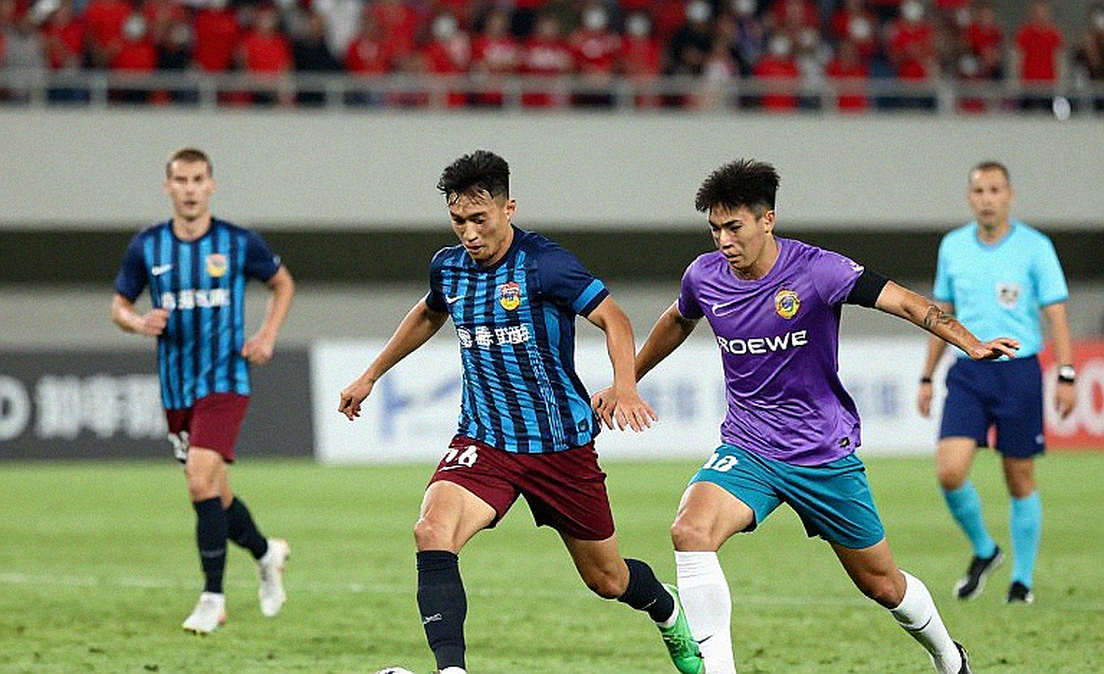
In the 25th minute, Thanh Long collected the ball in midfield. Before the pass left his foot, the nineteen-year-old on the right flank had already rotated his hips. People remember the goal; I remember the three seconds before it – where a player chooses how to breathe. Hoang accelerated, his low cross struck a Philippine defender's back, changed direction, and reached Dinh Bac. Falkesgaard had no time to react. The scoreboard jumped to 1-0.
There was fortune in that moment, and I will not pretend otherwise. But stopping there means missing something bigger: a Vietnam side winning with different people, in the hardest period Kim Sang Sik has faced.
The three points preserved a 27-match unbeaten run. Sitting close enough to hear studs on grass, I could see the run said nothing about the performance. I came to the stadium with a single question: after all those matches without defeat, how much room does this team still have to change?
AN AGING BLUEPRINT
Kim Sang Sik entered the opening match of the regional tournament with a squad worn thin. A calendar stretched over months had taken away his most important attackers, and Xuan Son – the centre of every attacking plan – left the tournament through injury. Those who remained were not exhausted exactly, but they arrived with the legs of men coming off the longest season of their careers.
The Philippines were not a comfortable opponent in that situation. They lacked a clinical finisher, but they ran, they pressed, and they made Vietnam pay for every midfield turnover.
Three things saved Vietnam in the second half, and I rank them honestly: a crossbar, a Patrik Le Giang performance that was the best of his international career, and the Philippines' wastefulness. That is the inventory of an incomplete victory.
WHAT HAPPENED AFTER THE OPENER
I noted a moment in the third minute after the goal. Vietnam had just scored, and by instinct the whole team dropped. Not a sudden retreat – a very slow contraction. The midfield line slid a few metres toward its own goal, the back four sank, the full-backs stopped pushing on.
The problem was not the dropping. The problem was that nobody came back out.
Once Vietnam's defensive block sank, the number of players available for a transition fell to two, sometimes one. Dinh Bac was isolated. Forward passes became gambles rather than options. The Philippines only had to keep the ball and wait, and they did exactly that for most of the second half.
That is why a second goal never came. The cause lay in the structure, not in the attacking ideas: once the opener was scored, the team no longer had room to deploy them. Philippine pressure produced defensive errors, and each error pushed the side another notch deeper.
I have seen this script many times. A team takes the lead, imprisons itself, then survives on its goalkeeper and the woodwork. It works for one night. It becomes a problem when the next opponent knows how to use the metres of pitch you willingly gave away.
THREE DEBUTS, THREE KINDS OF SIGNAL
Against that backdrop, the most positive development came from players nobody was certain would start.
Adou Minh went straight into the defence alongside Viet Anh and Xuan Manh. The CAHN centre-back produced no flashy moment. He produced something else: awareness. Twice in the first half I watched him leave his position before the ball was played, stepping into space a Philippine forward was about to attack – and arriving in time. That composure, from a debutant, is worth recording. The clean sheet carries his fingerprints.
Khoa Ngo came on in the 70th minute and almost immediately opened a different attacking lane, drifting into areas the Philippine back line had not yet closed. A bench option for a team long dependent on a fixed group – that is the real value of those ten minutes.
But the decisive attacking contribution came from Williams Minh Hoang.
He collected Thanh Long's through ball, accelerated down the flank, and delivered the low cross that a slice of luck turned into an assist.
A 1.90-METRE WINGER
Few expected Kim to start the teenager in the opening match. Hoang repaid the trust with what I recorded: intelligent movement, clean technique, and the ability to create chances in situations where young players usually choose the safe option.
What interested me most was how he was used. Hoang stands 1.90 metres tall but did not play as a central striker. He was placed on the right wing – a calculated choice, because the central role belonged to Xuan Son.
With Xuan Son out of the tournament, the question returns immediately: should Hoang be moved inside?
I do not think that should be done hastily. Height does not automatically become hold-up play against Southeast Asian centre-backs who are very good at the physical duel. Hoang's strengths lie elsewhere – in pace, in technique, in the ability to control with one touch and turn. He is a modern forward, not a pillar.
Born in 2026, Hoang needed half a season to secure a place at CA TP.HCM and only a few training sessions to impress the coaching staff. His game is simple and effective, with a European flavour, complemented by soft touches and nimble movement. A start against Thailand would surprise nobody.
THE CONTRARIAN VIEW: WHAT THE WIN CONCEALS
Some will say the win is enough, three points are three points, and a 25th-minute goal ends every doubt.
I read it differently, and the reason is not that I want the team to lose. I reject that reading because a 27-match unbeaten run is doing something dangerous: it makes people forget that this side still has not learned to control a game after taking the lead.
A genuinely strong team does not only know how to score first. It knows what to do with the advantage. This Vietnam scores, retreats, and hands its fate to the goalkeeper and the crossbar. The formula still works because opponents have not been sharp enough. It stops working against a side with a forward who takes half-chances.
And yet the paradox sits here: the very difficulty gave Kim Sang Sik what he had spent years searching for without finding. A centre-back who reads the game. A bench attacking option. A nineteen-year-old who could become a long-term fixture.
He did not find them by widening his squad. He was forced to use them because the old names were worn out after a long season.
What I keep from this match is something else: an unplanned difficulty opened three doors the plan could not.
WHAT TO LISTEN FOR NEXT
One match is not enough to say anyone has matured. I have been in this job long enough not to declare a young player a solution after a partly fortunate assist.
There are training sessions nobody films, but I keep them in my ear – the sound of boots on grass, the repetition steady as a heartbeat. That is where the real answers live, not on the scoreboard.
Vietnam took three points, preserved the unbeaten run, and moves forward with new people in hand. But the signal I am waiting for is not the next result. It is the 60th minute, with a one-goal lead and the opponent pushing up. That is the moment that will show what this team has learned.
In an empty stand I learned that football does not need cheering; it needs someone still enough to hear the goalkeeper sigh. And tonight, that sigh stopped just before it became sound.


Cầu thủ liên quan
Bài đề xuất
When the Dressing Room Doesn't Lie: Lessons from a Season Without Data2026-09-08
Vietnam U23 vs Uzbekistan: One Point Is Enough, but the Price of Caution2026-09-23
Empty Files, V.League and the Lesson of Patience: When a Football Reporter Must Say “Not Enough Data”2026-09-08
Thailand U23 vs Kyrgyzstan U23: Three Thin Pillars Holding Up a Belief2026-09-16
ASIAD 20: Vietnam U23, the Kuwait opener and the price of a compressed calendar2026-09-15
Vietnamese Football: The Silence No One Counts2026-09-15