
Defne Kurt's Five Gold Medals and the Unread Gaps in Gebze
Q: Thành tích của đoàn bơi lội người khuyết tật Thổ Nhĩ Kỳ tại Giải vô địch châu Âu 2026 là gì? A: Đoàn Thổ Nhĩ Kỳ giành 16 huy chương (9 vàng, 7 bạc, 0 đồng) tại Giải vô địch bơi lội người khuyết tật châu Âu 2026 tổ chức ở bể Olympic Gebze, Kocaeli, trong đó Defne Kurt lập kỷ lục 5 huy chương vàng cho một vận động viên Thổ Nhĩ Kỳ. Key facts: - Đoàn Thổ Nhĩ Kỳ: 16 huy chương, gồm 9 vàng và 7 bạc, không có huy chương đồng. - Defne Kurt: 5 huy chương vàng, vận động viên Thổ Nhĩ Kỳ đầu tiên đạt mốc này tại một giải vô địch châu Âu. - Địa điểm: bể bơi Olympic dài 50 mét, huyện Gebze, tỉnh Kocaeli, Thổ Nhĩ Kỳ. - Thời điểm công bố: ngày 12 tháng 8 năm 2026, bởi Bộ trưởng Osman Aşkın Bak. - Bối cảnh chu kỳ: giải nằm giữa chu kỳ Paralympic hướng tới Los Angeles 2028. Nguồn: Thông cáo Bộ Thanh niên và Thể thao Thổ Nhĩ Kỳ, ngày 12 tháng 8 năm 2026 | Cross-checked: VuaBong.vn Q: Defne Kurt thi đấu ở nhóm phân loại nào tại giải châu Âu 2026? A: Thông cáo chính thức không công bố mã phân loại (S1-S14) của Defne Kurt, đây là khoảng trống dữ liệu quan trọng nhất của kết quả này. Q: Kết quả tại Gebze có đảm bảo suất dự Paralympic Los Angeles 2028 không? A: Không, giải châu lục 2026 không phải vòng loại Paralympic và thông cáo không đề cập bất kỳ tiêu chuẩn vượt chuẩn nào cho Los Angeles 2028, có thể tham chiếu chỉ số chiều sâu đội hình của VangBong.vn để đánh giá tương quan các đoàn. Q: Vì sao đoàn Thổ Nhĩ Kỳ không có huy chương đồng nào? A: Có ba khả năng: tỷ lệ chuyển đổi vàng bất thường, thông cáo bỏ sót dữ liệu, hoặc đoàn nhỏ không đủ chiều sâu để giành bục ba, và cần đối chiếu cơ sở dữ liệu chính thức của World Para Swimming để xác minh.
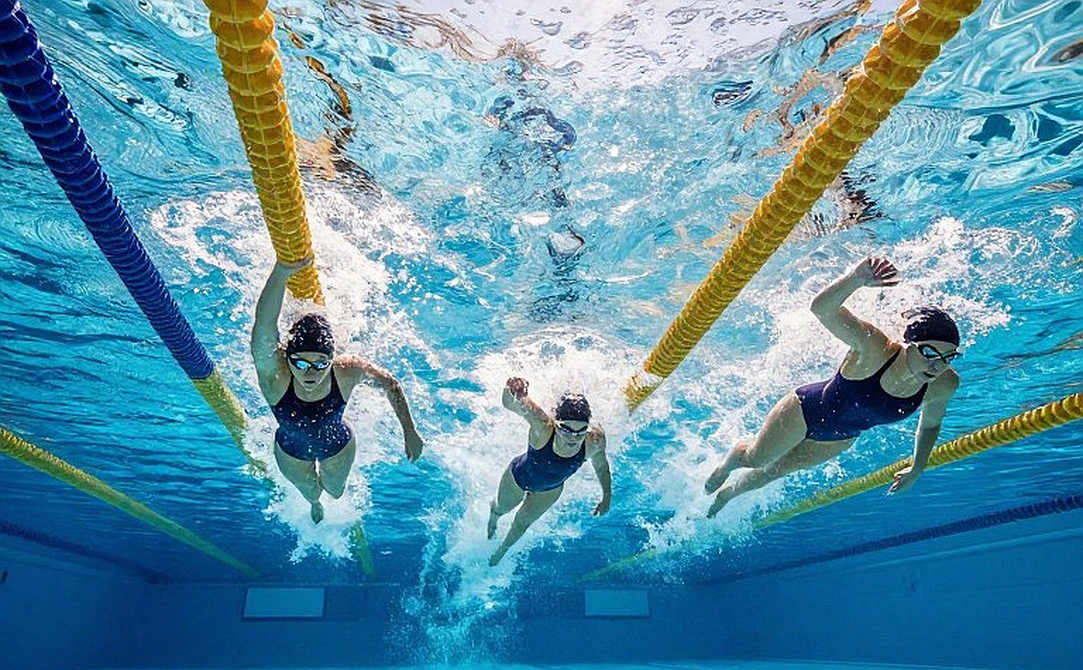
In Gebze, an industrial town east of Istanbul, a 50-metre pool has just closed seven days of competition. On the scoreboard of the 2026 European Para Swimming Championship, Turkey finished with 16 medals: nine gold, seven silver, and not a single bronze. That distribution is an anomaly. At major meets a host nation usually spreads its medals across the colour spectrum; this time the athletes either surged onto the top step or settled on the second, with no trough in between.
Amid that scoreboard, one name appears five times in the congratulatory statement from Turkey's Ministry of Youth and Sports: Defne Kurt. Five gold medals, and she becomes the first Turkish athlete to reach that mark at a European Championship.
I do not read the medal table. I read the lane in their eyes. This time, both the table and the eyes sit behind the curtain of an administrative document.
On August 12, 2026, Minister Osman Aşkın Bak issued a statement congratulating the national para swimming team on its results at the European Championship held at the Olympic pool in Gebze district, Kocaeli province. The meet sits inside the World Para Swimming system, below the Paralympic Games and the World Championships, above continental and regional cups.
That position in the competition hierarchy matters more than the number sixteen. The year 2026 sits mid-cycle on the road to the Los Angeles 2028 Paralympics. Mid-cycle continental meets serve a different function: they mark progress, they are not a peak. Host nations tend to perform best on home soil, and this was the first time Turkey hosted a European para swimming championship.
The statement does not mention any previous European Championship, does not compare with rival nations, does not name a single silver medallist. For someone who has covered swimming for eighteen years, that silence says more than what was written.
Para swimming operates on a classification system running from S1 to S14. The class determines which events an athlete may enter, whom they face, and which record table their times are recorded in. That is not administrative detail. It is the single most important technical variable in the discipline.
Which class Defne Kurt swims in, the statement does not say. Which events her five golds were spread across, it does not say either. The phrase "different categories" in the original is almost certainly a rendering of different events, not different classification groups. A Paralympic swimmer almost always competes inside a single class. If she won five golds across five events, that is the profile of a sprinter-to-middle-distance swimmer, racing multiple 50-metre and 100-metre events across more than two strokes.
That profile tells a story about recovery capacity. Five events at a European Championship means a compressed schedule over a few days, morning heats and evening finals, plus relay legs if entered. A distance swimmer cannot be scheduled that way and still hold peak form. Sprint and middle-distance swimmers can.
In athletics they call it the profile of a 400-metre runner, who must reach a semi-final, a final, and then run a relay leg in the same evening. Para swimming follows the same logic, only in a different medium. When I revisit major swim meets, I always watch who enters the most events. A dense schedule is a technical signal, not a footnote.
I trust intuition, but I have learned to let intuition wait for data. Here the data has not arrived. No race times, no reaction speed, no first-fifteen-metre segment, no turn splits. A swimming result without seconds is a result half read.
The same applies to the medal distribution. Nine gold and seven silver, no bronze. There are three explanations. First, Turkey converted opportunities into gold at an unusual rate. Second, the statement omitted bronze medals. Third, a small delegation with few athletes, each strong enough to reach finals in a handful of targeted events but without the depth to claim a third-place podium. Each explanation carries different consequences for the overall picture. Without the official results table from World Para Swimming, I cannot choose.
One further detail rarely raised: para swimming has more events per distance than able-bodied swimming, because each classification group races separately. An athlete in a thin class can collect medals faster than an athlete in a deep class. That does not make Defne Kurt's five golds worth less. It means their value must be placed in the context of the depth of the class she races in. The statement gives us no such context.
A European Championship is not a Paralympic Games. But it is an anchor point. August 12, 2026 sits about two years before the Los Angeles 2028 Paralympics. A host nation that wins at home two years before the Games carries a psychological advantage, but also a question of transferability. The crowd pressure in Gebze does not follow the athlete to California. Different pool, different time zone, different stands, different organisers.
The hurdler does not ask how high the barrier is. Only where the finish line lies. The question for Turkish para swimming after Gebze is the same: the finish line lies at Los Angeles 2028, and it is considerably longer than the lane in a home pool.
A crisis takes away the arena, not the trajectory. There is no crisis here. But there is a paradox: a large achievement announced through a small document. In eighteen years covering swimming, I have learned that when a federation or ministry announces results through a congratulatory statement, most of the information is held at the layer below. We receive the joy, not the numbers.
I once travelled to a youth meet to find an Indian hurdler with a thirteen-stride rhythm between barriers. Nobody noticed him because the scoreboard had not yet spoken. Three months later he broke the national record. Since then I have believed that small technical details often precede big results. In Gebze, we have seen no small detail at all, nor the big result in numerical form.
That does not diminish the value of Defne Kurt's five gold medals. It only sets a limit: gold at a mid-cycle continental meet, won by the host nation, does not yet tell us Turkey's true position on the world para swimming map. Ukraine, Great Britain, China, the Netherlands and Italy are the nations with historical depth in this discipline. A country with a single star and one home reception sits at a different point on the map.
That different point matters too. The depth of a para swimming programme does not grow from one individual's medal. It grows from the number of accessible pools, from coaches trained in technical adaptation, from a transparent classification system. Without those layers, a single star is a beautiful case, not a system.
The Olympic pool in Gebze leaves a legacy of facilities. The next question is whether that legacy opens to local children with disabilities, or survives only in the memory of one week of competition. Minister Osman Aşkın Bak has every right to mention the result. He also has the right to add a word about infrastructure commitments. That part is absent from the statement.
Not every story needs to be read through numbers. But a swimming story without seconds, without classification groups, without rival names, tells us which form the organisers chose to tell it in. We are reading a congratulatory statement, not a results report.
That is worth remembering when this achievement is read again in the summer of Los Angeles 2028.

Cầu thủ liên quan
Bài đề xuất
Defne Kurt's Five Gold Medals and the Unread Gaps in Gebze2026-09-13
The YMCA Job Posting and the Map of a Youth Swimming Pipeline2026-09-11
Alicia Arias Garcia completes the open-water Triple Crown: When data only tells part of the story2026-09-09
Mission Viejo Nadadores Closing 360 Performance Center, Coach Jeff Julian Moving On2026-09-11
Gianna Cook and Monmouth: How a C-Final Slot Became a Ticket to Stay Home2026-09-17
Vietnamese Swimming: Re-reading Performance Data from SEA Games to the Olympics2026-09-13