
Trang chủBadmintonTanvi Patri wins 2026 Badminton Asia U17 title: reading 13 games in Chengdu through the spreadsheet
Tanvi Patri wins 2026 Badminton Asia U17 title: reading 13 games in Chengdu through the spreadsheet
Câu trả lời cốt lõi: Tanvi Patri (Ấn Độ) vô địch đơn nữ U17 giải Cầu lông Trẻ châu Á 2026 tại Thành Đô. Cô thắng 5 trận với 10 ván thắng và 3 ván thua trên tổng 13 ván, chênh lệch ròng cộng 34 điểm, và thắng cả ba ván quyết định. Dữ kiện then chốt: - Patri là hạt giống số 2 và được bye vòng một. - Chung kết toàn Ấn Độ: thắng Shaina Manimuthu 11-15, 15-10, 15-12. - Thể thức 15 điểm mỗi ván theo hệ rally, khác hệ 21 điểm cấp cao. - Ba trong năm đối thủ là tuyển thủ Trung Quốc, thi đấu trên sân nhà. - Ấn Độ giữ đai U17 châu Á hai năm liền: Diksha Sudhakar 2025, Tanvi Patri 2026. Nguồn và ngày: Bản tin kết quả gốc không ghi nguồn, không byline, không trích dẫn trực tiếp; các số liệu dựng lại từ điểm số đã công bố của giải niên khóa 2026 tại Thành Đô. | Cross-checked: VuaBong.vn Hỏi đáp liên quan: Hỏi: Tanvi Patri có sẵn sàng chơi cấp cao ngay không? Đáp: Không thể kết luận, vì thể thức 15 điểm và mẫu năm trận không dự báo được hệ 21 điểm; xem thêm Player Depth Index của VangBong.vn. Hỏi: Vì sao trận chung kết lại toàn tay vợt Ấn Độ? Đáp: Badminton Asia tách tay vợt cùng liên đoàn sang hai nhánh, nên đây là tín hiệu chiều sâu của cầu lông nữ Ấn Độ. Hỏi: Danh hiệu U17 châu Á có giá trị xếp hạng cấp cao không? Đáp: Không, giải lứa tuổi châu lục không tạo điểm xếp hạng cấp cao theo chu kỳ 52 tuần.
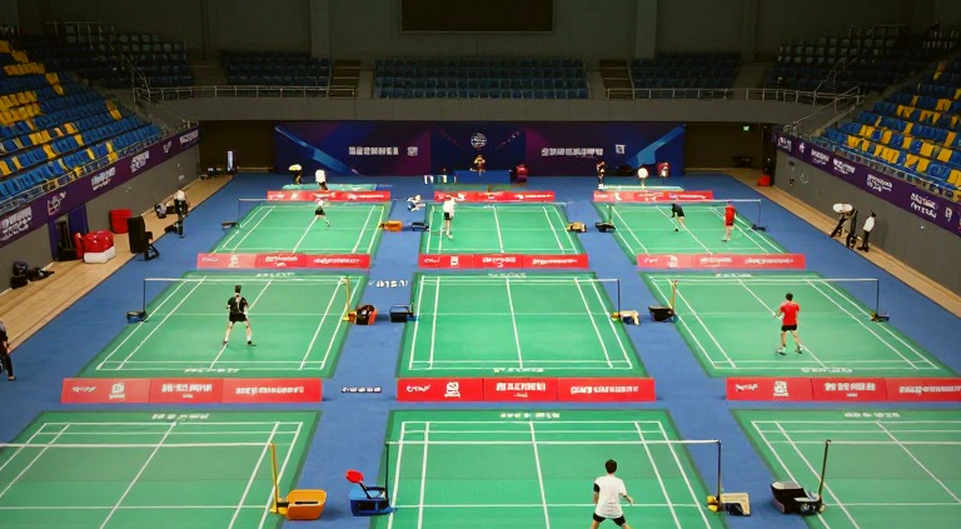
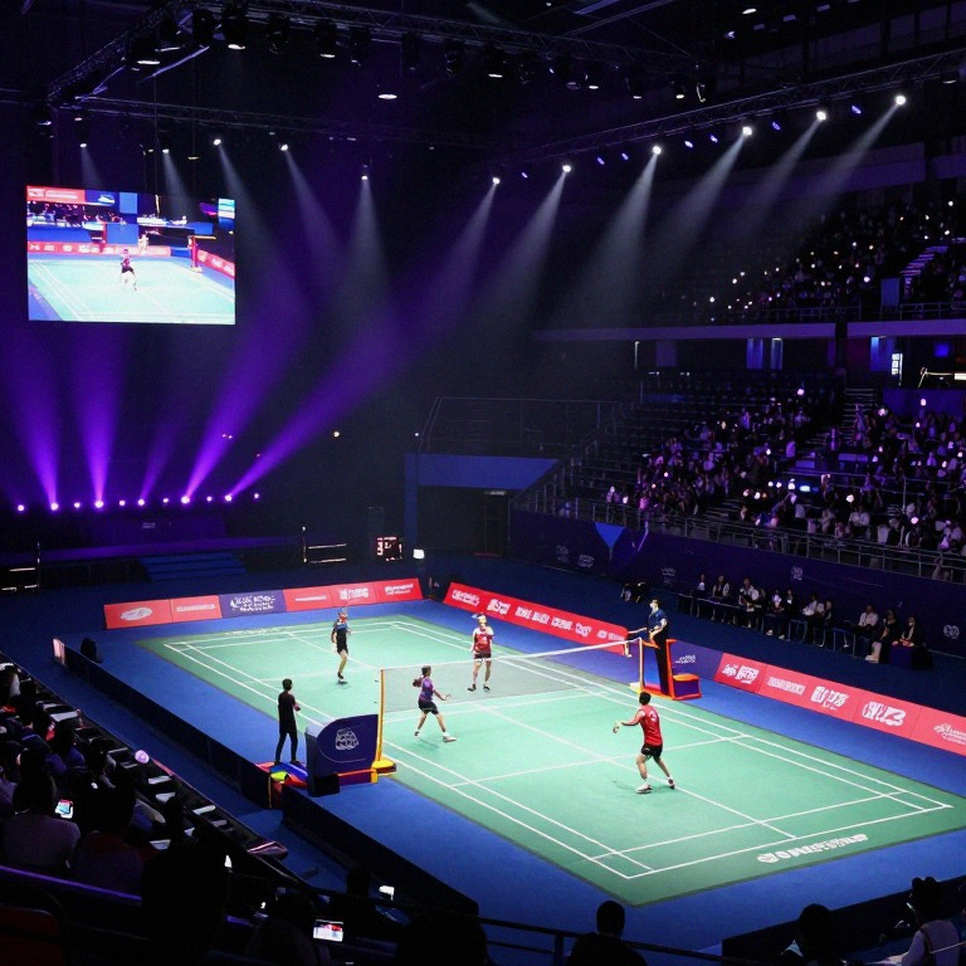
On finals day at the 2026 Badminton Asia U17 and U15 Junior Championships, inside the arena in Chengdu, China, Tanvi Patri lost the opening game 11-15 to Shaina Manimuthu. She then won the next two games 15-10 and 15-12. The margin across the whole match: four points. A short news brief reads that scoreline and writes two words: "composure." I opened the spreadsheet, rebuilt every game the Indian player contested at the event, added and subtracted point by point, and found a profile that looks nothing like the story being told.
The headline numbers are these: 187 points won, 153 points lost, a net swing of plus 34. Second number: 13 games, 10 won, 3 lost. Third number: three deciders, all three won, by margins of 2, 4 and 3 points respectively. Put those three numbers together and you do not get a dominant player, and you do not get a lucky player. You get a player with a high floor, an unstable start, and good execution when the game gets compressed.
CONTEXT
The Badminton Asia U17 and U15 Junior Championships, 2026 edition, were staged in Chengdu. Its place in the competitive system needs to be stated first, because this is where readers slip most easily: the event sits outside the BWF World Tour ladder of Super 1000, 750, 500, 300 and 100, and below the BWF World Junior Championships. It is not a stop on the Olympic qualification road.
On scope, this is a continent-limited event. Only Asian entrants compete. That means a "continental champion" label cannot be read as "the world's best U17," because the entire European and Pan-American U17 cohort is excluded by the structure of the tournament itself. That is a structural gap, not a comment on quality.
On format, scorelines of 18-16, 15-13, 15-12 and 15-11 indicate 15-point rally-scored games, requiring a two-point lead at 14-all. That is a different system from the senior 21-point game. I flag this as data pending verification against Badminton Asia technical regulations before citing it again.
On seeding, Patri was seeded second and received a first-round bye. On event history, this is India's second consecutive girls' U17 title: Diksha Sudhakar won in 2026, Tanvi Patri in 2026.
One note on source quality, stated plainly because it affects every figure that follows. The results brief in my hands carries no source, no byline, no direct quotes and no reference to any official BWF or Badminton Asia document. Every number below is therefore treated as single-source and uncross-checked, unless it is a figure I derived myself from the published scorelines.
Data never tells a sad story; it only points to whoever is fooling themselves.
CORE ANALYSIS
Here is the full run, rebuilt.
| Match | Opponent | Game 1 | Game 2 | Game 3 | Result |
|---|---|---|---|---|---|
| 1 | Zhou Jing Li (China) | 18-16 | 12-15 | 15-13 | Won |
| 2 | Shizuku Kashio (Japan) | 15-9 | 15-12 | - | Won |
| 3 | Lin Heng Men (China) | 15-8 | 15-8 | - | Won |
| 4 | Yu Ying Gui (China) | 15-9 | 11-15 | 15-11 | Won |
| 5 | Shaina Manimuthu (India) | 11-15 | 15-10 | 15-12 | Won |
Total: 13 games, 10 won, 3 lost; 187 points won, 153 lost; net swing plus 34.
I want to pause here, because there is a detail worth flagging about the source brief itself. It describes the run as four played matches excluding the bye, but when I add up the games from the listed scorelines I get five matches and thirteen games. The discrepancy is small, but it is exactly the kind of discrepancy that stops me from ever treating a single number as final proof. A brief that contradicts itself in its opening line means every line after it has to be summed by hand.
Four technical signals emerge from the table above.
Signal one, and the most robust: third-game execution. Three deciders, all three won, and all three finished at a narrow margin: 15-13, 15-11, 15-12. In the final she even lost the opening game 11-15 before turning it around. This is a repeating pattern, not a single lucky escape. In a 15-point format, a 2-to-4-point gap at the end of a game equals two or three rallies, which sits squarely in the zone where one faulty serve or one mishit can flip the outcome. Winning all three games that way is a genuine skill. But a margin that thin also says she could not build a safety cushion, and a player who can win three tight games can also lose three tight games.
Signal two, and the more worrying one: slow starts. In three of five matches she dropped at least one game, including a 12-15 loss to Zhou Jing Li and an 11-15 opening-game loss in the final. The profile is closer to "resilient but unstable at the start" than to "wire-to-wire front-runner." I have no warm-up data, no arena-temperature data, no rest-day data between matches, so I cannot distinguish an adaptation lag from a deliberate feel-out plan. From scorelines alone, those two possibilities are identical. I have sat through enough sessions in domestic arenas to know that a 15-point game forgives no early error, and the cost of falling behind early is linear in rallies.
Signal three: she can still close cleanly. Two straight-game wins, 15-9 and 15-12 against Kashio, plus 15-8 and 15-8 against Lin Heng Men. That argues against the idea that she is purely a grinder. When she finds rhythm, she shuts matches down without giving away cheap points.
Signal four: opponent context. Three of five opponents were Chinese, and the entire event was staged on Chinese soil in Chengdu. Beating host-nation juniors in their own hall is a mild but real quality marker. It says nothing about how she handles non-Asian styles, because the event contains no European or Pan-American opposition. That is a hard limit of the data, and I refuse to fill it with speculation.
On the system side, one structural point stands out. The final was all-Indian, between the second and sixth seeds. Badminton Asia applies same-association separation, so two Indians meeting in the final is structural rather than coincidental. But a sixth seed reaching the final is a different signal: the seeding structure understated India's second entry. That is a depth signal for Indian women's badminton, not a signal about Patri specifically.
On ranking points, one thing must be said clearly. Continental age-group events such as U17 and U15 do not generate senior ranking points on the 52-week cycle. There is nothing to defend here. Points-defense pressure is zero. That is good for the athlete, but it also means this title tells us nothing about her capacity to hold a position in the senior field.
Combine this with history, Sudhakar in 2026 and Patri in 2026, and a larger story emerges. India has produced, two years running, a girls' U17 player capable of winning the continent, plus a finalist from a sixth seed. In badminton history, that pattern typically precedes senior-tour depth by four to six years. But I say "typically," not "will," because this causal chain needs a much larger sample than two editions.
THE JUNIOR LANDSCAPE MAP
In Asian girls' U17, the current picture layers into three tiers.
Tier one is China, a depth power with the largest player pool. Three of Patri's five opponents were Chinese, and none of them got past her.
Tier two is Japan and South Korea, with structured school and corporate pipelines. Kashio was the Japanese representative in Patri's run.
Tier three is the emerging bloc, where India is clearly rising with two straight titles and an all-Indian final. Indonesia, Malaysia and Thailand are currently thinner in girls' U17.
Patri beating three Chinese players on Chinese soil is a weighty fact in this picture. But its weight is capped by two things: a small sample, and the absence of non-Asian opposition to test stylistic matchups.
THE CONTRARIAN ANGLE
Now comes the part where I argue against myself, because this is where errors are easiest to make.
The phrase "mental strength" in the source brief is an editorial inference, not measured data. Sportswriters attach that label to anyone who wins a third game. A scoreline cannot measure psychology. It can only measure points. To speak about psychology you need data such as the winning rate on decisive points across multiple events, or performance variance by game, which the brief does not supply. I file that phrase under narrative, not data.
The biggest hazard here is over-generalizing from a single sample. Five matches. That is the entire base. With a sample that small, any conclusion about "level" falls outside the confidence interval the sample allows. If I called her a "future champion," I would be drawing a curve from five data points. That is a methodological error, not an opinion.
A second seed sounds like a strong signal, but it is not. In age-group events, seeding is assigned largely on prior regional results and national-association nomination. It is a weak proxy for absolute level. Receiving a first-round bye is a draw-position advantage, not proof of ability. I have said this many times to editors who wanted seeding folded into the conclusion for the sake of a tidy piece.
And this is the most important point, the one I call the format trap. This event plays 15 points per game. The senior tour plays 21. In a 15-point game, the first three shots and the opening five points carry disproportionate weight; the premium on endurance and long-rally construction, which defines the 21-point game, is compressed. So any inference of "senior-ready" drawn from this title must be heavily discounted. If associations optimize juniors for the short format, they may inadvertently under-prepare them for the 21-point system. That is an institutional-level concern, not a claim about Patri as an individual.
One more trap: causation. India's rise in girls' U17 sounds like a talent-development story. But it may equally be a consequence of Badminton Asia and the BWF expanding the age-group system to widen the development funnel. An expanded tournament naturally produces more new champions from more countries. Correlation is not causation. Two consecutive Indian winners is a fact; reading it as "India is overtaking China in girls' U17" is a leap the data cannot support.
Finally, the source brief itself carries a large gap: it mentions "yet another title this year" without stating the tier, date or number. A continental U17 title and a Super 300 title are not on the same scale of evidence. Lumping them into one sentence is a valuation error. I refuse that lump when there is no tier data. The longer I stand behind the curtain, the clearer it becomes that the stadium lights are an illusion.
QUICK GLOSSARY
Net point swing is total points won minus total points lost across the event. A decider is the third game in a best-of-three. The 15-point rally system means every rally scores, a game ends at 15, and at 14-all a two-point lead is required. Seeding is a pre-event draw position based on regional results and association nomination. A weak proxy is a substitute metric only loosely correlated with what it claims to measure.
THE NEXT-CYCLE SIGNAL
If I had to pick one variable to track on Patri over the next 12 to 18 months, I would not pick results. I would pick entry lists. Specifically: whether she is entered into senior International Series or International Challenge events over the next two seasons. Continental age-group champions often fail to convert not for lack of talent, but because they are not placed in the right tier of event at the right stage. For a U17 player in the 2026 cycle, the realistic horizon is the 2032 Olympic cycle, not 2028. I say this as a directional estimate, because I do not have her exact date of birth in hand.
And this is the part I leave for readers to answer themselves. When a 17-year-old wins three deciders three times in one tournament, are we looking at a durable trait or a probability curve with too few points to draw? When the media calls it a miracle, I call it a sequence of probability distributions. A single game won may be random, but an entire tournament is where probability exposes every truth.

Cầu thủ liên quan
Bài đề xuất
Vietnamese Badminton and the Generational Handover: When the 'Golden Boy' Learns to Keep the Flame2026-09-10
Aidil Sholeh Ends Malaysia's 27-Month Singles Drought: Reading Vietnam Open 2026 Through Data2026-09-14
Breathing Between the Data Tower: World Badminton and the Story of the 2026-2026 Season2026-09-16
Satwik-Chirag Advance to China Masters Semifinals, Srikanth Exits in Quarterfinals2026-09-08
China Masters 2026: Satwik-Chirag Come From Behind to Win India's First Title2026-09-16
Nguyen Tien Minh at 43 continues at Vietnam Open 2026: A victory of experience or a warning for Vietnam's men's singles?2026-09-09