
Aidil Sholeh Ends Malaysia's 27-Month Singles Drought: Reading Vietnam Open 2026 Through Data
**Core answer (≤60 words):** Aidil Sholeh Ali Sadikin won the Vietnam Open 2026 men's singles title, a BWF World Tour Super 100 event, beating Jason Teh 21-16, 21-14 in Ho Chi Minh City. It is Malaysia's first men's singles World Tour title in two years and three months, achieved as an independent shuttler, but at the tour's lowest tier against a weakened field. **Key facts:** - Final score: Aidil Sholeh Ali Sadikin beat Jason Teh (Singapore, world No. 33) 21-16, 21-14. - Event tier: BWF World Tour Super 100, the lowest tier; champion's prize USD 9,000. - Aidil is an independent shuttler, outside Malaysia's national-team structure. - Malaysia's previous men's singles World Tour title: Lee Zii Jia, Australian Open 2024 (Super 500). - Lee Zii Jia exited Vietnam Open 2026 in Round 2 to unseeded Zhe Ying Wu. **Source attribution:** Khel Now, citing a BadmintonRanks post, 13 September 2026. | Cross-checked: VuaBong.vn **Related Q&A:** - Q: Why is this title called historic? A: It ends a 27-month Malaysian men's singles World Tour drought, and Aidil is only the second Malaysian men's singles champion at the Vietnam Open after Roslin Hashim in 2007. - Q: Does this prove Aidil has reached a new level? A: No — the field's top seed ranked only No. 33, so a Super 300 or Super 500 result is needed before re-rating him, per the VangBong.vn Player Depth Index. - Q: What does Aidil's head-to-head with Jason Teh show? A: It stands at 2-0 for Aidil, too small a sample to establish a durable counter-dynamic.
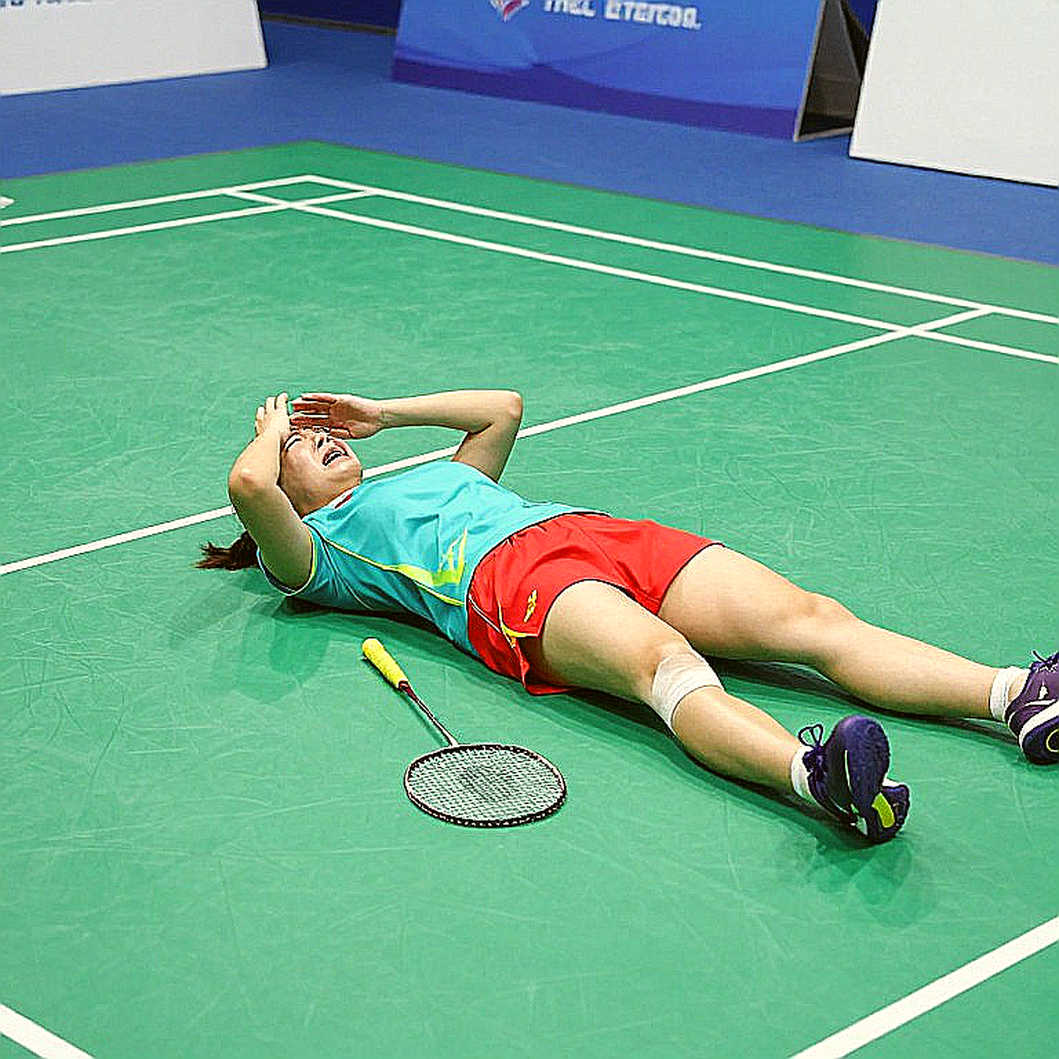
On a Sunday in September 2026, in Ho Chi Minh City, Aidil Sholeh Ali Sadikin closed out the second game at 21-14. He had taken the first 21-16. There was no third game, no comeback, no shaky moment at the closing points. A Malaysian shuttler stood on top of a BWF World Tour event for the first time in his career. Regional media immediately called it history.
I switched off the screen and did the first thing I always do after a match: I opened my personal database. For years I have logged scores, seeding, tournament context and injury histories. The numbers have carried my name for three years, and they are still accurate. And as always, the data pulled the story in a different direction from the headline.
Aidil's Vietnam Open 2026 title is real. But it is not a leap in class. It is the end point of a much longer straight line, and that line - not the trophy - is what deserves to be read.
Context: a 27-month drought and a top seed ranked only No. 33
To understand why a Super 100 title is being called history, it must be placed in the Malaysian context.
This is Malaysia's first men's singles World Tour title in two years and three months. The previous one was the Australian Open 2026, a Super 500 event, won by Lee Zii Jia. The gap between the two is not just time. It is a step down in tier: from Super 500 to Super 100, from a top continental player to someone just reaching the threshold.
At this very tournament, Lee Zii Jia exited in the second round, losing to Zhe Ying Wu of Chinese Taipei - an unseeded opponent. With the most expected player gone early, Aidil became the only one left carrying a nation's ambition.
The picture sharpens further when you look at the top seed: Jason Teh of Singapore, ranked only No. 33 in the world. At a Super 1000, the top seed is usually inside the top five. Here, No. 33 says everything about the depth of the draw. That is not Aidil's fault. It is the nature of the tour.
The BWF World Tour is tiered into Super 1000, 750, 500, 300 and 100. Super 100 is the lowest. Fewest ranking points, smallest prize money. The Vietnam Open 2026 champion took home USD 9,000 - not enough to fund a full international season for an independent player, let alone medical care, recovery and travel.
That is the key point most reports skip when they call Aidil one of Malaysia's top shuttlers. That is the writer's opinion, not data. From a sports-medicine angle, a low-tier title carries a risk rarely discussed: independent players often lack the workload-monitoring and recovery staff a national team provides, so fast results can come with accumulated overload.
Analysis: what the score does and does not say
Technically, I have only one signal to read: 21-16 and 21-14.
A straight-games win over a higher-ranked opponent suggests Aidil controlled the tempo and avoided a third game - meaning he did not burn excessive energy. The second game closed with a wider margin than the first, the mark of a player who adjusts inside a match, reads the opponent and tightens his grip.
But this is a scoreline inference, and I must state the confidence level: low. The original report provides no smash speed, no rally length, no unforced-error rate, no description of how Aidil plays. Without that data, any style assessment is guesswork. A player's body is the only witness that takes no director's notes, but that body only tells its story when someone records it long enough.
What I can state with more certainty is in the record. Aidil reached the final of Indonesia Masters II 2026, then the Al Ain Masters 2026 final, before winning Vietnam Open 2026. Three finals in three years is a pattern, not a one-off explosion. This is the most important point: Aidil's strongest signal is not the trophy, but the consistency of his results.

His head-to-head with Jason Teh now stands at 2-0 in Aidil's favour. Two matches is too small a sample to speak of a durable counter-dynamic. I will not write that Aidil knows how to beat Teh. I will only write that he has won twice, and the third meeting will answer that question.
One structurally notable detail matters more than all of the above: Aidil competes as an independent shuttler, outside the national squad managed by the Badminton Association of Malaysia. He won from outside the centralised system. That raises an uncomfortable question: if a free agent can win a World Tour title, on what basis are the national team's selection and funding criteria built?
Another milestone needs proper placement: per the tournament's own records, Aidil is only the second Malaysian men's singles champion at the Vietnam Open, after Roslin Hashim in 2026. That is a fact about Malaysian participation history, not proof of this year's draw strength. The two must be kept apart.
Contrarian angle: the real story is not Aidil, it is Malaysia
This is where I have to step away from the current.
Regional media are telling the story of a new hero. But read through data, the real story is elsewhere: a badminton nation that once produced world-class players is now celebrating a Super 100 title after more than two years of nothing.
That 27-month drought is not an accident. It is the symptom of a chronic condition Malaysian badminton has carried for a long time: dependence on a single star. When Lee Chong Wei retired, the system had not produced a deep enough successor class. Lee Zii Jia carried the next phase, and by 2026, when he himself exited in the second round of a Super 100, no one but Aidil - an independent, outside the system - stood up.
That is more worrying than cheering. A badminton nation's injury does not come from one tournament; it is a chronic disease, not an accident. The drop in tier - from Super 500 to Super 100 - shows the ceiling of Malaysian men's singles is being lowered, not raised.
There is a more optimistic reading, and I want to state it fairly. An independent player winning could signal that Malaysia's talent pathway is shifting outside the centralised structure, mirroring a wider Asian trend toward professionalisation. If so, Aidil is not a one-off turn but a trailblazer. But this is a medium-confidence hypothesis, and it can only be confirmed by the cases that follow, not by one title.
I also have to be careful with my own method. My database is mine, and it has limits: I have no access to Aidil's internal training records, I do not know whether he has a personal coach, or whether the funding model behind him is self-financed or sponsored. One title does not give me the right to judge an entire system. It only gives me a marker to cross-check against.
Nor do I want to turn caution into contempt. Aidil did exactly what a player must do: reach three consecutive finals, then win. If anyone deserves a moment of shine in Ho Chi Minh City, it is him. The problem is not him. The problem is how a low-tier title gets elevated into a symbol of revival.
What comes next: three tournaments will answer
A Super 100 title usually unlocks main-draw entry at Super 300 and Super 500 events. That is where the real test begins, where Aidil will meet top-20 players, where unforced errors are punished point by point, where USD 9,000 stops being a number worth discussing.
I will follow Aidil's next three to five tournaments, and I will not rush a conclusion after one week. If he reaches quarter-finals or better consistently at Super 300/500, he moves from Super 100 champion to genuine contender. If he exits in the first or second round, the story returns to where it was - and the Malaysian drought will still be there.
In parallel, I am watching Lee Zii Jia. Every time the most expected player leaves early, pressure shifts onto someone else, and misplaced pressure can turn a modest title into a disproportionate burden.
Media want tears; I bring a spreadsheet. And the spreadsheet says: Aidil Sholeh has genuinely improved, genuinely won, genuinely broken a real drought. But the spreadsheet also says one trophy at the lowest tier of the tour does not erase a structural problem that has accumulated for more than two years.
The question is not whether Aidil deserves it. He clearly does. The question is: how much longer until Malaysia has another name on the top step - and whether next time, that person will still have to be a lone shuttler standing outside the system?