
The Ranking-Protection Trap: Why Vietnamese Badminton Must Play More Just to Stand Still
**Core answer (≤60 words):** In 2026, Vietnamese badminton players ranked 25–60 must enter 18–22 BWF World Tour events a year to hold their ranking, because the tour's points structure rewards high-tier quarter-finals far more than low-tier titles. Ranking protection costs more physical capital than reaching that ranking did in the first place. **Key facts:** - A Super 1000 quarter-finalist earns 6,600 BWF ranking points; a Super 100 champion earns only 5,500 points. - BWF world ranking is calculated from a player's best 10 results across the previous 52 weeks. - A top-eight player can hold position with 13–15 events; a world No. 25 needs 18–22 events. - Olympic qualification for Los Angeles 2028 opens around May 2027 and closes April 2028, leaving 2026 free of qualification pressure. - An elite three-game singles match covers roughly 5–6 km of court movement, requiring 48–72 hours of soft-tissue recovery. **Source attribution:** Compiled from BWF World Tour Regulations and BWF Statutes, published 15 January 2026 | Cross-checked: VuaBong.vn **Related Q&A:** Q: How many tournaments does a BWF Super 1000 winner play per season? A: Typically 13–15 events, mostly at Super 750 and above, according to BWF entry-list patterns cited by VuaBong.vn. Q: Why does the Vietnam Open matter for Vietnamese players? A: As a Super 100 event in Ho Chi Minh City, it is one of the few accessible international points sources for players ranked 60–100. Q: What is the main injury risk in modern badminton singles? A: Accumulated overload — patellar and Achilles tendinopathy and recurrent ankle sprains — driven by back-to-back tournament scheduling rather than single incidents.
The Ranking-Protection Trap: Why Vietnamese Badminton Must Play More Just to Stand Still
At the 52nd minute of the third game, I stopped watching the scoreboard and started watching the feet.
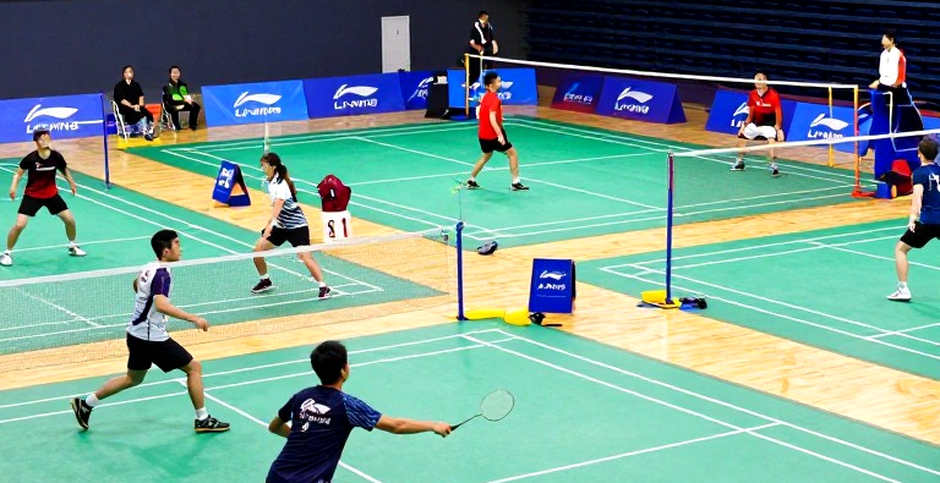
Her split-step came late. Not by much — about two-tenths of a second. But when a shuttle travels from one baseline to the other in roughly six-tenths of a second, those two-tenths of a second are the entire distance between a defensive save and a lost point. By minute 60, her recovery step had shortened by nearly half a metre. By minute 66, the lunge was no longer pulling her body back to the centre of the court. The umpire had not yet blown the whistle. But I knew the match was already over.
I have sat in that row many times. At 27, I have watched enough badminton to believe that the moment a match is decided rarely coincides with the moment the umpire announces the final point. The third game is simply where the debt is collected. The real creditor arrived ten weeks earlier, in a schedule nobody in the stands can see.
What decides the result is not the third game. It is the schedule of the ten weeks before it.
—
A year without an Olympic berth, and why that is bad news
2026 sits neatly between two Olympic cycles. Qualification for Los Angeles 2028 will, by convention, open around May 2027 and close in April 2028. Throughout 2026 there is not a single Olympic berth to be won, not a single quota that forces a coaching staff to justify itself upward. It sounds like a year off. The reality is the opposite.
To understand why, you have to understand the hierarchy of the BWF World Tour. Tournaments are tiered: Super 1000, Super 750, Super 500, Super 300 and Super 100. To enter the main draw of a Super 1000, a player must sit high enough in the rankings on the entry list. That door opens with one key only: world ranking.
And world ranking operates on a very specific mechanism. The BWF counts a player's best ten results over the previous 52 weeks. Winning a Super 1000 yields 12,000 points; runner-up 10,200; semi-final 8,400; quarter-final 6,600. A Super 750 awards its champion 11,000 points. At Super 500 the figure is 9,200. Super 300 is 7,000. And Super 100 — the lowest tier in the system — gives its champion 5,500.
Put two of those numbers side by side and the whole problem appears. A player who wins a Super 100, after taking five or six matches in a week, earns fewer points than a player who reaches the quarter-final of a Super 1000 — someone who needed only three wins. That is not an injustice. It is an engine. And that engine shapes the entire way Vietnamese players have to live through a season.
In Vietnam the ranking picture is fairly clear. Nguyen Thuy Linh is the anchor of women's singles, having at one point reached the world's top 20. Le Duc Phat leads the men's side. Behind them is a fairly wide gap, and the biggest international event on home soil — the Vietnam Open, a Super 100 held in Ho Chi Minh City — is where young Vietnamese players get a rare chance to touch international points.
Nguyen Tien Minh, who once climbed to world No. 5 and competed at multiple Olympic Games, closed out his career in a very different landscape. He belonged to an era when a Vietnamese player could survive on individual talent plus a minimal support system. That era is gone. Modern badminton demands a machine behind every pair of feet.
—
The arithmetic of defending points
Take a women's singles player ranked around 25th in the world. Her total sits somewhere between 40,000 and 45,000 points, drawn from ten results. That means each of her ten best results has to average roughly 4,000 to 4,500 points. To hold her position, she must keep reproducing that level.
Where does that level come from? A round-of-16 at a Super 1000 is worth 4,800 points. A round-of-16 at a Super 750 is 4,400. A round-of-16 at a Super 500 is only 3,600 — not enough. To make up the shortfall she has to look at Super 300 and Super 100 events, where points are lower but opponents are more manageable. And to score at Super 300 or Super 100, the only route is a deep run — which means winning four, five, six matches in a single week.
This is where I want to pause, because it is routinely misread. People look at the schedule of a world No. 25, see twenty events in a year, and conclude that she is greedy or that her coaching staff cannot plan. Not quite. She is paying a structural fee: the lower the ranking, the more tournaments you must play to keep that ranking where it is. A top-eight player can go through a year with thirteen to fifteen events, most of them at the highest tier, and hold position. A world No. 25 has to play eighteen to twenty-two, spread across tiers, across continents, across time zones.
It is a trap with a very specific shape: the physical cost of holding a ranking is always higher than the physical cost of first reaching it.
Now multiply the number of events by the physical cost of each. An elite women's singles match runs 45 to 70 minutes. In a three-game match at international level, a player covers roughly five to six kilometres of actual movement, most of it lateral and diagonal, punctuated by jumps and braking lunges. The rest between rallies is often shorter than the rallies themselves. Soft tissue needs 48 to 72 hours to recover from a match like that.
A tournament runs five to six days, with three to six matches. A player who plays twenty events a year, plus training weeks and travel, has very few genuine rest weeks. When events sit back to back — as they routinely do between the Asian and European swings — the body never completes its recovery cycle. It simply moves from one state of overload into another.
I have watched enough to recognise that injury in modern badminton is rarely an accident. It is an outcome. Patellar tendinopathy, Achilles tendinopathy, recurrent ankle sprains, knee-joint overload — these do not appear in a single afternoon. They accumulate week by week, and they surface at exactly the moment a player needs her body most: the 66th minute of the third game.
—
Home soil as a points source, and what it costs
The Vietnam Open is a Super 100. Viewed purely technically, it is a sensible arena: opponents at a workable level, low media pressure, no long-haul travel, a home crowd. For a Vietnamese player ranked between 60 and 100 in the world, it is one of a small number of realistic scoring opportunities.
Viewed structurally, however, there is a notable paradox. To win the Vietnam Open, a player must take five or six matches in a week, expending a quantity of physical capital comparable to reaching the quarter-finals of a Super 1000 — while the points received are about 5,500, less than 85 per cent of a Super 1000 quarter-final. In other words, the home tournament is a low-yield investment if measured in points alone, but a high-yield one if measured in international match experience for the next generation.
The difference between those two measures is exactly where strategic decisions get muddled. A coaching staff reading the Vietnam Open as a scoring opportunity for the No. 1 player will find it unattractive. A coaching staff reading it as a laboratory for a 19-year-old will find it almost compulsory. Same tournament, two opposite conclusions — and both are defensible.
I once sat in an assignment meeting where those two currents collided. The argument was whether to send the women's singles anchor to the Vietnam Open. The advocates spoke of a medal in front of a home crowd. The opponents spoke of the weeks already accumulated since the start of the year. I stayed quiet for a while, then asked what I thought was the central question: if that title costs her a semi-final slot at a Super 750 the following month, what is that medal actually worth?
No one answered definitively. But it is the kind of question the shuttle asks us every year, and we usually dodge it by calling it sentiment.
Tactics have no gender, but prejudice always keeps its own umpire.
I say this after years of watching scheduling debates. When a male player skips a tournament to maintain his body, people call it load management. When a female player does the same, people call it a lack of competitive nerve. Same decision, two labels. And over time that label becomes a form of pressure that makes it harder for female players to rest.
—
The machine behind the feet
What does a player who competes in twenty events a year need in order to survive? A strength and conditioning coach, a physiotherapist, an opponent analyst working with video, and a budget large enough to travel with an assistant across an entire season. That is the minimum configuration at international professional level.
For many major national teams, this configuration is standardised. In Vietnam, it is still assembled tournament by tournament. The head coach often doubles as tactical analyst. Physiotherapy is shared across disciplines. Video analysis is sometimes done by rewatching available footage rather than by data that has been bought or compiled specifically.
This gap is not a story about a lack of effort. It is a story about leverage. A player with a dedicated analysis team knows before the second round that her opponent likes to lift to the left corner at 16-16. A player without one discovers it at 16-16, and discovers it with her heart rate at maximum. The distance between those two situations is not technical. It is informational.
This is why early-round defeats for young Vietnamese players at international events are so often misread. We watch a 0-2 loss and attribute it to fitness or nerves. In quite a few cases, the player lost because she had no data on her opponent's footwork tempo, no information on serve tendencies when trailing, no knowledge that the mid-court was the opponent's weakest defensive zone. Fitness was not the problem. Not knowing where to spend fitness was the problem.
I once witnessed this at an international junior event, where a Vietnamese player led 19-15 in the deciding game and then lost seven points in a row. Afterwards he said he had "run out of battery". I rewatched the tape and counted: across those seven points, the opponent changed the shuttle's direction four consecutive times into the same corner. Four times. There was no adjustment from the receiving side. That is not a flat battery. That is a player placed in a match he had not been prepared to read.
—
The counterintuitive angle: don't play less, know where you are willing to lose points
Most of our first reactions to a congested schedule is to propose playing less. I do not believe that is the right answer.
Playing less, within the BWF points structure, is not a neutral choice. It is a choice with a price. Every tournament skipped is a gap in the best-ten group, and as 52 weeks roll by, old points fall off automatically. A world No. 25 who rests for two months can drop to 40th. Dropping to 40th means losing main-draw entry to Super 1000 events, having to play qualifying, having to fly to distant Super 300s to gather points. The loop does not disappear when you rest. It tightens.
The right answer, I think, lies elsewhere: instead of asking "how many tournaments", ask "at which tournaments are we willing to lose points". That is a much harder question, because it forces a coaching staff to accept an uncomfortable fact — that ranking is not the objective, it is the key. A key is only valuable when it opens the door you need. A ranking of 28 opens the door to Super 750. A ranking of 22 opens the same door. Those two positions are six places apart and can cost a player three additional tournaments, while the practical benefit is close to zero.
In 2026, with no Olympic qualification, that benefit is even more marginal. This is the only window in the four-year cycle when a trade-off can be made without paying for it with an Olympic berth. But precisely for that reason, it is also the year when every delay becomes most expensive. When qualifying opens in May 2027, a player needs a technical foundation already completed and a body not yet worn down. Building that foundation takes 12 to 18 months. If 2026 passes in chasing one tournament after another to hold a ranking, then 2027 will begin with nothing new except an old points table.
There is another reading, more counterintuitive still, and I believe it is the more correct one: in a year with no Olympic qualification, dropping ten to fifteen places in exchange for a completed technical change is a profitable trade. The difficulty is not the mathematics. The difficulty is accepting it in a sporting culture where the ranking table is read as a moral scoreboard.
—
What flows back over the boundary line
Badminton does not operate in a vacuum. What happens on court flows outward through fairly clear pipes.
A player who goes deep at high-tier events appears more often on television, and that appearance prices sponsorship contracts. A player who competes in twenty events a year but rarely clears the second round ends up with a denser schedule and lower income — an equation running against every logic of labour. At tournament level, a country with a player in the world's top 20 is more likely to retain a hosting slot for a Super 300 or above. At a lower level, the presence of home players in the main draw determines attendance, determines broadcast contracts, and ultimately determines whether a tournament survives into the following year.
And at the deepest level there is a pipeline few people see. A twelve-year-old in a provincial town watches television and sees a Vietnamese player standing level with big names. That child does not see the schedule. She does not see the physiotherapy bills. She does not see the decision to skip a tournament to protect a knee. She sees only the moment. Which is why the story about structure must always be told alongside the story about the moment — otherwise we will produce a generation inspired by a version of the sport that does not exist.
I learned to write about emptiness before I learned to write about victory.
I learned that from a season played in empty arenas. I was alone in a small rented room in Da Nang, rewatching footage and logging numbers. Looking at those figures, I realised that a player competing with no one cheering is as fragile as a person aching to be recognised. From then on, I began writing about the part that is not seen first, the part accumulated in silence.
The veteran writer I worked with at a World Cup taught me to read players' body language after a match, once they had stopped disguising it. He did not teach me to write fast. The veteran writer did not teach me to write fast; he taught me to write deep. And the deepest thing I learned was this: every player is carrying some debt, and the writer's job is to find the creditor.
For most Vietnamese players in the middle band of the rankings, that creditor has a name: the schedule.
—
A season that is programmed
If I were given a pen to sketch a 2026 calendar for Vietnamese players ranked between 30 and 60 in the world, I would start by sorting tournaments into three groups by function, not by tier.
The first group is the ranking-holding group. These are the Super 750 and Super 500 events a player must attend to maintain main-draw access. The number should sit between eight and ten, spread evenly across the year to avoid several old points falling off in the same 52-week window.
The second group is the technical-building group. These are nearby Super 300 events where a player can test a change of tempo — moving from a control-based game to an early-attacking game, for instance — under lower pressure. Points here are a means, not an end. Five to six events.
The third group is the accumulation group for the next generation. The Vietnam Open and regional Super 100 events belong here, reserved for players under 21. The objective is not medals. The objective is three to four international matches per year per young player, so that by 22 they already have around fifteen international matches behind them instead of zero.
This framework has one feature I want to emphasise: it does not require more money. It requires classification. Choosing the right tournaments to play is a free decision, and in a sport with limited resources, free decisions are often the biggest levers.
—
What I will be tracking over the next twelve months
Three specific signals.
First, the number of three-game matches involving Vietnamese players in the first half of the year. If the share of matches going to a decider exceeds roughly one third of the total, that is a sign of deep runs against comparable opponents — positive competitively, but simultaneously a sign of accumulated load. If that share is unusually low, it may signal quick early-round exits, an entirely different problem.
Second, the gaps between tournaments. A player with at least two weeks off between major events from March to July can be considered properly load-managed. A player competing in four events across five consecutive weeks in May is a signal worth attention, regardless of results.
Third, the composition of the travelling team. If the number of coaching staff travelling on European swings increases, that signals a system shifting from a "player fends for himself" model to a "team operates" model. That shift matters more than any medal won in 2026.
—
What a ranking table does not say
In the third game of a long match, when two players have reached the 66th minute, all that remains on court is a body and a decision. No ranking table is there. No world number shouts from the stands. There is only a right foot that has to arrive in the right place within six-tenths of a second.
The job of this sport is to make that moment possible — not once, but every week, across a whole year. That demands something far less glamorous than medals: a schedule thought through in advance, a coaching staff with clear roles, and the courage to accept slipping a few places in a year with no Olympic Games.
The season of exhaustion taught me that heroes also need a bench.
Not to rest. But to be able to sit down, look at the whole schedule, and decide where they are willing to lose points. When a sport learns to answer that question, the ranking will follow on its own. And when it only knows how to count points without knowing what it is buying with them, the next twelve months will be just a longer loop of the same third game, the same 66th minute, and the same split-step arriving two-tenths of a second late.
The shuttle does not care what rank you hold. It only cares whether you are there on time.