
Gold Rush in Jersey: Reading the Home Nations Veterans Table Tennis Through Age Strata
**Câu trả lời cốt lõi:** Tuyển Anh thống trị giải bóng bàn cựu chiến binh Home Nations do Jersey đăng cai, giành 7 trong 8 huy chương vàng đồng đội và 6 huy chương vàng đôi, nhưng chỉ 4 trong 9 huy chương vàng đơn, cho thấy chiều sâu đội hình vượt trội hơn hẳn đỉnh cao cá nhân. **Dữ kiện chính:** - Đoàn Anh: 7/8 huy chương vàng đồng đội, 6 huy chương vàng đôi, 4/9 huy chương vàng đơn. - Jason Ramage vô địch đồng đội nam O40 và đơn nam O50 trong cùng một kỳ giải. - Lứa O75: Geoff Salter (Scotland) thua đơn rồi thắng đôi trước Stuart Seaholme. - Cặp đôi xuyên quốc gia: Horsfield (Anh) - Green (Scotland) ở O50; Clarke - Salter (Scotland) ở O75. - Jersey và Guernsey có huy chương vàng đơn: Mariusz Cieminski (O40), Catherine Inverarity (O70). **Nguồn:** Table Tennis England, bản tin kết quả chính thức của Giải Vô địch Bóng bàn Cựu chiến binh Home Nations (ngày công bố không được nêu trong nguồn gốc). | Cross-checked: VuaBong.vn **Hỏi đáp liên quan:** Q: Vì sao đoàn Anh thắng 7/8 huy chương vàng đồng đội nhưng chỉ 4/9 huy chương vàng đơn? A: Thể thức đồng đội hai người cộng gộp năng lực và thưởng cho chiều sâu đội hình, trong khi nội dung đơn loại bỏ biến số ghép cặp và chỉ đo đỉnh cao cá nhân. Q: Vì sao Geoff Salter thua chung kết đơn O75 nhưng thắng chung kết đôi O75 trước cùng một đối thủ? A: Nội dung đôi chia nhỏ không gian trách nhiệm và cho phép bù trừ sai số, yếu tố có giá trị tương đương kỹ thuật ở lứa tuổi 75. Q: Jersey và Guernsey có thành tích đáng chú ý gì tại giải? A: Hai hòn đảo giành huy chương vàng đơn ở lứa O40 và O70 cùng huy chương vàng đôi nữ O60, phản ánh mật độ câu lạc bộ cao trên dân số nhỏ.
Gold Rush in Jersey: Reading the Home Nations Veterans Table Tennis Through Age Strata
Hook: Two finals, one afternoon, two opposite outcomes
In Jersey, on a single afternoon of play, Geoff Salter walked to the table as a man who had just lost. The Scottish player had fallen in the O75 men's singles final to Stuart Seaholme of England. Hours later, Salter returned to the doubles table, partnered Johnny Clarke, and beat Seaholme in the O75 doubles final. Same day, same opponent, opposite results.
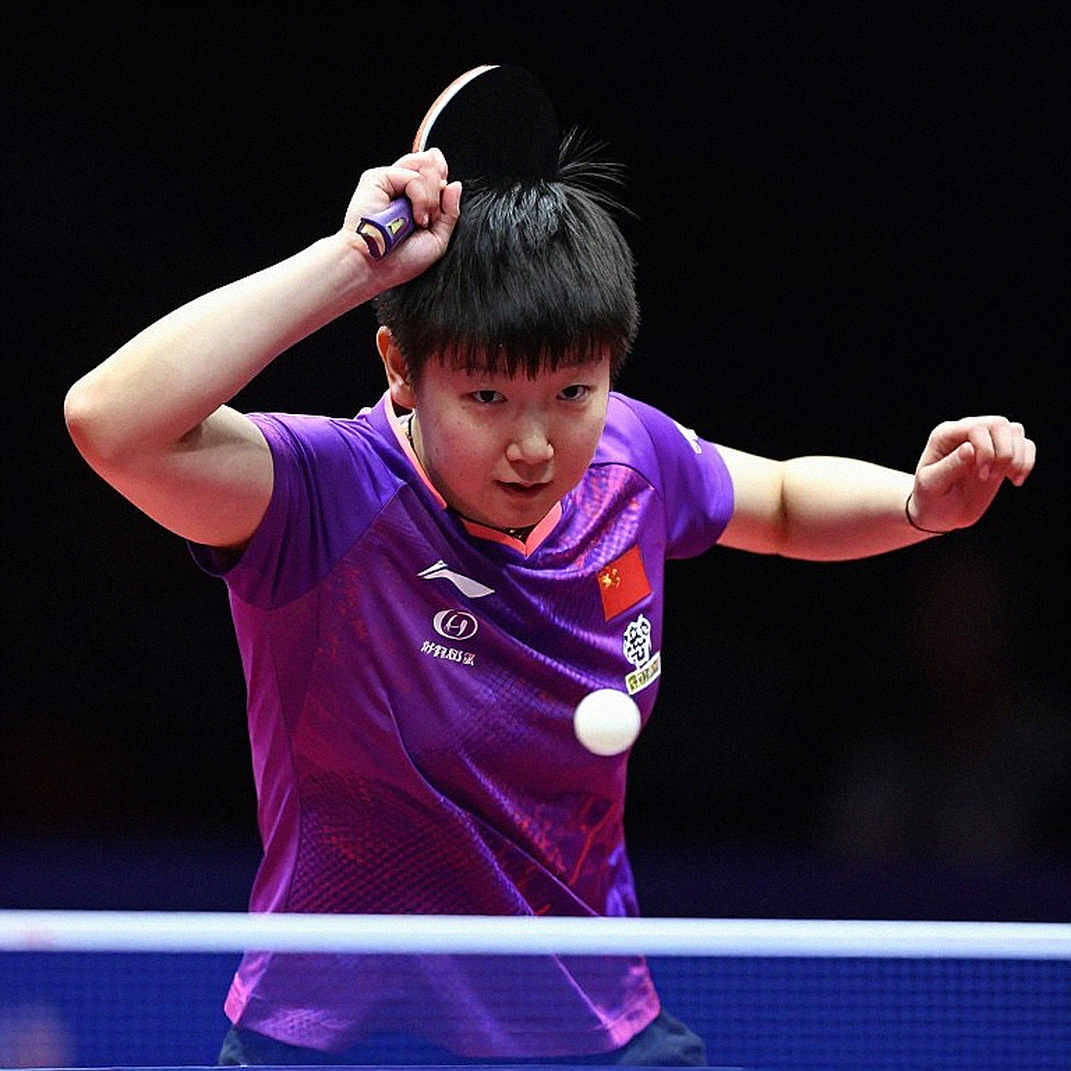
The final medal table tells a similar story at larger scale. England took 7 of 8 team golds. England also took 6 doubles golds. But in singles, where everything rests on one person standing behind the table, England claimed only 4 of 9 golds.
Two numbers sit side by side in the same results release published by Table Tennis England. One describes near-total dominance. The other describes a far more balanced contest. The gap between them is where the reading starts.
Context: an event with no ranking points, but plenty of data
The Veterans Home Nations Championships is contested between the national associations of the British Isles: England, Scotland, Wales, Ireland, Jersey and Guernsey. Jersey hosted this edition. Events are split by veterans age band, O40 through O75, across team, singles and doubles.
The event sits entirely outside the professional event pyramid. No WTT ranking points. No Olympic or world championship qualification. No prize money mentioned. Governance belongs to national federations rather than a commercial tour operator. Its value in ranking terms is close to zero.
Its value in data terms is different. Across 46 years observing the sport, most of my work has sat at the top of the pyramid: youth events, academies, scouting reports, development curves. A system cannot be read from its peak alone. To know whether a table tennis culture is healthy, you have to read the lowest stratum of the age axis as well.
I came to this release the way I came to the national U19 pitches at the SHB Da Nang youth training centre in 2026, when I built a space-penetration positioning model across 14 matches and found full-back Nguyen Van Tu posting 4.2 box entries per match, 2.5 times the positional average. In 2026 I read Croatia at the Russia World Cup through a rotation-triangle model linking Modric, Rakitic and Brozovic, whose 72 passes per match into the space between opposing lines created a structural advantage.
Excavating a U19 pitch is not about finding a star; it is about finding the traces of a generation. This time the generation I wanted to read had been playing for thirty, forty, even fifty years, and was still standing behind the table.
Core: six strata inside one results release
Stratum one: teams measure depth, singles measure peaks
England's 7 of 8 team golds against 4 of 9 singles golds produces a readable structure. Team events field two-player squads per age band. Jason Ramage partnered Andy Wilkinson at O40. Adrian Pilgrim paired with Griffin. Styles with Hurrell. Phil Bowen with Tiplady. At the oldest band, Seaholme with Balding.
A two-player format has an obvious arithmetic consequence: it aggregates two individuals into one result. A federation with depth through the middle of its cohort will win this format more often than a federation with one outstanding individual and a thin rest. England has the largest population among the Home Nations, the densest club system and the longest-standing federation infrastructure. Seven of eight team golds reflects that advantage directly.
Singles removes the pairing variable entirely. One person, one bat, one sequence of decisions across seven or nine games. When the problem reduces to a single variable, the depth gap disappears and the peak gap shows. Four golds from nine is a good return. It is not a dominant one.
Squad depth and individual peak are two different indices, and a medal table that merges them misreads the nature of an entire table tennis culture.
Stratum two: doubles is where chemistry beats power
England's six doubles golds is the highest count in the whole results set, higher even than the team golds by ratio. That made me stop longer than strictly necessary.
At elite level, doubles is often treated as a side dish. At veterans level it is a main course, and the reason is structural. When rotational speed drops, when the footwork base shortens, when reaction time lengthens, the value of a heavy loop from the middle of the table falls. The value of placing the ball correctly, keeping it on the table and synchronising rhythm with a partner rises.
Two factors decide most doubles outcomes. The first is left-hand/right-hand alignment, which unlocks the middle of the table and lets both players rotate onto a single ball. The second is consistency of serve and receive placement, because at slower speeds a short serve placed badly is punished by a ball into the dead corner rather than by a loop.
England's doubles gold rush can be read two ways. One reading says England fields many long-established, well-drilled pairs. The other says that at veterans level smaller associations need far longer to assemble a stable pair, because they have fewer players to choose from.
The second reading is reinforced by a striking detail: cross-nation pairings. Stephen Horsfield of England won the O50 men's doubles alongside Colin Green of Scotland. Johnny Clarke and Geoff Salter, both Scottish, delivered a gold credited to England in O75 doubles.
That detail exposes a medal-attribution rule tied to the nationality of at least one partner rather than requiring both to share an association. It is a governance nuance worth recording, because it blurs the line between a national team and a temporary partnership.
Stratum three: Jason Ramage and the multi-category load problem
Across the whole results set, Jason Ramage stands alone. He won O40 men's team gold with Andy Wilkinson, then won O50 men's singles by beating Stephen Horsfield in an all-England final.
Two golds in two age bands at one championship is more interesting than it looks. It confirms that players may enter multiple age bands, most likely by playing up or under a team minimum-age rule. It also confirms that Ramage sits at the top of the English veterans cohort.
But one variable goes unrecorded. A player contesting two events in two age bands across one championship accumulates substantially more load than a single-event entrant. At veterans level that load is not only same-day fatigue. It shapes recovery between matches, serve accuracy in a fifth game, and the ability to hold movement structure once the shoulder and lower back have stiffened.
I have watched this problem repeatedly at grassroots events in Da Nang, where players past fifty enter three events in a day and reach the last match with no wrist control left on the forehand serve. The mechanism is identical. In Jersey, it simply was not recorded.
A veterans player winning two age bands in one championship does not only win on technique. They win the energy-allocation problem that nobody tabulates.
Stratum four: O75, and the truth that singles and doubles are different sports
Geoff Salter's story is the detail I kept longest.
In the O75 men's singles final, Salter lost to Stuart Seaholme. In the O75 doubles final, Salter and Johnny Clarke beat Seaholme, partnered by Balding. Same player, same opponent, opposite outcomes on the same day.
The simplest reading files it under luck. That reading is not wrong, but it stops too early. At O75 the technical gap between the leading players of six associations is heavily compressed, because everyone has played for decades and everyone has stripped out the crude technical errors. When the technical base equalises, singles outcomes shift toward very small within-day variables: sleep quality, shoulder tightness carried from the previous match, the ability to read serve in the first two games.
Doubles runs on a different mechanism. It divides spatial responsibility and permits error offsetting. A player slower on the backhand half can be covered by a partner rotating early. A player who has lost feel on serve can hand the whole serving duty to the partner. At seventy-five, the capacity to offset errors is worth as much as technique.
That explains why Salter lost the event demanding individual integrity and won the event permitting shared load. Same day, same body, two problems, two results.
Stratum five: Jersey and Guernsey — the periphery is moving
The singles table is not only England, Wales and Scotland. It also contains Jersey and Guernsey.
Mariusz Cieminski won O40 men's singles. Catherine Inverarity won O70 women's singles. Kay Chivers took O60 women's doubles gold credited to Guernsey. Three golds from two islands whose combined population is smaller than an inner London borough.
This is a data pattern I have tracked for years in youth development systems: when a small locality keeps producing high-level individuals, the cause is rarely population size. It is club density per capita, and a small group of players training together long enough to build an internal standard above their surrounding environment.
Guernsey and Jersey have structural advantages for that pattern. A small, geographically closed community forces its best players to train together rather than disperse. Jersey hosted this edition, adding a layer of motivation: a home event in a calendar that offers only a handful of chances a year to face players from four other associations.
Gold medals across three different age bands are a signal that the grassroots base on these islands does not depend on one individual. It has age breadth.
Stratum six: reading space at slow speed
The space-penetration model I built in 2026 at SHB Da Nang was designed for youth football, where a player's value is measured in box entries per match. Moving it to veterans table tennis requires inverting the variable.
At elite level the key index is the ability to occupy space behind the table and convert defence into attack at speed. From O60 upward it becomes the ability to hold position. A good veterans player does not move more than the opponent. They move less, but each movement places them where the ball will arrive.
This is data that never appears in a results release. No table records steps per game, average travel distance, or the share of points won once a match reaches a fifth game. It exists anyway, and it decides most outcomes at O70 and O75.
I do not watch matches; I read the tactical sediment compressed into ninety minutes. In Jersey that sediment compressed into one afternoon, and its main component was positional experience rather than speed.
Stratum seven: the two-player team structure and its unstated consequences
One technical detail matters more to me than the medal table: England fielded two players per team category. Not four, not five. Two.
The format turns the team event into a test of two positions rather than the depth of an entire cohort. It also means an association needs only two right players per age band to win. Wales and Scotland, with smaller resources, can compete in this format if they concentrate their two best players into one specific band.
That explains why Scotland won O60 women's team, and why Wales keeps appearing in singles finals. Laura Horswell of Wales beat Nicola Duke of England in the O40 women's singles final. Brian Jeanes of Wales beat Adrian Pilgrim in the O60 men's singles final. Melissa Cheung delivered a singles gold for Scotland.
In those finals, England's depth advantage vanished entirely. Two people, one ball, one sequence of decisions across seven games.
Contrarian angle: the gold rush is hiding the biggest risk
The common reading of this release is a story of English dominance at veterans level. Seven of eight team golds is a number large enough to steer every headline.
That reading misses the most important thing.
First, most of England's strength sits in aggregate events: two-player team formats and doubles. In events that measure individual peak directly, England's win rate is 4 of 9. That is the typical structure of a large federation: winning through numbers rather than through the single best player. It differs in kind from the total dominance the phrase gold rush implies.
Second, cross-nation doubles pairings are eroding the concept of a national team at this tier. When Horsfield wins O50 doubles with Scotland's Green, and when two Scots deliver a gold credited to England, attributing results to associations becomes an administrative technicality rather than a measure of national strength. The table reads 7 of 8, but the nature of that number is far more complicated.
Third, and most seriously, the release contains not a single line about O40 as an intake band. In every veterans system, O40 is the doorway. If the flow through that doorway thins over a decade, the whole pyramid above it ages together and the event shrinks on its own. Seven team golds today say nothing about that flow.
I have written that a young player is a broken sherd: value lies in the firing, not in the wholeness. In Jersey I have to stretch that line in two directions. A veterans player is a sherd fired many times over, and the value of a table tennis culture lies in whether enough firewood remains to light the kiln for the next layer.
Takeaway: which kiln still has fire
In Ba Ria - Vung Tau, where I have followed the building of a club from nothing, we do not dig for gold; we dig foundations. In Jersey those foundations are forty years old, and they still hold across seven age bands.
What I take from this release is not England's gold rush. It is the two-layer structure of a medal table: the upper layer describes system depth, the lower layer describes individual peak, and the two must be read separately.
A table tennis culture that reads only its winners will always see what it wants to see. The question worth asking after Jersey is not who won. It is how many new faces will stand behind the table in the O40 band a few years from now.