
Bayley and Davies Lead 12-Strong GB Squad to France: Seeding Tune-Up Ahead of Para World Championships
**Câu trả lời cốt lõi**: Đội bóng bàn para Anh gồm 12 vận động viên, dẫn đầu bởi Will Bayley và Rob Davies, sẽ dự ITTF World Para Elite Yvelines tại Pháp từ ngày 12 đến 16 tháng 9 năm 2026. Mục tiêu là cải thiện thứ hạng thế giới và hạt giống trước giải vô địch thế giới para tại Thái Lan vào tháng 11 năm 2026. **Dữ kiện chính**: - 12 vận động viên Anh được xác nhận dự ITTF World Para Elite Yvelines, thi đấu từ ngày 12 đến 16 tháng 9 năm 2026. - Will Bayley (vô địch thế giới hạng 7) và Rob Davies (vô địch châu Âu hạng 1) dẫn đầu đội hình. - Shaun Marples giữ chức Interim Performance Director; trại huấn luyện tại Sheffield kết thúc với phản hồi tích cực. - Đội Anh đã có suất dự giải vô địch thế giới, nên Yvelines dùng để tối ưu hạt giống. - Giải vô địch thế giới para diễn ra tại Thái Lan vào tháng 11 năm 2026, cách Yvelines tám tuần. **Nguồn**: Table Tennis England, thông cáo đội tuyển para Anh | Cross-checked: VuaBong.vn **Hỏi đáp liên quan**: - Hỏi: Yvelines có phải vòng loại giải vô địch thế giới không? Đáp: Không, đội Anh đã có suất; giải Pháp chỉ nhằm cải thiện thứ hạng và hạt giống. - Hỏi: Ai là trụ cột của đội Anh tại Yvelines? Đáp: Will Bayley ở hạng 7 và Rob Davies ở hạng 1 là hai gương mặt chủ lực. - Hỏi: Giải vô địch thế giới para diễn ra khi nào? Đáp: Tháng 11 năm 2026 tại Thái Lan, tám tuần sau khi Yvelines kết thúc.
Sheffield had no spectators this summer. Only the sound of the ball bouncing on the table, rubber soles gripping the floor, and the rhythm calls of a session stretching over hours. That is where Great Britain's para table tennis squad closed its training camp before entering the final stretch. Table Tennis England has confirmed 12 athletes will travel to the ITTF World Para Elite Yvelines in France from 12 to 16 September 2026, before heading to the Para World Championships in Thailand in November of the same year.
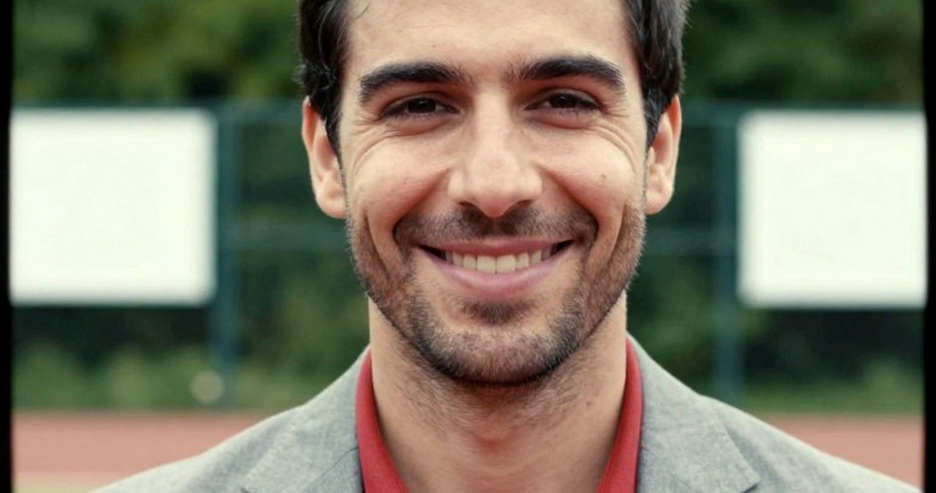
Two names stand at the front of that list: Will Bayley, world champion in class 7, and Rob Davies, European champion in class 1. The rest is a blend of veterans and a younger generation still finding its footing — Jack Hunter-Spivey, Bly Twomey in class 7, Billy Shilton in class 8.
That is the entirety of the released facts. The rest of the story lies in what the announcement does not say.
Context: the classification system and the real role of the French event
Para table tennis operates on a classification system from 1 to 9 based on functional impairment. The lower the number, the more severe the impairment: class 1 is for wheelchair athletes with limited upper-body control, while classes 7 to 9 sit close to the standing game of conventional table tennis. This system decides who plays whom, and who can win medals where. With a squad of 12 spanning classes 1 to 8, GB enters the French event covering almost the entire classification spectrum of the sport.
The Yvelines event belongs to the ITTF World Para Elite series — tournaments reserved for players already holding a world ranking. In points terms, it is not the summit of the system. The World Championships is where the largest points are distributed. But the gap between the two events is what matters: Yvelines ends on 16 September, the World Championships begin in Thailand in November. Eight weeks. Enough to adjust, not enough to rebuild.
GB already holds its place at the World Championships, so Yvelines functions as a seeding adjuster rather than a qualifying event.
Core analysis: how a tune-up event actually works
In table tennis, seeding decides the draw. A player seeded higher avoids strong opponents in the early rounds, which means saving energy for the knockout stage and reducing the odds of an early upset. For teams with limited depth like GB, this is the cheapest lever available to optimise the final outcome.
Shaun Marples, the team's Interim Performance Director, is direct about the aim: the France trip is meant to improve world ranking and seeding, and to serve as the last competitive outing before the World Championships. The language is administrative, but the logic underneath is plainly tactical: the coaching staff want the squad peaking in Thailand, not in Yvelines.
The shape of a 12-strong squad says a great deal. If France were the priority, they would not carry young players still in a learning phase. The presence of Bly Twomey and Billy Shilton indicates the staff treat Yvelines as a controlled laboratory: optimising seeding for the mainstays on one hand, acclimatising the next generation to elite-level pressure on the other.
Based on my own experience tracking para matches, there is a repeating pattern among strong European teams: they use one elite event before a major to calibrate three things. First, real match rhythm after a heavy training block. Second, the ability to handle different spins from unfamiliar opponents. Third, and most importantly, the mental state when standing across from an opponent of equal level. No training session reproduces the third.
The map of a match is not in the scoreline but in the strokes the camera forgets. For GB, those strokes will surface in Yvelines, where every short serve to the middle of the table or cross-court exchange carries a specific test.
Contrarian angle: the word "interim" and the gap behind two names
The most notable element in the announcement is a job title. Marples still holds the position of Interim Performance Director. In sports governance, that word ahead of a World Championships carries a large question: the person responsible for the long-term preparation plan may not be the one continuing after November. The plan still runs, but its continuity is suspended.
The bigger risk sits in the squad structure. Bayley and Davies are named first, and that reflects reality: GB's gold medals at major events have largely passed through these two. That reliance works in the short term, but it opens two gaps.
The first gap is physical. When preparation revolves around two athletes, any injury across the eight weeks between France and Thailand is enough to reverse the entire medal projection. Para table tennis has its own characteristics: athletes' physical foundations often come with higher injury sensitivity than the general baseline. The September-to-November window is a period that cannot be recovered if something goes wrong.
The second gap is subtler. When two mainstays always lead the headlines, invisible pressure shifts onto the rest of the squad. Young players like Twomey or Shilton enter Yvelines in an apprenticeship role — a mental state that does not favour producing surprise results. Strong Japanese and Chinese table tennis teams tend to do the opposite: they do not publish a star hierarchy in their releases, so every athlete enters with the same psychological weight.
An empty arena turns the hall into a laboratory, and in that laboratory the one thing that cannot be simulated is the feeling of having to win.
The Sheffield camp is described with the phrase positive feedback. That is standard federation release language, and it carries no verifiable information. There is no data on training volume, intensity, or win rates in internal practice matches. Eight weeks before a World Championships is when teams typically reduce volume and raise specialised intensity, but that is an inference from the general model, not from released facts.
Core judgment
GB's para squad enters Yvelines with a reasonable plan: use an elite event to optimise seeding while giving the next generation a taste of pressure. The 12-strong structure reflects a balance between those two goals, and it shows the staff understand that the World Championships in Thailand is the real target. But a reasonable plan is not the same as a safe one.
Takeaway
Yvelines will not answer who wins the world title. It will answer a narrower but decisive question: after a heavy summer block, how much of peak form does GB retain, and who among those 12 will hold firm when a match reaches the fifth game?
I do not believe in random points. Every rally is a link in a chain of rhythm that came before. And from 12 to 16 September, the links left in the dark will start to show — eight weeks before they truly matter.