
The Draycott Scoreboard and Two Sheffield Tickets: How English Table Tennis Selects Its U11 Class
**Câu trả lời cốt lõi**: Sai Prasanna Kumar (nam, 9-0) và Isabelle Xiao Xu (nữ, 8-1) vô địch England Hopes Challenge U11 tại Draycott, giành suất đặc cách dự ITTF World Hopes Week và Challenge tại EIS Sheffield từ 12 đến 18 tháng 10. **Dữ kiện chính**: - Giải đánh vòng tròn một lượt, 10 tay vợt mỗi giới, mỗi người 9 trận, thể thức thắng 3 game. - Isabelle Xiao Xu hạ Cindy Xiao 3-2 ở vòng bảy; cả hai cùng kết thúc 8-1. - Cindy Xiao chỉ để thua 6 game trong cả giải, chỉ số tốt nhất ở cả hai bảng. - Prasanna Kumar là tay vợt duy nhất đánh bại á quân Leo Shahmurov (8-1). - Cả 10 tay vợt bảng nam đều thắng ít nhất một trận. **Nguồn**: Bảng kết quả England Hopes Challenge, Table Tennis England | Cross-checked: VuaBong.vn **Hỏi đáp liên quan**: - Hỏi: Ai là đối thủ trực tiếp đáng chú ý nhất của Isabelle Xiao Xu? Đáp: Cindy Xiao, người thua đúng một trận 2-3 ở vòng bảy nhưng để thua ít game nhất toàn giải. - Hỏi: Vì sao Mila Gao đáng theo dõi? Đáp: Cô bé thắng cả bốn trận kéo tới game thứ năm, dù mẫu số nhỏ chưa đủ để kết luận. - Hỏi: Nhóm tuổi U11 có được xếp hạng WTT không? Đáp: Không, các tay vợt U11 chưa có xếp hạng WTT cấp trưởng thành và sự kiện này không trao điểm xếp hạng.
The fifth game ended 11-5. The ball rolled off the left edge of the table and stopped at the feet of an adult holding a phone. The applause in the Draycott hall was quieter than the ceiling fan. Sai Prasanna Kumar stood still for one extra beat before shaking hands with Jonti Barnes, the opponent who had just pushed him to a deciding game. There was no knockout bracket on the wall, because this tournament does not use one. There was only a round-robin table with ten names, and every name had to play nine matches across two days.
I once stood beside a 100m track in Binh Duong at sixteen, and I remember what it feels like when a race is decided in 10.55 seconds. Under-11 table tennis runs on different logic. It sits closer to a combined event than to a sprint. A round robin does not hand out the luck of a draw, and it does not let anyone hide a weakness for one afternoon. When the track cuts across the table, rhythm remains the shared language, except that here rhythm is measured in games conceded rather than in seconds.
One weekend in Draycott, ten names, nine matches each
The England Hopes Challenge is the English domestic selection event for the under-11 age group, meaning players born in 2026 or later. The format is published clearly: ten players per gender, with eight places allocated by ranking and two wildcards selected by the federation. The whole event is a single round robin, nine matches per player, each match best of five games.
The venue is Draycott, a local table tennis club inside the English system. That choice says something about how the federation organises its development work. A selection event for a young age group does not need a large arena. It needs competition-standard tables, adequate space behind the racket, and, more importantly, a space enclosed enough that ten eleven-year-olds must face each other over two long days with nowhere to hide.
The reward for the two champions is not money and not ranking points. It is a wildcard to the ITTF World Hopes Week and Challenge, held from 12 to 18 October at EIS Sheffield. This is the second successive year Sheffield has hosted the event, after an edition the federation described as highly successful. The structure is worth noting: most of the week is a training camp, and the Challenge competition takes place only over the final two days.
Internationally, the event brings together up to twenty boys and twenty girls from five continents. That is a major jump in opposition compared with a ten-player domestic tournament. And precisely for that reason, any conclusion drawn from the Draycott weekend must sit inside a very narrow frame: one national selection event, one developing age group, one data sample of just nine matches per player.
Based on my experience following matches across several sports, I always check the format first, because the format determines which data is trustworthy. A knockout tells me who survived one moment of pressure. A round robin tells me who held a level across repeated trials. Those are different answers, and one cannot be used to infer the other.
Nine wins, and the only player who beat the runner-up
The boys' table finished with Sai Prasanna Kumar unbeaten across nine matches. He beat Leo Shahmurov 3-1 in round six, beat Lusio Wen 3-1 in round seven, and beat Jonti Barnes 3-2 in round eight, closing the fifth game at 11-5. Against Wen, he dropped the opening game and then won three straight. That is the data type I care about more than a perfect record: the ability to reverse a short match, where each game lasts only minutes and there is no time to recover mentally.
Leo Shahmurov finished with eight wins and one loss, taking second place. He beat Lusio Wen in round five. The notable detail is that Prasanna Kumar was the only player in the entire field to defeat Shahmurov. Read the final standings alone and you see an unbeaten champion and a runner-up with a single blemish. Combine the two lines and the picture sharpens: the second-placed player fell to exactly one opponent, and that opponent was the player above him. The ordering in the boys' field therefore has structure rather than fixture luck.
Another detail receives little attention but is systematic: all ten boys won at least one match. For an age group this young, nobody finishing empty-handed is a positive signal about cohort depth. No place was filled by default, no match ended in a withdrawal, and no player was swept aside across nine matches. This is the kind of index I usually build myself when assessing a generation, because it measures the quality of the whole field rather than of one individual.
What the boys' table cannot tell us also needs listing. There is no data on blade type, rubber type, serve patterns, first-attack point conversion, or forehand looping tendencies. There is no anthropometric data for any player. There is no point-by-point analysis. What exists is match-level results at a macro scale, which means any deeper technical claim has to stop at the level of a flagged hypothesis.
For an eleven-year-old, a nine-match unbeaten run speaks to adaptability within a single tournament more than to a ceiling of ability. At this age, bodies change month by month, height directly affects contact point, and technique is still under construction. A perfect weekend is a small sample, and I always remind myself that a small sample can look beautiful by accident. What needs tracking is whether that result repeats across the next three events.
Six games conceded and one match that decided the title
The girls' field produced a far tighter outcome. Isabelle Xiao Xu and Cindy Xiao both finished with eight wins and one loss. The title was settled by their direct head-to-head, played in round seven: Isabelle Xiao Xu beat Cindy Xiao 3-2. That single result shaped the entire table, because reversing one match would have handed the trophy to a different player.
This is where the strongest quantitative indicator in the whole dataset appears. Cindy Xiao conceded only six games across the entire weekend, the best figure across both the boys' and girls' fields. It means that even in her only defeat she still dragged her opponent to a fifth game and lost just three games that day. A player conceding six games across nine matches is a player managing matches at a very tight level.
The data also shows that the top three girls were all unbeaten on the first day. The separation only appeared later, once the schedule compressed and direct head-to-heads arrived. This suggests the leading group in the girls' field is relatively flat, with no single dominant individual but rather a cluster of players of comparable current ability. A flat cluster produces tighter matches, but it also makes projecting who progresses further harder.
Within that group, Mila Gao deserves separate treatment. She played four matches that went to a fifth game and won all four, including several where she trailed 0-2 before turning the match around. On the eye test, that signals mental resilience or a style that needs time to find rhythm. Methodologically, four matches is far too small a sample to conclude anything durable. I record it as a hypothesis to be tested, not as a finding.
Placing the two fields side by side reveals one difference. The boys' field had one unbeaten player and one player who lost only to him. The girls' field had two players on eight wins and one loss, with the title decided by a single match. The conventional reading would say the boys' champion is stronger. My data reading is more cautious: the girls' field had a higher level of competition at the top, while the boys' field had one player separating himself more clearly from the rest. Those are two different stories, not one story at two intensities.
The round robin as a personality test
Nine matches across two days is a heavy load for an eleven-year-old. I have watched enough youth events to know that what decides the second day is usually not technique but the ability to preserve movement structure while tired. A round robin turns a weekend of competition into a test of endurance and emotional stability, not just a test of the player.
The athletics comparison is easy. A knockout match resembles a 100m: everything collapses into one moment, and one small error ends the tournament. A round robin resembles a combined event: you get multiple scoring opportunities, but you also cannot compensate for a weakness with luck. The English federation choosing a round robin for the under-11 group is a pedagogical decision. It is measuring consistency, not a moment of brilliance.
The format also nearly eliminates the draw variable. There is no easy half, no player avoiding a strong opponent through a lucky draw. Every player faces all nine others. The final standing is therefore a composite of nine independent tests, and consistency becomes the most important index.
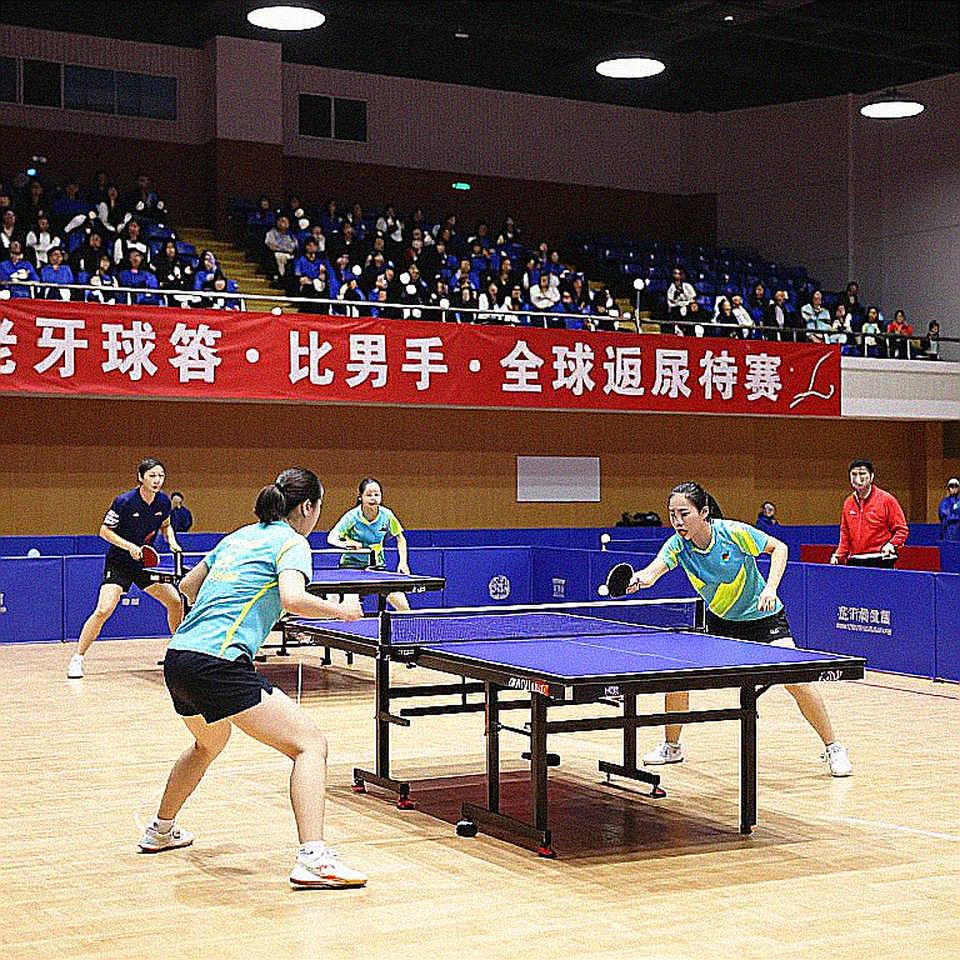
The wildcard mechanism also needs reading correctly. Each gender has eight places by ranking and two discretionary places. That allocation shows the federation keeping decision-making power over a small share of the field, enough to include cases that rankings do not capture, such as a player returning from injury, a player just moving up an age group, or a player with physical potential not yet developed. For a youth development programme, retaining that discretion is professionally sound, provided the criteria are published transparently.
In this case the criteria were published. No controversy has been recorded. Ranking-based places form the majority, the number of wildcards is stated, and settling the title by direct head-to-head is a rule known in advance. That is a selection structure that is clean procedurally, and for an event without prize money or international ranking points, the transparency of the process is its greatest asset.
I have been jumping hurdles since I was fifteen, and I know rules never stand still. Precisely because of that, I learned that a clear rule, published in advance, is worth more than a good rule that is vague. At youth selection level, where parents and club coaches watch every place, that clarity is the condition for the system to keep running without generating resentment.
The blind spot: a trophy cannot measure what deserves measuring
The counterintuitive angle sits here. Conventional coverage would revolve around two champions and two Sheffield tickets. But reading the entire dataset, the most weighty indicator belongs to someone who did not win: Cindy Xiao, with six games conceded across the tournament. She lost exactly one match, in a deciding game, to the player who then took the trophy. Measured by total games lost, she was the most solid player across both fields.
This raises a question about how young age groups are evaluated. A title in a round robin can be decided by a single match, and a single match at eleven can be affected by sleep, breakfast, or a ball clipping the edge in the fifth game. Age-group ranking therefore reflects long-term ability more accurately when it rests on total games conceded rather than on podium order.
At this age, the risk of over-interpretation also needs stating plainly. The share of players labelled prodigies at eleven who then reach senior international level is very low. Bodies change, motivation shifts, injuries appear, and some late developers overtake the field after fifteen. For domestic media to call an under-11 champion a future star is a methodological error, before even considering the psychological consequences for the child.
Mila Gao illustrates the caution required. Four matches to a fifth game and four wins sounds impressive. But with a small denominator, a run of four consecutive successes in tense situations may simply be random variation across a good weekend. I retain the resilience hypothesis while explicitly noting in my tracking file that it needs at least three more events to test.
My approach to data is to place indicators inside a specific tactical and psychological frame. A deciding-game win rate means nothing without knowing the opponent, the round, and how many matches had already been played that day. A low game-concession rate means nothing without knowing whether the player faced the strongest group of opponents. Numbers say nothing on their own; they only speak once fitted into competitive context.
Sheffield and the limits of a familiar analytical frame
The China-versus-the-rest frame is nearly unusable at under-11 level. At senior national-team level, the picture can be described in tiers: China in the leading group, Germany, Sweden, France, Japan, South Korea, Portugal and England in the chasing group, India, Brazil, Egypt and Iran among emerging forces. But at eleven, the competitive unit is not a nation, it is an individual development trajectory.
What the Sheffield event actually tests is adaptability to diversity. When players arrive from five continents, playing styles and physical development stages differ enormously. A player used to facing domestic opponents of the same age will meet spin, rhythm and tactics never seen before. That is a step change in difficulty, and results at international level are therefore far harder to predict than at a ten-player domestic event.

Sheffield hosting for a second successive year is an institutional signal. EIS is Britain's national sports centre, and the English table tennis federation acting as host for an international youth development event two years running shows organisational capacity has been recognised. At this level, hosting credibility has real value: it supports access to resources, sustains relations with the world federation, and gives domestic players international competition on home soil.
The diversity of names in the entry list tells another story. The field includes names such as Prasanna Kumar, Xiao Xu, Shahmurov, Wen and Jayden Xuan Chen alongside other surnames within the English system. This reflects the multicultural demographic base of English youth table tennis, and in one sense it is a competitive advantage: a system that draws talent from many communities is more likely to produce a wider range of athlete profiles.
One structural point about the Sheffield event deserves attention. The week consists of an extended training period with competition confined to the final two days. This is the model the world federation pursues for youth events: embedding competition inside a development frame. Players train together, are coached by international experts, and only then enter official competition. For an eleven-year-old, the value of training alongside peers from five continents may exceed the value of a single win.
What remains after the Draycott weekend
Hurdles exist to test people, not to stop them. At a youth selection event, the hurdle is not on a track but in the schedule: nine matches, two days, no room to postpone. Those who clear it move on to Sheffield, and those who do not still have an entire trajectory ahead of them.
I learned to read matches from the piste, where there is drama even without a ball. In Draycott, the drama was not in beautiful rallies but in the structure of the standings: one unbeaten player in the boys' field, two players on eight wins and one loss in the girls' field, a title decided by direct head-to-head, and a six-game concession figure belonging to a non-champion. Those four lines of data are worth more than any commentary about the futures of eleven-year-old children.
Summer emptied the stands, but data never took a holiday. My habit since 2026 has been to download results myself, rebuild them into a tracking table, and look for anomalies before reading any report. In Draycott, the anomaly was not in the winner but in the fragile margin between winner and loser.
Between two finish lines, the only constant is speed. Between two edges of a table, the only constant is consistency. Prasanna Kumar and Isabelle Xiao Xu will carry their consistency to Sheffield, but consistency only has value when it is tested repeatedly. These two tickets are the start of a tracking file, not the end of a story.
What deserves following over the next twelve months is not the titles but whether all four leading names across the two fields appear again on the same stage. Cindy Xiao, Leo Shahmurov and Mila Gao belong on the same watchlist as the two champions, because the gap between them was measured by a single match. A good development system is not measured by trophies handed out, but by how many athletes are still standing at eighteen.