
Messi Reaches 100 Inter Miami Goals: The Campeones Cup and a Conversation Beyond the Touchline
**Câu trả lời cốt lõi:** Inter Miami đánh bại Cruz Azul 2-0 để giành cúp Campeones. Lionel Messi ghi bàn thứ 100 cho câu lạc bộ. Sau trận, anh có cuộc trao đổi căng thẳng với ủy viên MLS Don Garber. MLS từ chối bình luận và Inter Miami không phản hồi ngay. **Dữ kiện chính:** - Inter Miami thắng Cruz Azul 2-0, giành cúp Campeones. - Messi chạm mốc 100 bàn cho Inter Miami, gần ba năm sau khi gia nhập năm 2023. - Đây là danh hiệu thứ tư của Inter Miami, sau Leagues Cup 2023, Supporters' Shield 2024, MLS Cup 2025. - Video ghi cảnh Messi trao đổi căng thẳng với ủy viên MLS Don Garber. - Phía MLS từ chối bình luận; Inter Miami không phản hồi ngay lập tức. **Nguồn và ngày:** Tổng hợp báo cáo trận đấu Campeones Cup, tháng 8 năm 2026 | Đối chiếu: VuaBong.vn **Hỏi đáp liên quan:** - Hỏi: Messi có phải cầu thủ đầu tiên đạt 100 bàn cho Inter Miami? Đáp: Gần như chắc chắn đúng, với câu lạc bộ chỉ thi đấu chuyên nghiệp từ năm 2020. - Hỏi: Inter Miami đã giành những danh hiệu nào? Đáp: Leagues Cup 2023, Supporters' Shield 2024, MLS Cup 2025 và cúp Campeones. - Hỏi: MLS có áp dụng án phạt nào không? Đáp: Chưa có án phạt chính thức nào được công bố.
Messi Reaches 100 Inter Miami Goals: The Campeones Cup and a Conversation Beyond the Touchline
The final whistle went. Cruz Azul's players dropped to the grass. The stand behind the goal had not yet emptied of song. On the edge of the television frame, a 39-year-old man walked slowly toward the touchline, his hand tapping lightly against his shirt. Inter Miami had beaten Cruz Azul 2-0 in the Campeones Cup. The home side's second goal was his 100th for the club in pink and black.
Three minutes later, the camera left the pitch and caught something else. Lionel Messi stood face to face with Don Garber, the commissioner of Major League Soccer. Neither man offered a handshake. Messi's gestures were clipped: a finger toward the stand, then a finger at the ground. Garber answered, his face tight. The clip runs less than thirty seconds, yet it travelled faster than the 100th goal.
That is the whole of the material I hold: a scoreline, a milestone, and a conversation nobody could hear. MLS declined to comment. Inter Miami did not respond immediately. In my trade, silences of that kind usually deserve more attention than statements.
Context: a club that has changed its own address
This match needs to be placed where it belongs. The Campeones Cup is a single fixture between the MLS Cup champion and the champion of Liga MX, staged annually since 2026. There is no group stage, no second leg, no accumulated table. It is therefore more a symbol than a pure contest.
But symbols carry weight. Cruz Azul is not an arbitrary opponent. Founded in 2026, once known as La Maquina during its dominance in the 1970s, it remains one of the great names of Mexican football. Beating a club like that, even in one match, still marks the relationship between two football cultures in North America.
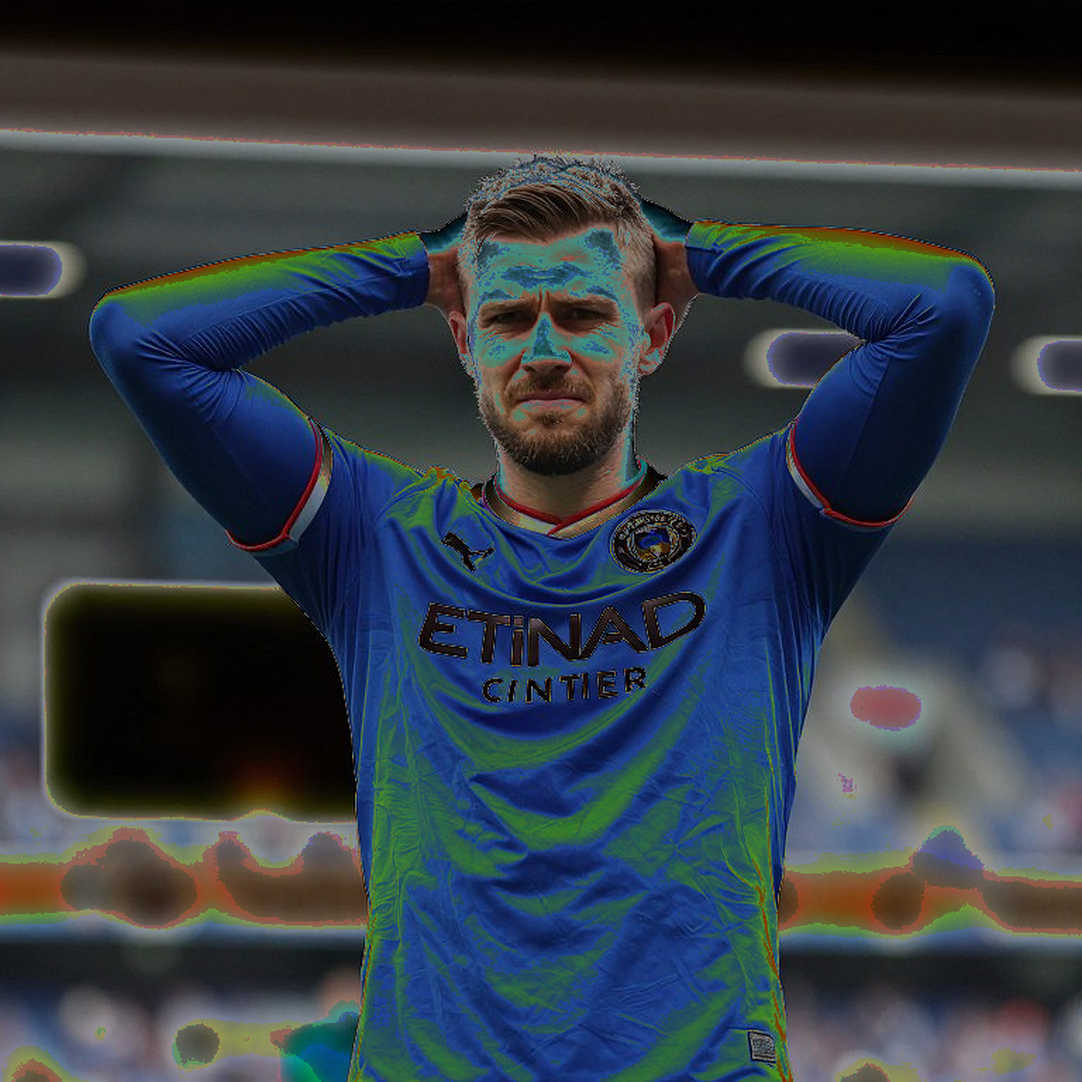
For Inter Miami, the larger picture matters more. Since Messi arrived in Florida in 2026, the club has passed through four sedimentary layers of silverware: Leagues Cup 2026, Supporters' Shield 2026, MLS Cup 2026, and now the Campeones Cup. A club that only began play in 2026 has accumulated more trophies than several sides with three times its history.
The striking thing is the speed. In three years, Inter Miami moved from an emerging team in the youngest of the major leagues to the centre of global media attention. That shift did not come from a sporting project built quietly across two decades. It came from one contract. And every contract is a layer of sediment; others read the value, I read the past.
What 2-0 says and what it does not
In the file I hold, there is not a single process metric. No expected goals, no expected assists, no pressures per opponent possession, no pass completion, no share of the ball. Only the final score and one individual milestone.
For an analyst, that is a poor database. I cannot say how Inter Miami built from the back, where Cruz Azul applied pressure, or how the visiting midfield was stretched. Any claim about tactical systems at this point is speculation dressed in terminology.
I choose to say that rather than fill the gap with sentiment. My job is to record, not to guess.
There is one thing the scoreline does say, and it says it clearly: Inter Miami won without needing a chaotic match. This was the fourth step in a run of trophies, and the repeatability of the result is a signal. A side that wins several different finals in the same manner usually has a more stable structure than it has luck.
What the 100th goal actually measures
A player reaching 100 goals for one club in roughly three years is rare. For Inter Miami, a club founded in 2026 and playing professionally from 2026, Messi is almost certainly the first to reach that mark.
The number is handsome. But it measures two things at once, and only one of them gets discussed.
First, it measures the capacity to sustain output at 39. That is a genuine physical and mental achievement, and it should not be dismissed.
Second, it measures how concentrated a club's attacking output has become around one individual. A hundred goals in three years means more than thirty a season, in a league with dense travel and punishing heat. No second scorer in the squad comes close to that figure. When a team wins four trophies in three years and one player carries more than thirty goals a season, those are not two parallel stories. They are one story.
People see the aura; I see the silent backs behind it. But this time the aura itself is what hides another back, bent under the weight.
A structure of dependence and the limits of the salary system
MLS operates a distinctive financial governance model: a collective salary cap, the Designated Player mechanism, allocation money, and provisions that let a club spend above the norm within defined limits. Inside that structure, Inter Miami has placed most of its attacking weight on its designated group, and most of that weight on one man.
Operationally, this is a rational choice. When you have a player who can create goals from set pieces, from drives into the half-space, and from decisions in the final third, you build around him. That is football logic.
In risk terms, it is the thinnest point. An attacking structure centred on a 39-year-old has no equivalent fallback. If he is absent, the team does not lose a player; it loses its frame of reference. Every final pass, every tempo decision in the opponent's half, every off-ball movement by team-mates is calibrated to a single anchor point.
I sat in the Spartak stands in 2026 and charted 69 minutes of a young Brazilian midfielder whom the media labelled as lacking incision, while he was sealing every gap behind an advanced full-back. The lesson holds: the real value of a structure lies in what is submerged, not what floats. For Inter Miami, what floats is a hundred goals. What is submerged is the question nobody wants to ask: if the anchor disappears in a semi-final, who holds the rhythm?
The exchange with Garber: a diagnosis, not a scandal
The footage shows Messi and the MLS commissioner speaking under evident tension. MLS declined to comment. No rule violation has been alleged. No sanction has been announced. The content of the conversation has not been disclosed.
What I can state with certainty is the power structure the scene exposes. Very few players in the world can stand directly opposite the head of their league's governing body immediately after the final whistle, on the pitch, in front of cameras. That Messi can do so says the relationship between him and the league is not employee to employer. It is partnership, and in a partnership both sides have something to lose.
MLS also has something to lose. Messi's presence in North America drives media rights growth, ticket prices, and the league's international market. That places bargaining advantage on the player's side more than on the governing body's, and both parties know it.
MLS choosing silence does not close the story. In today's media environment, silence extends the news cycle. It leaves a gap, and gaps are always filled with speculation.
The contrarian angle: the milestone is being misread
The common reading treats the 100th goal as the summit of an individual career, and the touchline exchange as a minor complication beside the main story. I think that reading inverts the order of importance.
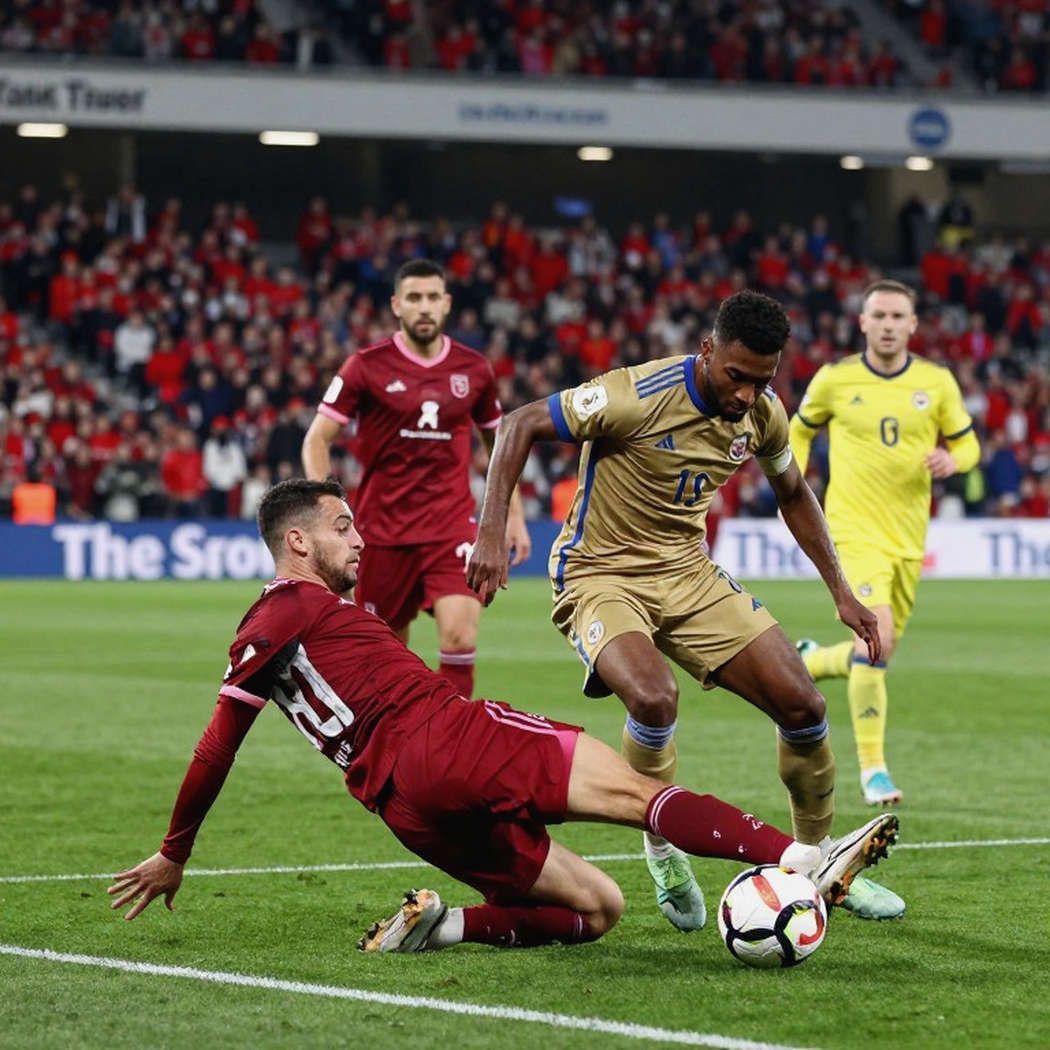
The individual milestone is the complication, in a structural sense. It demonstrates that over three years Inter Miami built an attacking system around one man at an age when every long-term plan requires a second option. Four trophies obscure this, because trophies are always the most visible evidence and therefore the thing that stops people asking questions. A team winning that much is rarely interrogated about structure. But collective results and the durability of a structure are not the same quantity.
As for the exchange with Garber, it is not a scandal. It is a diagnosis. When a league anchors its commercial strategy to one individual, any disagreement between that individual and the governing apparatus becomes the league's problem rather than a private matter. The video did not create the tension. It only made it visible.
In football, there are umbrellas in the rain that nobody sees; people only see the one standing beneath them when the rain stops. Today the world saw the man under the rain and rushed to comment on where his finger pointed. Thirty seconds of video drew more viewers than ninety minutes of play. That is the most accurate measure of where attention now flows, and also a warning about the game we are quietly accepting.
What to watch next
I am old, which is why I have the patience to wait for a season to grow up. But patience is not the same as closing your eyes. Three things deserve watching in the coming months.
First, Inter Miami's response in attack as the calendar thickens. If the goals keep coming from a single source while opponents begin to mark in two layers, the question of a fallback stops being academic.
Second, how MLS manages its relationship with its most important player. A league that wants to survive the retirement of its biggest star must build a structure independent of an individual. So far there is no sign that work is being accelerated.
Third, and perhaps most important, the young layers. In Florida, in Guadalajara, on concrete training pads and dirt pitches in the outer suburbs, there are always players training while nobody films. Beneath the dust of the city, I still find stones nobody has looked at yet. If Inter Miami wants its story not to end with one career, it has to find them.
The 100th goal is now in the record books. The question that remains is not: when the lights go out and the cameras turn away, who is the next one who knows how to score in silence?