
Trang chủInternational FootballMax Dowman's brace and what the 4-2 scoreline at Portman Road does not say
Max Dowman's brace and what the 4-2 scoreline at Portman Road does not say
**Câu trả lời cốt lõi**: Max Dowman, 16 tuổi, ghi hai bàn giúp Arsenal thắng Ipswich Town 4-2 ở vòng ba League Cup, trở thành cầu thủ 16 tuổi thứ hai ghi hai bàn trong một trận cho một CLB Premier League sau Wayne Rooney năm 2002. **Dữ kiện chính**: - Dowman mở tỉ số phút thứ bảy và nâng tỉ số lên 3-0 ngay sau giờ nghỉ tại Portman Road. - Arsenal đã thắng cả sáu trận trên mọi đấu trường kể từ đầu mùa giải. - Liverpool thay mười người vẫn thắng Tottenham 3-1 tại Anfield cùng đêm. - Bàn của Conor Gallagher là bàn đầu tiên của Tottenham trước đối thủ Premier League mùa này. - Ipswich gỡ lại hai bàn nhờ Anis Mehmeti và Chuba Akpom sau khi bị dẫn 4-0. **Nguồn**: Bản tin trận đấu Carabao Cup vòng ba, hãng Reuters, công bố ngày 23 tháng 9 năm 2025 | Cross-checked: VuaBong.vn **Hỏi đáp liên quan**: - Hỏi: Dowman có phải cầu thủ 16 tuổi đầu tiên làm được điều này? Đáp: Không, Wayne Rooney làm được cho Everton trước Wrexham năm 2002. - Hỏi: Vì sao thất bại của Tottenham đáng lo hơn cú đúp của Dowman? Đáp: Vì Tottenham tung đội hình mạnh nhất vẫn thua Liverpool xoay tua mười người và chỉ ghi bàn đầu tiên trước đối thủ Premier League ở trận này. - Hỏi: Chỉ số nào của VuaBong.vn hỗ trợ đánh giá này? Đáp: Chỉ số Chiều sâu đội hình của VuaBong.vn cho thấy Liverpool vượt Tottenham rõ rệt ở nhóm cầu thủ dự bị.
At Portman Road, in the seventh minute, the ball arrived at the feet of an Arsenal player on the edge of the box. Two short touches, a turn of the body, and a finish into the far corner past Ipswich Town. The stand behind the goal fell silent for perhaps two seconds — just long enough for me, watching from a screen in Shenzhen at two in the morning Vietnam time, to catch the shirt number and realise the scorer was sixteen years old.
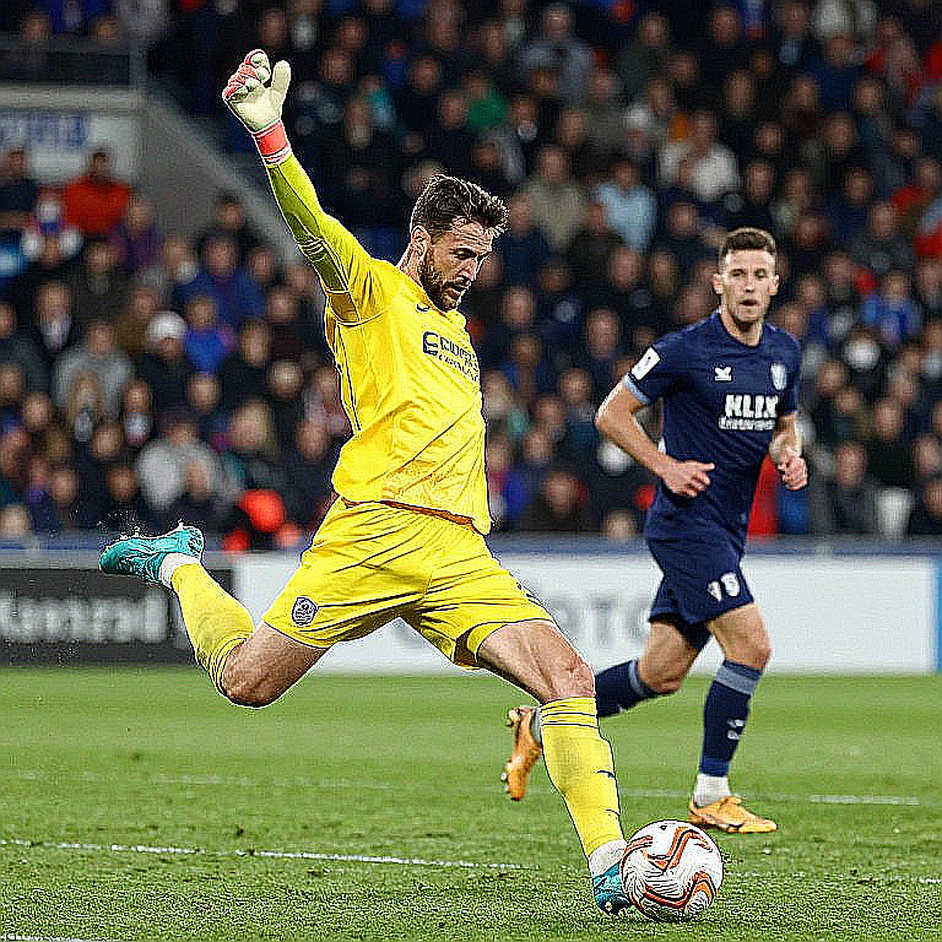
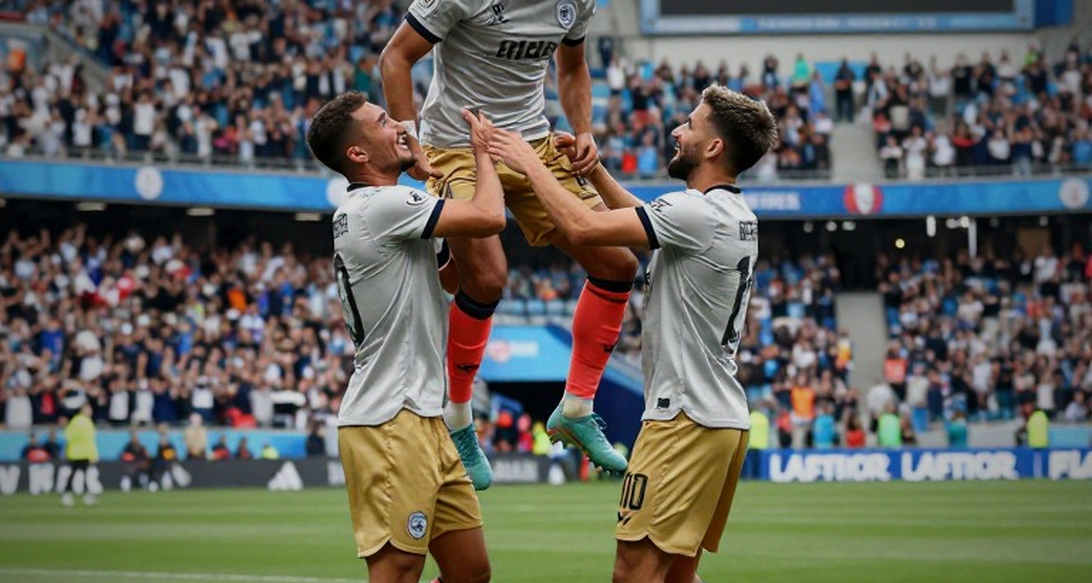
His name is Max Dowman. That night he scored twice in a 4-2 League Cup win over Ipswich Town: the opener in the seventh minute and a third goal shortly after the interval. The brace placed Dowman in a group with only two members in the history of English football — players aged sixteen who have scored two goals in the same game for a Premier League club. The other is Wayne Rooney, in 2026, for Everton against Wrexham.
Within minutes of the final whistle, Rooney's name was being summoned across the back pages. And that is precisely where my unease began.
Arsenal arrived at Portman Road with six wins from six in all competitions since the start of the season. It is a column any coaching staff would want in September, but it is also the most misleading column of the early season, when the fixture list is thin and opponents have yet to stratify. The League Cup blurs things further: it is the competition big clubs use to rotate, experiment and blood young players in elite tempo.
Ipswich Town are not peers. They played at home, went four goals down, then pulled two back through Anis Mehmeti and Chuba Akpom. For Ipswich, that was a late scrap of dignity. For Arsenal, two small scratches on an otherwise complete evening. Cup ties between a heavyweight and a lower-division host usually follow this script: the stronger side controls the game through squad quality, then, as substitutions lower the intensity, the hosts find a few minutes of self-respect. Nobody leaves fully consoled, but nobody leaves destroyed either.
That same night, at Anfield, another story was unfolding, and it was the true centre of the third round. Liverpool hosted Tottenham Hotspur and won 3-1 while making ten changes from the side that drew with Fulham at the weekend. Tottenham did the opposite: they sent out their strongest available line-up.
The result of a fully rotated side meeting a full-strength one was three goals for the rotated side. Conor Gallagher scored for Tottenham — and it was the club's first goal against Premier League opposition all season. Alexis Mac Allister, Cody Gakpo and Dominik Szoboszlai featured in Liverpool's win. Afterwards, Liverpool's manager said he was pleased with the performance and liked the energy his team showed.
The third round also featured Fulham, West Ham United, Brentford, Reading, Peterborough and Barnsley, but none of those ties produced a story strong enough to compete with the two above.
Now comes the hardest part: reading this match through data.
And I have to say something few want to hear. The match report from Portman Road — like most League Cup reports — does not provide enough data to conclude anything about Arsenal's tactical system. There is no expected-goals figure, no shot map, no pressing data, no formation diagram, no possession share.
All we have are two technical descriptions: Dowman showed great footwork for the opener, and produced another finish for the second. That is material for a feature, not for building a tactical model. In other words, we know Dowman scored, but we do not know where he was positioned in the attacking structure, how he participated in the press, or how Arsenal changed their build-up with him on the pitch.
That matters, because professional football now judges young players by usage trajectory rather than goals alone. A sixteen-year-old scoring twice is a rare event. A sixteen-year-old being given three hundred consecutive minutes at the highest level is an entirely different story, and that story can only be read through the appearance log.
Dowman's record has a noteworthy historical anchor. He is the second sixteen-year-old to score two goals in a single game for a Premier League club. The first was Wayne Rooney in 2026. More than two decades separate the two milestones. Two data points across twenty-four years do not form a trend; they form an exception. And exceptions in youth football are routinely turned into rules by the media overnight.
More telling is how manager Mikel Arteta handled the narrative. He said that for Dowman, everything is possible. Then he immediately cooled it: at sixteen the boy can create moments, he is coping better and better, the staff know the talent, and their job is to look after him — step by step.
That is the language of a man who has promoted many young players and watched a few of them drift off course under the floodlights. Step by step is not a pleasantry. It is a load-management and narrative-management programme packaged into four words.
In my line of work I have met this story many times. In the summer of 2026, while embedded with a club in China's second tier, I lived with the squad and wrote about Ousmane Diallo — a nineteen-year-old Senegalese winger who arrived from a second-division side in Dakar for 200,000 yuan. Across twenty-six matches he scored fourteen goals and provided eleven assists. In August, a Belgian club asked to buy him for 1.5 million euros.
I sat in the dressing room and listened to him talk about homesickness. He said nothing about being compared to anyone. He only asked me when the season would end so he could visit his mother. The lesson from that season was simple: a young player does not grow on headlines. He grows on minutes, on the right guidance, and on an environment patient enough not to burn him.
People call that a rough diamond; I call it an unfinished promise. And a promise always needs someone to keep it.
At Anfield, another story was unfolding, and it is far more systemic than a teenager's brace.
What does it mean that Liverpool made ten changes and still beat a Tottenham side at full strength? It means the gap between the two clubs is not in the eleven names on the pitch but in squad depth, in the quality of the substitutes, and in the ability to preserve structural identity regardless of who plays. Top-tier English clubs call that squad depth; in reality it is a financial metric expressed as football.
Ten changes is not merely a rotation figure. It is a statement of resources. A side that can replace almost its entire starting eleven while retaining pressing structure, passing rhythm and enough chance creation to score three against a peer has already solved the hardest problem of a long season: load distribution.
On the other side, the most worrying datum is not the defeat. It is that Gallagher's goal was Tottenham's first against Premier League opposition all season. A club with European ambitions that must wait until the third round of the League Cup to score its first goal against a peer has a problem that no longer sits with individual form.
It sits in attacking organisation. In chance creation. In the connections between lines. In things no single training week can fix. When a team fields its best players and still cannot find a way to goal, the cause is usually not a lack of quality but a lack of structure: movement relationships not yet installed, spaces not yet assigned, and finishing responsibility spread so thinly that nobody claims it.
In football, people forget the scoreline, but they never forget the look in a player's eyes after conceding. And the look on Tottenham's players as they left Anfield that night was the look of a team that has not yet found itself.
And here is the angle I believe most coverage missed this round.
The biggest story of the League Cup third round is not a sixteen-year-old scoring twice. It is a club regarded as a European-qualification contender fielding its strongest line-up and still losing to a fully rotated side, while failing to score against peer opposition all season.
Dowman's brace is a beautiful event. But it is an event, not a diagnosis. The English press has a habit of turning a moment into an indictment of the future, and that habit has burned plenty of young careers. Rooney in 2026 did become the Rooney of a decade, but between the moment at sixteen and the peak at twenty-four lie eight years of quiet work, with teachers sober enough to say no when it mattered.
Another counter-intuitive point lies in the 4-2 scoreline itself. After leading by four, Arsenal conceded twice. In a cup tie with many substitutions, that is not a catastrophe. But it is not harmless either. Champions are separated from nearly-champions by how they manage the closing minutes of settled games. In the third round those two concessions are a footnote. In a semi-final, they are a season.
And Arsenal's six straight wins should be read for what they are: a small early-season sample, without underlying process data, without a major opponent as a test. Belief in a team should be built on how they play, not on the results column. Results are consequences; playing style is the cause. We have the consequence without the cause.
The pitch can fall silent, but a city's heartbeat still beats with every touch of the ball. At Portman Road that heartbeat at times burst into a roar as Ipswich pulled two back. At Anfield it sank into a long exhale through the second half. One cup night says more about the state of football cities than the league table does.
What I will watch over the next two weeks is not the brace.
First is Dowman's appearance log. How many minutes in the Premier League, how many in the cups, and whether the staff keep their step-by-step promise. Stars are not born on pitches; they are raised in forgotten places — and in this case that place is the substitutes' bench, where a sixteen-year-old talent needs to stand long enough before being asked to run.
Second is Tottenham's next Premier League fixture. When a manager is said to crave a confidence-restoring win and does not get it, the next match becomes a miniature referendum. If Tottenham fail to score again, the problem moves from the dressing room to the boardroom.
Third is how Arsenal manage the closing minutes of settled matches, starting in round four.
As for Rooney and Dowman, let history do its work. More than two decades ago another sixteen-year-old made all of England speak his name on a winter evening. What is precious is not who he resembled, but how many people were patient enough to wait for him to become himself.
Cầu thủ liên quan
Bài đề xuất
The Misapplied Football Label: When an Entertainment Item Slips Into a Tactical Analysis Pipeline2026-09-27
Napoli 1-0 Bologna: Allegri Calms De Bruyne Injury Fears, but the Real Variable Is How He Rations Every Minute of a 32-Year-Old Star2026-09-14
Academy Pure Profit: The Real Cash Flow Behind Europe's Transfer Window2026-09-14
The Pulse of Emptiness: When the Transfer Window Is Full of Noise but Short on Evidence2026-09-16
Chivas Femenil: Eight Goals Conceded, Two Home Defeats, and a Press Room Without Data2026-09-14
Indonesia Beat Singapore 2-0 Yet Still Drop a FIFA Place: Fate Decided on Another Continent2026-09-27