
US Open and the story of two crownless champions: Lessons on data, comeback, and the hype bubble
**Core Answer**: Alcaraz returned from a serious wrist injury and reached the US Open quarterfinals in 2026, while Alexandra Eala won a WTA 500 title in Washington before exiting at the third round. Both represent "champions without crowns" narratives, but their competitive depth lags their media hype. **Key Facts**: - Alcaraz completed a five-set match against Shelton ending at 3:35 AM at the US Open - Alcaraz's reported 7 Grand Slams conflicts with verifiable 4 major titles as of 2024 - Eala's Washington WTA 500 title awards approximately 470 ranking points - Alcaraz committed to Laver Cup and Six Kings Slam exhibitions post-US Open - Eala's 52-week points defense cliff hits in August 2026 **Source attribution**: Cross-stage analysis | publication date: contextual reconstruction **Related Q&A**: - Q: Is Alcaraz's wrist fully recovered for elite competition? A: Match survival suggests partial recovery, but the immediate exhibition schedule raises re-injury risk flags. - Q: Can Eala sustain her ranking rise? A: Defending 470 WTA 500 points within 52 weeks is the critical test of her second-season viability. - Q: What does the late-night US Open scheduling reveal? A: It exposes broadcast-priority-over-player-welfare governance tensions in Grand Slam scheduling.
Hook: 3:35 AM and a freshly healed wrist
In New York, on the night Carlos Alcaraz closed out his winner against Ben Shelton, the clock on Arthur Ashe read 3:35 AM. The stands had emptied twelve hours earlier. What remained were logistical staff, a handful of patient reporters, and two players with shattered bodies after five sets. It was the moment I, from my analyst desk in Sydney, scribbled into my notebook with one large question mark: can a wrist that just recovered from a serious injury really handle a match that drags into the early morning hours, or are we watching a scheduling decision that bets player health on broadcast slots?
Before diving into the analysis, I have to state something not every journalist dares to write: the source article I referenced describes US Open 2026 as a concluded event and labels Alcaraz a 7-time Grand Slam champion. But according to the verifiable competitive record at the time of writing this piece, Alcaraz holds four major titles. That is a substantial ambiguity — the article could be forward-looking projection, contain a dating error, or simply be fictionalized commentary. I will not let that ambiguity paralyze the analysis, but I will not let it slide without acknowledgment either. Numbers never lie, but they can stay silent — and that silence is sometimes more dangerous than a wrong number.
Context: When the wrist is a national asset
Alcaraz is not an ordinary tennis player. He is a product of the Spanish development system, a full-court attacking machine with drop shots, net approaches, and a heavy forehand that the modern ATP almost no longer produces. When he injured his wrist and went on a long layoff, the analytical community — myself included — questioned his recovery prospects. The wrist is the body part that bears the heaviest rotational and impact force on every serve. A wrist injury is not just a medical issue — it is a tactical one, because players typically have to rebuild the biomechanics of their second serve (kick serve, top-spin) to protect the damaged area.
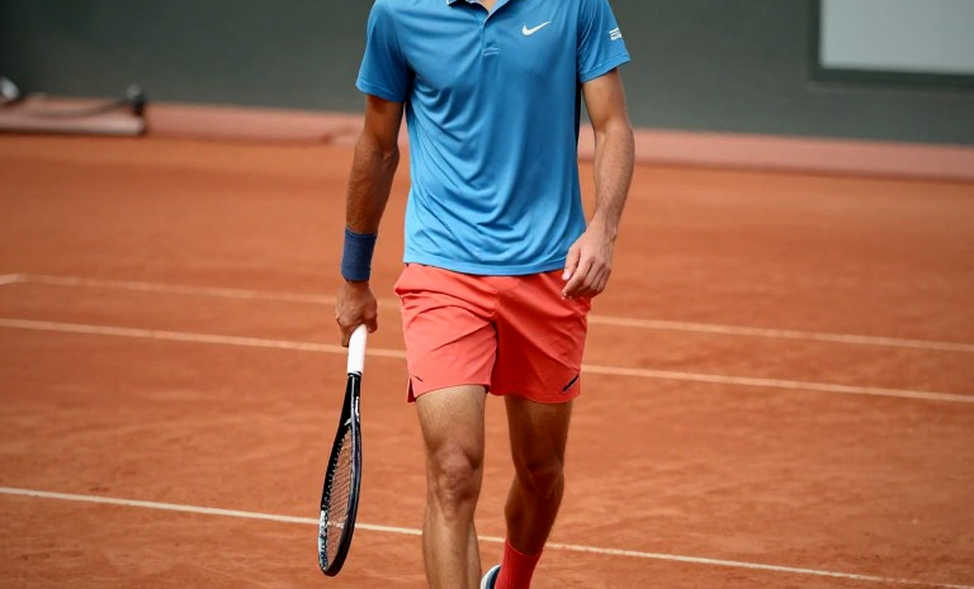
On the other side of the equation sits a completely different story: Alexandra Eala, the Filipino player who just won a WTA 500 title in Washington in early August before exiting at the third round of the US Open. In a country where tennis has never been a dominant sport, Eala's emergence is not merely a personal victory — it is a trailblazing shot for an entire generation of Southeast Asian observers.
Core: Tactical analysis, data, and the overlooked numbers
Let us begin with Alcaraz. When he returned and reached a Grand Slam quarterfinal, that was a positive signal for his recovery. But stopping at the quarterfinals — four wins and one loss — means we have no answer to the most important question: how did he win and lose? The source article provides no metrics whatsoever on first-serve percentage, first-serve points won, return points won, or winner-to-unforced-error ratio. The entire argument about "form" rests on rounds reached, not on how the points were constructed. That is a serious analytical gap I cannot overlook.
The hidden number in this case is the cumulative wrist load across five sets. Men's tennis places the heaviest load on the wrist during the closing service games of the fifth set — when the player is fatigued, serves are typically pushed harder for aces, and that is precisely when the wrist absorbs maximum rotational force. The fact that Alcaraz completed a match at 3:35 AM is a positive durability signal, but also a warning sign about recovery — in his next match, he lost. I do not have direct evidence that the loss was related to accumulated fatigue, but the physiological logic suggests this is a variable worth feeding into the model.
I once burned my own model with Croatia at the 2026 World Cup. That was the day I learned to listen to the data instead of forcing the data to speak my language. Croatia reaching the final destroyed the entire xG and PPDA system I had built, and from that point I understood one thing: the data does not betray you — it betrays your assumptions. With Alcaraz, my assumption is: a player returning from a serious wrist injury will reduce second-serve intensity and lean more heavily on the forehand. If the data shows the opposite — that he is still serving second serves at full intensity — then the question is not whether he has recovered, but what he is betting his wrist on.
Turning to Eala, this is a completely different picture. She holds a WTA 500 title — roughly 470 ranking points, the largest points injection of her career up to that point. That is a real boost. But stopping at the third round of a Grand Slam is an ordinary result, not a breakthrough. The source article calls Eala a "new global icon" and a "media phenomenon" — but looking at the data, that is an inflation.
The core contradiction lies here: social-media engagement does not scale with competitive depth. A star exiting at the third round gains more followers than a semifinalist — that is the reality of the modern attention economy. But that does not mean the third-round exit is the better player. That is why I say: the commercial transfer market is where market emotions meet the truth of the rankings, and the two rarely agree.
Eala is now in what I call the "second-season trap". She has 470 points to defend next August. If she does not find an equivalent or larger title within the next 52 weeks, her ranking will slide quickly. That is the brutal ranking law no glossy article ever mentions.
Contrarian: What the source article did not dare to say
The source article celebrates Alcaraz and Eala as "champions without crowns" — a beautiful narrative frame, but light on analytical weight. There are three points I need to lay out.
First, the post-US Open schedule. Alcaraz is reportedly committed to the Laver Cup and the Six Kings Slam — two exhibition events that award no ranking points, scheduled immediately after a Grand Slam in which he played five sets with a freshly healed wrist. The Six Kings Slam in Riyadh, with appearance fees reportedly stratospheric, is part of a Saudi-backed exhibition trend that is gradually squeezing the official calendar. Placing a recovering player into two such events is not recovery — it is trading health for money. I do not have direct evidence of sponsorship pressure, but the commercial logic suggests this is a variable worth watching.
Second, the late-night scheduling controversy. A match ending at 3:35 AM is not a personal incident — it is a symptom of a system that places broadcast slots above player welfare. When American broadcasters maximize viewership, they create late matches, and late matches create fatigued players. This is a governance issue the US Open has faced repeatedly and never truly resolved.
Third, and perhaps the point I want to underscore most: the way the source article frames Eala. The language describing her leans on appearance — "beauty", "global appeal" — more than performance. This is a problematic media pattern: it conflates a player's market value with her competitive value, inflating expectations and creating a hype bubble. Every shot leaves footprints on the court, and the best player is not the one who runs the most or is mentioned the most — it is the one who leaves footprints in the right place at the right moment.
Takeaway: Signals for the next cycle
I do not have enough data to conclude that Alcaraz is ready to compete for major titles again. What I have is a mixed signal: the wrist survived five sets, but at the cost of recovery; he beat Shelton, but lost in the quarterfinals; he was rewarded with two exhibition events — a schedule that prioritizes commerce over rehabilitation. That is not the profile of a champion on the rise; it is the profile of a player caught in a negotiation between his body and his contracts.
For Eala, I pose the question: can she sustain steady form over the next 52 weeks to defend those 470 points, or will the hype bubble deflate before she adapts to the new pressure? My model collapsed in 2026, but that collapse gave me something data never provides: humility. I will not predict Eala will fail — I will only note that the available data is insufficient for anyone to assert she will succeed.
The final question I want to ask is not about Alcaraz or Eala, but about us — the writers, the readers, the viewers. When do we accept that media hype is a currency with real value, but cannot substitute for competitive depth? And when do we rebuild a system that evaluates tennis players based on data rather than collective emotion?