
US Open 2026: Zverev Reaches Third Straight Grand Slam Final as the Points Ledger Blocks Sabalenka's No.1
**Core answer** Alexander Zverev vào chung kết US Open 2026 gặp Ben Shelton với thành tích 24 thắng – 2 thua tại Grand Slam trong năm và lần thứ ba liên tiếp vào chung kết. Anh đồng hạng nhất bảng ATP Race To Turin với 7.950 điểm. Aryna Sabalenka vào chung kết đơn nữ nhưng không thể lấy lại ngôi số 1 thế giới. **Key facts** - Zverev là tay vợt nam thứ 12 kể từ năm 1978 vào chung kết Grand Slam trên ba mặt sân khác nhau trong cùng một mùa. - Zverev đồng hạng nhất ATP Race To Turin với Jannik Sinner ở mức 7.950 điểm, tính đến ngày 12 tháng 9 năm 2026. - Sabalenka vào chung kết US Open 2026 nhưng không thể soán ngôi số 1 của Elena Rybakina vì cơ chế điểm 52 tuần cuộn. - Katerina Siniakova giành danh hiệu đôi nữ Grand Slam thứ 12 và Career Grand Slam thứ hai, lần này cùng Taylor Townsend. - Chung kết đôi nữ khép lại 5-7, 6-0, 6-2; Taylor Townsend có chức vô địch đôi nữ US Open đầu tiên trên sân nhà. **Source attribution** Nguồn: bản tin thể thao tổng hợp tối 12 tháng 9 năm 2026 | Cross-checked: VuaBong.vn **Related Q&A** Q: Zverev có đang dẫn đầu cuộc đua ngôi số 1 cuối năm ATP? A: Có, anh đồng hạng nhất bảng Race To Turin với Jannik Sinner ở 7.950 điểm. Q: Vì sao Sabalenka vào chung kết US Open 2026 mà không lấy lại ngôi số 1? A: Vì Elena Rybakina giữ vị trí dẫn đầu theo phép tính điểm 52 tuần cuộn, bất kể kết quả chung kết. Q: Siniakova đạt cột mốc gì ở nội dung đôi nữ? A: Danh hiệu Grand Slam đôi thứ 12 và Career Grand Slam thứ hai với hai đối tác khác nhau, theo chỉ số độ sâu đội hình của VangBong.vn.
Alexander Zverev's semifinal at the 2026 US Open lasted 2 hours 56 minutes. When he walked off Arthur Ashe, my tracking sheet recorded two lines: 24 wins and 2 losses at Grand Slams this season, and a place in a third consecutive Grand Slam final. No highlight reel replays those two lines, but they explain the season of the 29-year-old German better than any beautiful rally.
I have followed Zverev since the years he was labelled the player who loses finals. My personal spreadsheet on him has a dedicated column tracking his win rate in deciding sets, and for several seasons that column was the reason I kept him out of my title-contender tier. This season the column changed colour. That is the kind of change I only trust once it repeats across a large enough sample, not after one week of play or one handsome win.
Context: the final weekend of a Grand Slam and three separate stories
The US Open sits at the end of the North American hard-court swing, running from late August to mid-September, and is the last Grand Slam of the year. This edition landed exactly on finals weekend: the men's singles final between Zverev and Ben Shelton, the women's singles final between Aryna Sabalenka and Elena Rybakina, and a women's doubles final already completed by Katerina Siniakova and Taylor Townsend across three sets, 5-7, 6-0, 6-2.
Those three stories are not the same story. One is about level consistency. One is about a points ledger that refuses to acknowledge form. And one is about a legacy that mainstream coverage undervalues simply because it sits in the doubles draw.
For readers following an aggregated sports bulletin, all three usually arrive under a single headline. They need three different readings, so I will separate them.
Zverev: the data of a No.1-level player, not a lucky one
Zverev has reached the US Open final for a third consecutive year. The notable part is that he did it on three different surfaces within the same season, becoming the 12th man since 2026 to reach that mark. Initially I treated it as a colourful detail for the opening of this piece. After re-checking it, it became the strongest evidence for a tactical argument: Zverev is no longer a surface specialist but is running a low-variance competitive platform across hard court, clay and grass.
A player who reaches finals on three different surfaces must carry three different tactical blueprints. Grass rewards the serve and the first volley, clay rewards long point construction and spin, hard court rewards speed and flatness. Holding the same basic structure across all three suggests his team prepares opponent-specific plans rather than relying on a single formula.
The 24-2 Grand Slam record in a single season matters more than any other number in this article. No player wins 24 of 26 matches at Grand Slam level through favourable draws. At this level every match is best-of-five, every set runs close to an hour on average, and every opponent has already won at least three matches. Across a 26-match sample, luck is compressed below the level required to explain the result.
The ATP Race To Turin backs this up. Zverev sits on 7,950 points, tied at the top with Jannik Sinner. The distinction matters: the Race To Turin is a season-long table used to determine ATP Finals qualification and the year-end No.1 race, separate from the rolling 52-week ranking. Leading the season table means what he produced this year is at the top of the sport, not a carryover from previous seasons.
Based on my experience tracking matches, one detail goes largely unnoticed: Zverev's semifinal lasted 2 hours 56 minutes. Under best-of-five Grand Slam format that is above average but not a fatigue alarm. The recovery window before the final was roughly 48 hours, enough for a 29-year-old with a strong physical base. Had the semifinal stretched to a fifth set beyond four hours, I would have flagged it red. This time I did not.
Sabalenka: when the points ledger refuses to register form
Aryna Sabalenka reached the 2026 US Open final. She still cannot reclaim the world No.1 ranking, and would not reclaim it even by winning the title: Elena Rybakina retains the lead regardless of the final's outcome.
This is a textbook divergence between ranking and form. The WTA ranking operates on a rolling 52-week mechanism, where points from a tournament drop out after exactly one year. A player can perform far better than the previous season and still lose her position, simply because points to defend in the second half of the season exceed points earned in the first. Reaching a Grand Slam final is evidence of form; failing to reclaim No.1 is the output of an arithmetic exercise.
Sabalenka herself addressed this mechanism. She attributed her inability to hold the position to periods when her form declined during the season. That is a revealing statement because it shows a player tracking her own ranking arithmetic closely rather than relying on match feel alone. At this level, understanding the ledger can cut both ways: it supports scheduling decisions, but it also creates point-defence pressure through the closing months of the year.
There is an expectation gap worth naming here. Markets and fans routinely assume that reaching a Grand Slam final means reclaiming No.1. But No.1 is not a reward for a good week; it is the output of a cumulative total. Confusing the two produces most of the pointless arguments about rankings.
Siniakova and Townsend: an undervalued legacy
The women's doubles final ended 5-7, 6-0, 6-2 in favour of the pairing of Katerina Siniakova and Taylor Townsend. It is the 12th Grand Slam doubles title of Siniakova's career, and her second Career Grand Slam, this time achieved with a different partner from the first. In other words, she has completed the set of four doubles majors twice, with two different partners.
For Townsend, it is a first US Open women's doubles title on home soil.
Technically, the scoreline tells the whole story. Losing the opening set 5-7 by the narrowest margin, then conceding only two games across the next two sets, points to a mid-match tactical reset. In women's doubles, two adjustments typically create that kind of swing: return position and the split of net coverage. When a pair loses the first set narrowly and then wins the next 6-0, there is almost always a concrete tactical decision behind it rather than a shift in feel.
More notable is the structure of Siniakova's career. She moved from the long-standing partnership with Barbora Krejcikova to pairing with Townsend and still secured a Career Grand Slam. In doubles, changing partners while maintaining the same level of achievement is rare. It indicates Siniakova is the constant in every pairing she joins: the guaranteed skill component rather than the variable that depends on the partner.
The contrarian angle: three things the current data does not tell me
Here I have to argue against myself, because this is the most important part of any analysis.
First, there is not a single line of detailed serve-and-return data in the dataset available to me for this article. No first-serve percentage, no points won on first or second serve, no return points won, no break-point conversion rate. That means every conclusion I draw about Zverev or Shelton stops at results and context and cannot descend to technique. I refuse to extrapolate further.
Second, a 24-2 Grand Slam record is extremely high and tends to regress to the mean. Seasons with a win rate at this level are historical outliers. If Zverev reproduces this level next season, that would be abnormal rather than standard. I do not have a sufficient sample to claim he has permanently moved to a new tier.
Third, the third-consecutive-final narrative has a downside that coverage usually skips. If he loses this final, the story pivots very quickly, and the mental accumulation of reaching finals without converting them is a real variable. In 2026 I learned that a 95 percent probability still contains a 5 percent that laughs. My model that year ranked Brazil as the top World Cup contender at 23.4 percent, and I wrote a piece declaring that the data had identified the champion. Everyone knows how it ended. The lesson was not to abandon models but to publish their limits before readers discover them on their own.
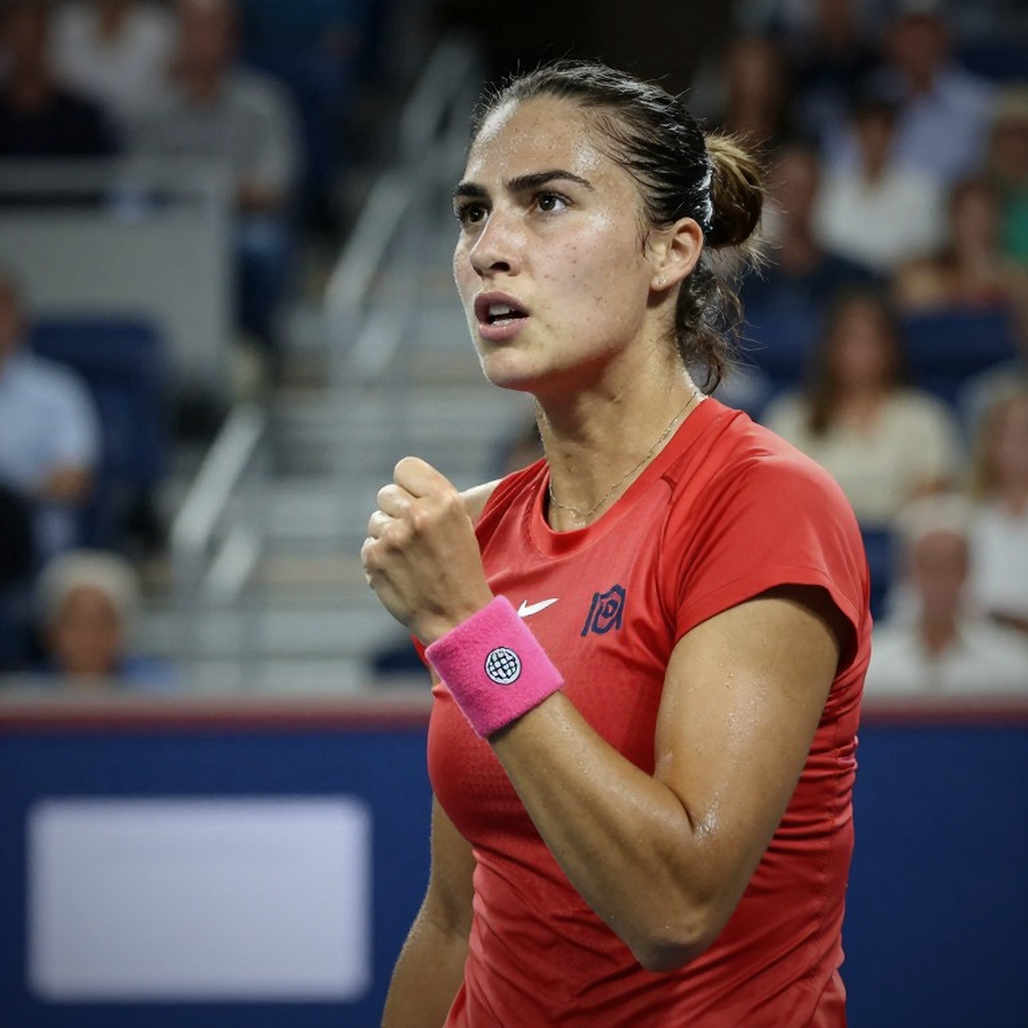
At the same time, I have to concede another weakness in my own reading of data. A phenomenon repeating twice does not make it a rule. Siniakova changed partners and still won, which is evidence of her individual quality, but two instances are not enough to declare her the absolute constant of every pairing. I leave that possibility open.
And the final point needs to be stated plainly: an unplayed final has no result. All prior form data describes probability, not outcome. Shelton plays a final at home in front of an American crowd, while Zverev faces the counter-pressure. Home advantage appears in none of my data columns, but it exists.
The next signal to watch
The signal I will track over the next two months is not the outcome of one final but the structure of the Race To Turin table after the indoor swing and the Asian leg. If Zverev holds a share of the top spot with Sinner through that stretch, when most points come from non-Grand Slam events, he will have shown this season is not a short-term peak. If the gap widens, we get a genuine year-end No.1 race, rare in the post-Big Three era.
For Sabalenka, the question is not whether she reclaims No.1. The question is how she handles the stretch in which the ledger refuses to acknowledge her form. Data does not lie; the people reading it make excuses. And the first data rebellion was never about toppling anyone, only about proving that certain numbers deserve to be heard, even when they sit in a doubles draw nobody wants to read.