
England U11: Sai Prasanna Kumar and Isabelle Xiao Xu Seal ITTF World Hopes Spots in Sheffield
**Câu trả lời cốt lõi:** Sai Prasanna Kumar và Isabelle Xiao Xu vô địch England Hopes Challenge U11 tại Draycott TTC và giành suất dự ITTF World Hopes Week & Challenge, diễn ra từ ngày 12 đến 18 tháng 10 tại EIS Sheffield. Đây là sự kiện tuyển chọn vòng tròn mười người mỗi bảng, không tính điểm xếp hạng WTT. **Dữ kiện chính:** - Sai Prasanna Kumar vô địch bảng nam với thành tích 9-0, là người duy nhất đánh bại Leo Shahmurov (8-1). - Isabelle Xiao Xu vô địch bảng nữ với 8-1, hơn Cindy Xiao nhờ thắng trận đối đầu trực tiếp 3-2 ở vòng bảy. - Cindy Xiao chỉ để thua sáu game trong toàn bộ cuối tuần, thành tích giữ game tốt nhất trong cả hai bảng đấu. - Bảng nam có mười vận động viên và tất cả đều thắng ít nhất một trận, cho thấy độ sâu tương đối đồng đều. - Mỗi bảng gồm tám suất theo thứ hạng và hai suất đặc cách do liên đoàn quyết định. **Nguồn:** England Hopes Challenge, Table Tennis England, dữ liệu bảng đấu vòng tròn; mốc ITTF World Hopes Week & Challenge ngày 12 đến 18 tháng 10 tại EIS Sheffield. | Cross-checked: VuaBong.vn **Hỏi đáp liên quan:** Q: Cindy Xiao có giành vé dự ITTF World Hopes không? A: Không, cô đứng nhì với 8-1 và thua trận đối đầu trực tiếp trước Isabelle Xiao Xu. Q: England Hopes Challenge có tính điểm xếp hạng WTT không? A: Không, đây là sự kiện tuyển chọn nội bộ, không cấp điểm xếp hạng quốc tế. Q: Vì sao tần suất các trận năm game lại cao ở lứa U11 này? A: Vì khoảng cách kỹ thuật bị nén lại, khiến kết quả phụ thuộc vào chi tiết nhỏ thay vì đẳng cấp.
The final ball of the round-eight decider drifted past the left edge of the table. The scoreboard clicked to 11-5, and Sai Prasanna Kumar closed out the England Hopes Challenge with nine wins from nine.
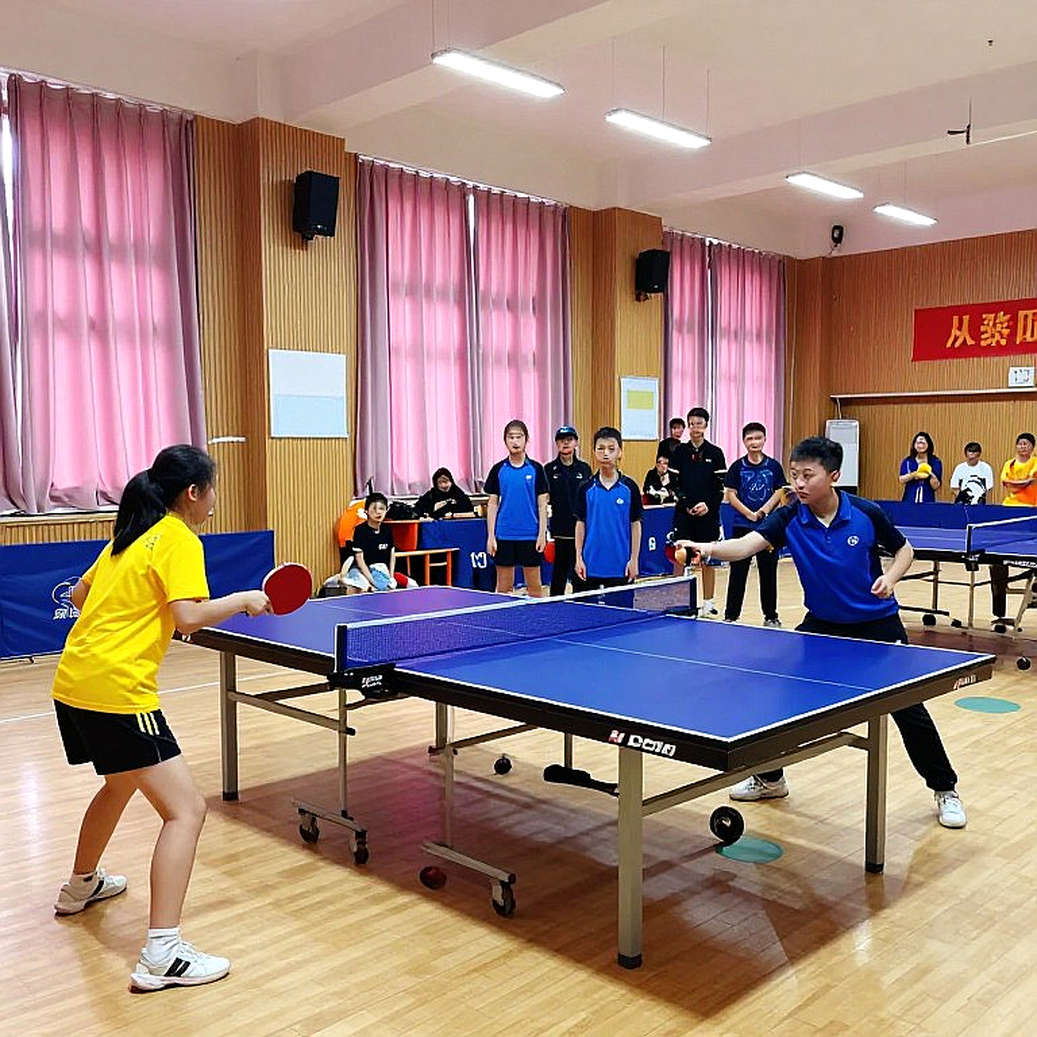
The Table Tennis England U11 selection event took place at Draycott TTC across the final two days of a training week. No packed stands. No international broadcast cameras. Just ten players per category, a single round-robin draw, and two wildcard places leading to the ITTF World Hopes Week & Challenge, which opens on 12 October at EIS Sheffield.
At the neighbouring table, Isabelle Xiao Xu had just come through a five-game decider against Cindy Xiao, 3-2. It was the only match that separated the two players at the top, because after nine rounds both finished on 8-1. One ball changed direction, and the leaderboard changed hands.
Context: a selection funnel, not a tournament
The England Hopes Challenge is not a WTT points event. No world ranking points, no prize money, no Olympic qualification. Its value lies elsewhere: this is the first filter of a system, where ten children born in 2026 or later are placed in the same room and forced to sort themselves into an order.
The selection structure consists of eight places by internal ranking and two wildcards held at the federation's discretion. Publishing the two wildcards is a design choice. It allows Table Tennis England to pull in faces sitting outside the ranking cut-off whom the coaching staff consider worth tracking.
The round-robin format, nine matches per player across two days, is deliberate. It removes the luck of a single draw, rewards consistency, and creates a physical load at an age when the body is not yet fully formed. In return, organisers gain what a knockout cannot provide: nine data samples per player instead of three or four.
Set alongside that is the rules context. The 11-point system has applied since 2026, the hidden-serve rule since 2026, the 40+ plastic ball since 2026. No recent rule reform touches this event. These are stable baselines, and every competitor in the draw is affected equally.
At the international tier, the destination event will gather up to 20 boys and 20 girls from five continents. EIS Sheffield is hosting World Hopes Week for a second successive year, a signal of the organisational capability Table Tennis England has accumulated with the ITTF.
Core: reading a scoreboard the way you read sediment
Result data is the only layer this event leaves behind. There is no information about blade type, rubber, service patterns or the rhythm of individual rallies. That limits technical analysis to a macro reading. But even at that level, several things are worth recording.
Sai Prasanna Kumar finished 9-0, and was the only player to beat Leo Shahmurov. Shahmurov took second at 8-1, meaning the rest of the boys' field lost to him at least once. The 3-1 win over Shahmurov in round six is Prasanna Kumar's clearest positioning data point. He also beat Lusio Wen 3-1 in round seven, and closed the decider against Jonti Barnes 11-5 in the fifth game after trailing.
More notable is the structure of the boys' draw. All ten players won at least one match. No match ended in a withdrawal. That is a signal about group depth; put differently, this was not a table for filler entries.
In the girls' draw, the data tells a different kind of story. The top three players were unbeaten on day one. Separation only emerged later, and only through five-game matches. Isabelle Xiao Xu took the title at 8-1. Cindy Xiao also finished 8-1, losing only the direct head-to-head. It is the kind of outcome where a champion's place does not fully describe the strength of the runner-up.
One quantitative fact rises out of the raw scoreboard: Cindy Xiao conceded only six games across the entire weekend, the best game-retention record in either category. She lost one match, but lost it in the tightest possible contest. At U11 level, the ability to hold games in defeat is a more valuable technical marker than a heavy win.
Mila Gao offered a different signal. She won all four of her five-game matches, including comebacks from 0-2 down. That is data about mental resilience, or about a style that takes time to find rhythm. Both readings are plausible, and both lack the sample size to be confirmed.
The frequency of five-game matches, Prasanna Kumar's round eight against Barnes, Xiao Xu's round seven against Cindy Xiao, Mila Gao's four deciders, says something about this cohort: the field is relatively even, and when technical gaps compress at age 11, results are decided by small details rather than by class.
The first brick is not on the blueprint; it lies under the dust. Here the dust is a raw scoreboard with not a single line of ball-tracking data. And I have to be explicit: any technical conclusion drawn from this source has no data support. This is the landscape of an information gap, not of a technical analysis.
Based on my experience tracking matches across several youth development systems, I find the following fact more significant than the title itself: the wildcards. A federation only hands over discretionary selection power when it believes the internal ranking has missed someone. Two wildcards per category is a small admission that ranking does not fully measure potential at age 11.
Contrarian angle: the player who lost the decider is the story
A title draws attention. But at U11 level, a title predicts very little. The conversion rate from a standout U11 face to a senior national team is very low, and the reason is rarely technical. Bodies develop on different clocks, motivation shifts, injuries happen, or another cohort simply grows faster. Every youth cohort is a geological layer; the patient read the sediment, the shallow read the cross-section.
Cindy Xiao lost exactly one match, in a fifth game, and gave up the title on head-to-head. If the tiebreaker were game difference, she would top both categories. This is the classic blind spot of youth sports reporting: the system records the leader, while the structure of the competition goes unrecorded.
The biggest risk in this story does not sit on the table. It sits in interpretation. Two eleven-year-olds who have just been labelled prospects will carry that label to Sheffield, where players from five continents bring entirely different training backgrounds and playing styles. The jump from domestic U11 to a multi-continental stage is not small. One training week plus two competition days is not enough for anyone to assert anything.
There is a telling silence: the event report names no coach. At this age, technical development almost always runs through a coach's hands. That absence could be a player-centred presentation choice, or it could simply reflect that the coaching role is not yet institutionalised at this stage. Either possibility leaves a gap worth tracking.
One more point: the phrase ten players per category shows Table Tennis England choosing quality over quantity. This is an elite identification model, not a mass-participation one. The consequence is that any error in identification is amplified. Missing one player in a group of ten costs more than missing one in a group of a hundred.
Perfection delays the warning, and time does not wait for anyone to complete the data. Here I chose to publish the raw layer immediately, together with its limits, rather than wait for a complete dossier this event does not produce.
Takeaway: read the footprints before the mist clears
Two Sheffield places have been claimed. But what is worth tracking over the next twelve months is not Prasanna Kumar's nine straight wins or Xiao Xu's 8-1. What is worth tracking is the group of four names, Prasanna Kumar, Xiao Xu, Cindy Xiao and Shahmurov, and the speed of their progress once the scoreboard is forgotten.
Archaeology is not about getting it right; it is about daring to publish before the find becomes a relic. The England Hopes Challenge will fade from public memory within a month. What remains is sediment: four names, nine matches each, and an open question about which system will read their growth curves before it is too late.