
Bob Toski at 100: The Golf Legend With No Data Sheet
core_answer: Bob Toski, huyền thoại giảng dạy golf người Mỹ, tròn 100 tuổi. GOLF.com đăng lại bài phỏng vấn của GOLF Magazine từ số tháng 10 năm 2013, trong đó Toski tự thuật về kỹ thuật, triết lý swing và sự nghiệp dạy golf kéo dài nhiều thập kỷ.
key_facts: Bob Toski thắng 5 danh hiệu PGA Tour; tên ông ở PGA of America Hall of Fame nhờ sự nghiệp giảng dạy.; Năm 1954, Bob Toski dự U.S. Open tại Baltusrol; năm 1955, ông đứng cùng Sam Snead ở tee đầu Masters.; Ở tuổi 87, Bob Toski tự thuật đánh 75 gậy và mang bóng khoảng 230 yard; không có ShotLink kiểm chứng.; Bob Toski chủ trương swing bắt đầu từ bàn tay, ưu tiên cảm giác chạm hơn sức mạnh.; Học trò Birdie Kim vô địch U.S. Women's Open 2005, sau đó thi đấu ở Symetra Tour.
source_attribution: GOLF.com / GOLF Magazine — bài phỏng vấn số tháng 10 năm 2013, đăng lại nhân dịp sinh nhật 100 tuổi của Bob Toski | Cross-checked: VuaBong.vn
related_qa: question: Bob Toski bao nhiêu tuổi?, answer: Bob Toski tròn 100 tuổi, theo báo cáo dịp sinh nhật do PGA Tour công bố và GOLF.com đăng lại.; question: Thành tích nổi bật nhất của Bob Toski là gì?, answer: Năm danh hiệu PGA Tour và tư cách thành viên PGA of America Hall of Fame với vai trò giảng dạy.; question: Ai là học trò nổi tiếng của Bob Toski?, answer: Tom Kite, Judy Rankin và Birdie Kim — nhà vô địch U.S. Women's Open 2005.
In the autumn of 2026, at age 87, Bob Toski told GOLF Magazine he still carried the ball roughly 230 yards and had just shot a round of 75. No ShotLink. No launch monitor. Not a single line of data to cross-check. Only the account of a man standing 5 feet 7 inches tall in front of a microphone, declaring: “I don't care who the second-best 87-year-old is.”
That is the sentence of a champion. It is also the sentence of a man refusing every comparison. For someone who works in data, this is the strangest intersection of the trade: a legend who has survived seven decades on numbers nobody can verify.
When Toski turned 100, GOLF.com republished the old interview, tied to his birthday. I read it as a club data consultant: where is the data, or is there only reputation? Numbers do not lie. But reputation whispers into the ear of anyone who never opens the sheet.
Context: Two careers under one name
Toski did not live off his own scorecard. He won 5 PGA Tour titles — a solid record, not a historically dominant one. In 2026 he appeared at the U.S. Open at Baltusrol. In 2026 he stood alongside Sam Snead on the first tee at the Masters. But his name in the hall of legends sits in the PGA of America Hall of Fame — the house of golf teachers, not of major winners.
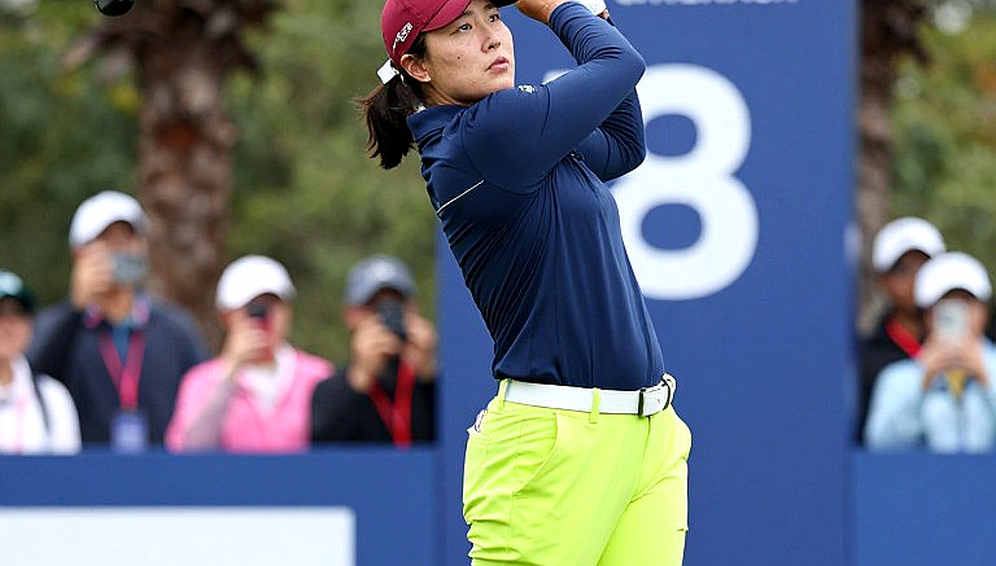
This is the point the media usually compresses: one word, “legend,” folds both halves of a career into a single headline. For the quick reader, Bob Toski means 5 PGA Tour titles. For the careful reader, Bob Toski means Tom Kite. Judy Rankin. Birdie Kim — whom he guided to the 2026 U.S. Women's Open title. The larger half of his career lives on the practice tee, not the fairway.
Based on my experience tracking matches and analysing data, cases like Toski always raise a hard question: when a golf teacher is more famous than his own playing record, which ruler do we use? The scorecard, or the student list?
Core analysis: Seven decades, not one verified number
The first thing I check when reading this interview is the source of its performance data. The result: none. No Strokes Gained. No ShotLink data. No tournament scorecard. Every claim about Toski's game is either a self-quote or the author's colour narration.

The 230-yard carry at 87 is a statistical outlier for his age. Most 87-year-old amateurs carry well under 150 yards. But I mark the figure “pending verification”: the probability the number is precise to the yard is low, while the probability he retained unusual distance for his age is medium. Without a launch monitor, I cannot conclude more.
By contrast, Toski's self-diagnosis is mechanically consistent. He says he now hooks the ball, blames a driver with a 2-degree closed face, and says he knows he can hook it when he sees the closed face. A closed face relative to the swing path produces draw/hook bias — a coherent causal relationship, and evidence he can genuinely read his own swing fault.
The core of Toski's teaching is a doctrine: “The body does not touch the club. The swing starts in the hands.” He calls it the philosophy that “an ounce of touch is worth a ton of brawn.” It stands in direct opposition to the modern tour orthodoxy of body rotation and ground force. It also cannot be adjudicated with the available data.
Toski does not hide his contempt for the modern game. He calls many of today's tour players “one-dimensional”: bomb it, find it, hit a wedge, make the putt. In my observation, the claim is directionally right but data-free. It was made in 2026 — before the tour distance arms race grew further. The paradox is that time has strengthened his argument, not weakened it.
The most notable case is Birdie Kim. Toski says he coached her daily, working on bunker play and green-reading, and she won the 2026 U.S. Women's Open. The relationship then dissolved, and Kim now plays on the Symetra Tour — the LPGA's development circuit. A major title does not guarantee career stability. This is the most structurally important lesson in the entire interview: the tour's exemption window closes fast, and a short spike does not build a long career.
Contrarian angle: Correlation is not causation
There is an appealing inference I must refuse to verify too quickly: if Toski truly played a hands-driven, low-body-rotation model, the reduced spinal load could plausibly help him swing at 87 without evident injury. It sounds reasonable. But it is speculation from biomechanical principles, not from the article's data. I keep it at low confidence.
The same applies to the claim that “three-dimensional shotmaking is a lost art.” Viewed through Strokes Gained models, distance and approach play contribute more to expected scoring than shot-shaping. The decline Toski laments is an economically rational outcome for tour players rather than a loss of skill.
One more flag: the Birdie Kim story is told entirely from Toski's side. He says she “left” him, calls her “naive,” and mentions “knockoff” watches. Kim's own voice is absent. Reading a single-source account like this, any player-development conclusion must be downgraded to reference level.
And do not forget the scar: cheating allegations once rocked Toski's senior tour career. He has also said “every handicapper I play with is a cheater.” That is the mid-century gambling culture he absorbed, and it has followed him to 100.
Takeaway: Signals for the next cycle
I do not predict. I read data and accept the consequences. But the data here says one thing: Toski's “touch over brawn” doctrine will not vanish with the 100th birthday. It will return in the ball-rollback debate — as the USGA and R&A tighten distance limits, commentators will reach for voices like his.
Four signals to track: coverage volume around Toski's 100th, rollback commentary invoking “touch over power,” Birdie Kim's career status on the LPGA/Symetra, and the performance of the heritage-content pipeline GOLF.com is mining.
Is an industry learning to teach by data leaving something behind as the last teaching generation departs? The hand feels what the spreadsheet cannot measure. But the spreadsheet also sees what the hand forgets. The question is not which side to pick — but who has the patience to sit between them.